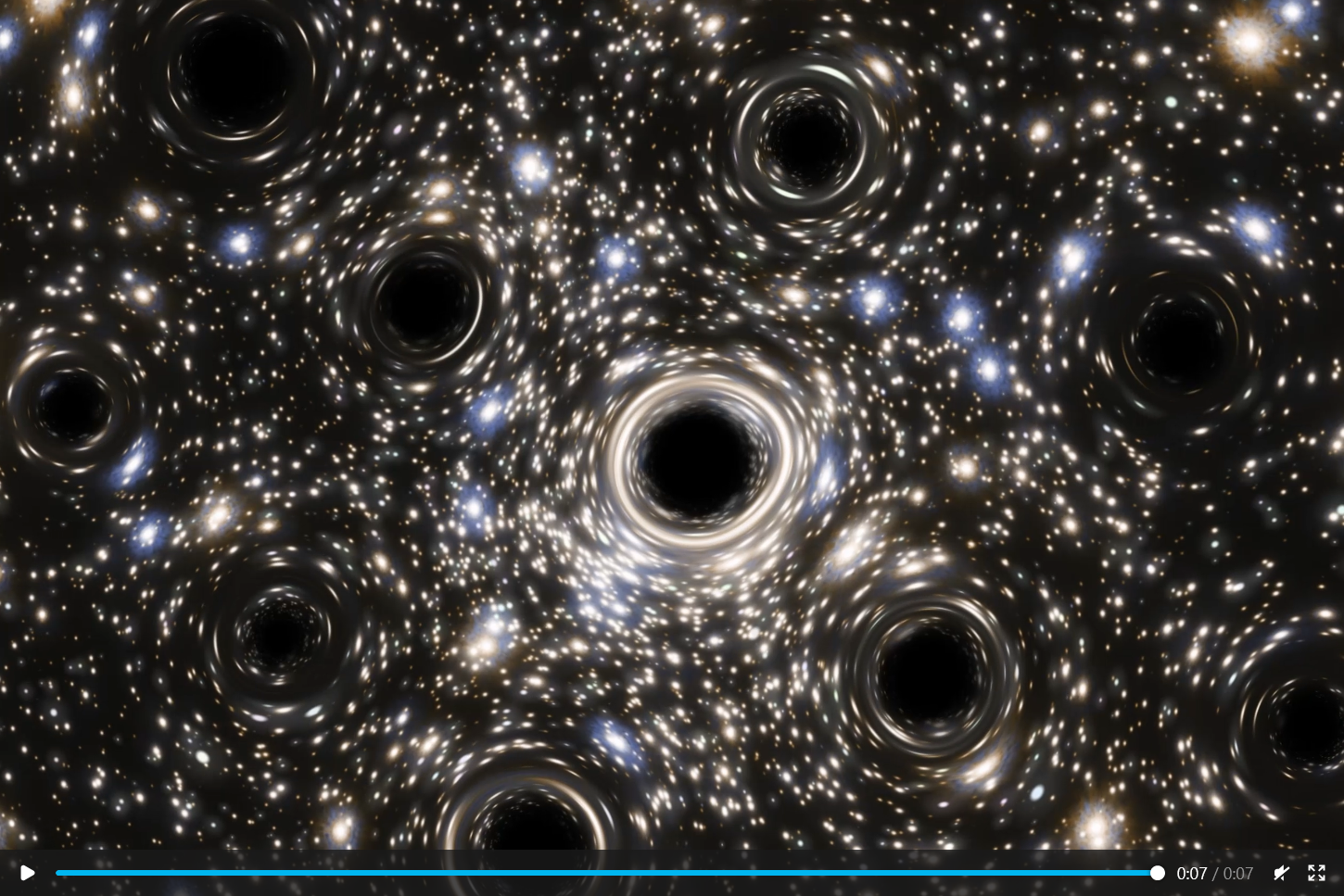
Wandering black holes that traversed the universe for billions of years may have left observable imprints that reveal clues about cosmic evolution, according to new research. These black holes, which moved through space rather than remaining stationary at galaxy centers, shaped the universe as they traveled. The research suggests that studying these wandering black holes could provide insights into how the universe developed over time. An artist's impression from the European Space Agency's Hubble team depicts the population of wandering black holes within a galaxy, illustrating how these objects may have distributed themselves throughout cosmic structures. The imprints left by wandering black holes during their extended journeys through space potentially contain valuable information about universal processes and galaxy formation. Understanding the behavior and effects of these mobile black holes represents a pathway to decoding fundamental aspects of cosmic history and the mechanisms that shaped the universe's large-scale structure.
News
Wandering Black Holes May Hold Clues to the Evolution of the Universe
Key facts
- Wandering black holes that traversed the universe for billions of years may have left observable imprints that reveal clues about cosmic evolution, according to new research.
- These black holes, which moved through space rather than remaining stationary at galaxy centers, shaped the universe as they traveled.
- The research suggests that studying these wandering black holes could provide insights into how the universe developed over time.
- The imprints left by wandering black holes during their extended journeys through space potentially contain valuable information about universal processes and galaxy formation.
Why it matters
This astronomy story is part of SpaceWireDaily's daily monitoring of sources, companies, institutions, and trends shaping nasa, spacex & astronomy news.
Source context
This article summarizes and contextualizes reporting from Universe Today. The visible original source link is retained so readers can review the primary report directly.