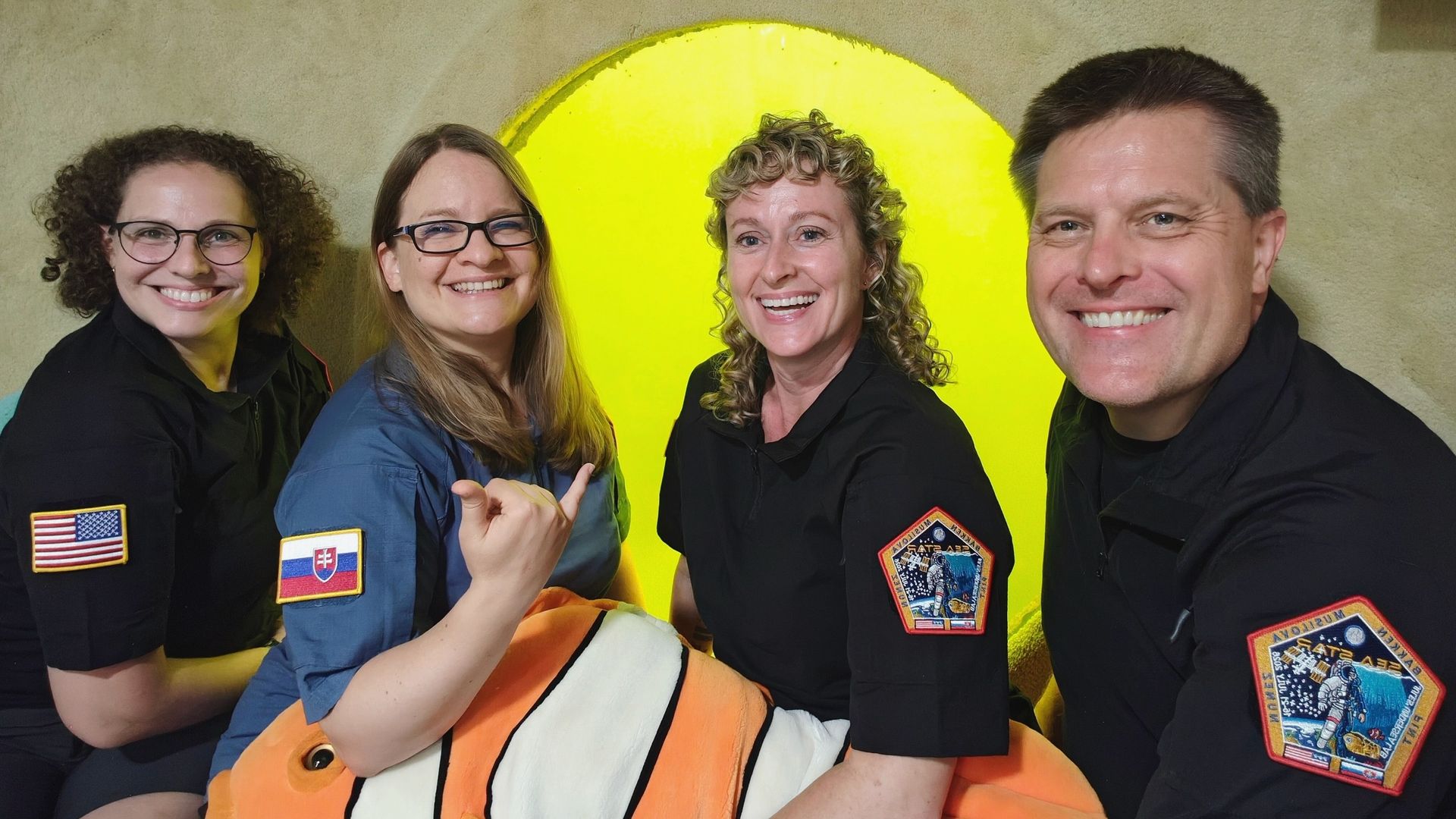
# Analog Astronauts: How Living Underwater Prepares Humans for Space Missions
Space agencies and research organizations have long recognized that the ocean floor offers one of Earth's most valuable training grounds for space exploration. Underwater habitats provide analog environments where astronauts and mission specialists experience isolation, confinement, and resource constraints that closely mirror the conditions they will face aboard spacecraft and extraplanetary bases.
The physics of depth resemble the physics of vacuum in unexpected ways. Both environments demand rapid decompression protocols, life support system redundancy, and constant vigilance about equipment failure. Astronauts cannot simply exit an airlock or habitat to repair a problem. They must solve technical challenges with available materials and work within strict procedural frameworks designed by mission control. Underwater missions compress these realities into days or weeks rather than months, allowing researchers to gather behavioral and physiological data efficiently.
NASA, ESA (European Space Agency), and other organizations have run extended underwater missions for decades. NEEMO (NASA Extreme Environment Mission Operations) represents the most systematic effort. These missions typically place crews in the AQUARIUS habitat off the Florida Keys, a 400-ton underwater research station positioned 60 feet below the surface. Crews live and work in AQUARIUS for up to three weeks, conducting scientific experiments while simultaneously serving as test subjects for human factors research.
The isolation metrics matter deeply. Underwater crews experience communication delays with surface support (though minor compared to Mars missions), limited personal space, inability to leave the habitat without specialized procedures, and dependency on external resupply. Team dynamics shift under these constraints. Psychologists observe how crew members negotiate confined spaces, manage stress, and maintain motivation during repetitive work cycles. These observations inform astronaut selection and training protocols for long-duration missions to the International Space Station, lunar bases, and eventually Mars expeditions.
Physical adaptation studies happen in parallel. Underwater environments expose crews to partial weightlessness effects (neutral buoyancy approximates aspects of microgravity for certain tasks), altered atmospheric composition, and pressure changes that affect physiology. Researchers measure cardiovascular response, bone density changes, and fluid shifts that occur underwater, data that correlates with spaceflight adaptation.
China has invested heavily in underwater analog research through its COMARS (China Manned Analogue Research Submergence) program, demonstrating that space agencies worldwide recognize water-based training value. Russia has used underwater facilities since the Soviet era. The convergence across multiple space programs validates the approach's scientific legitimacy.
Beyond behavioral and physiological research, underwater missions test hardware. Communication systems, life support components, spacesuit prototypes, and robotic tools undergo evaluation in realistic high-stakes environments. Engineers identify failure modes and procedural gaps before committing hardware to orbit or lunar surface operations.
The analog concept extends beyond AQUARIUS. Antarctic research stations provide isolation without the underwater component. Cave systems in Europe and Central Asia simulate darkness, navigation challenges, and resource scarcity. Each environment captures different aspects of spaceflight demands.
As humanity prepares for Artemis lunar missions and eventual human Mars exploration, underwater analogs remain central to training infrastructure. The lessons learned by astronauts breathing recycled air in sunken habitats directly inform how future crews will survive and thrive in environments far more hostile than Earth's oceans. The water-to-space pipeline continues strengthening human spaceflight capability.