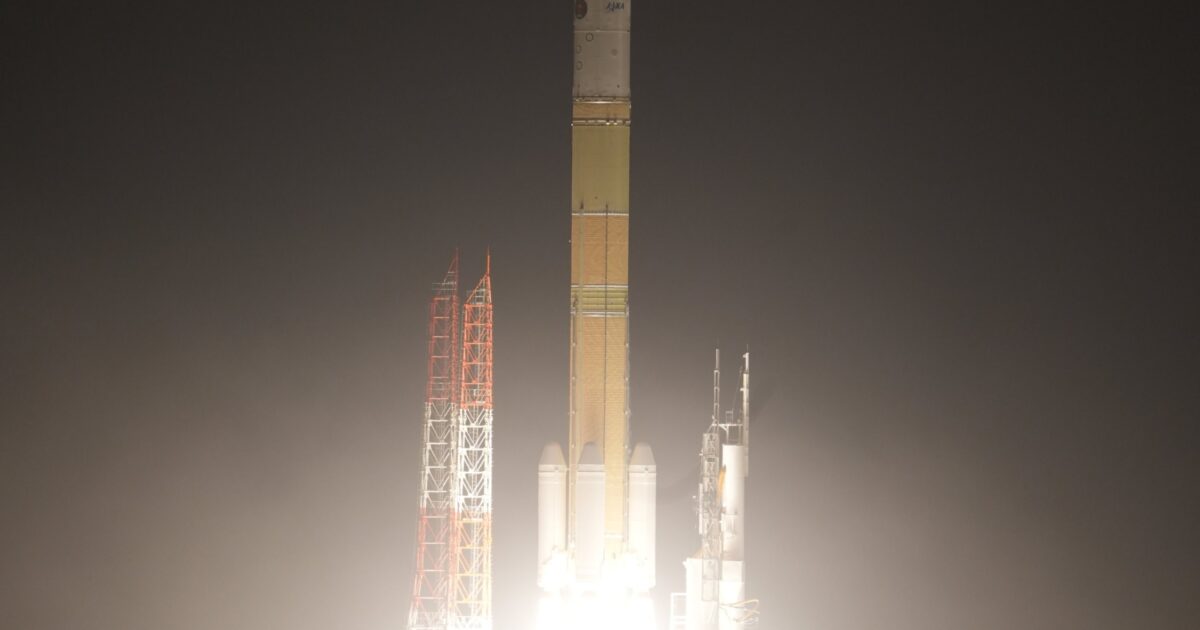
The Martian Moons eXploration spacecraft launched this week to collect the first samples ever retrieved from Phobos, a moon of Mars. The Japan Aerospace Exploration Agency led the mission, which carries a dustbuster-like sampler developed by Honeybee Robotics based on PlanetVac technology. MMX will arrive at Mars in August 2027 and return samples to Earth in 2031.
NASA's Lucy mission reached its five-year mark this week, having launched on October 16, 2021. The spacecraft has flown past the asteroids Dinkinesh and Donaldjohanson. Lucy will visit the Jupiter Trojan asteroid Eurybates and its satellite Queta in August 2027.
NASA will not solicit proposals in 2026 for its Research Opportunities in Space and Earth Sciences program, also known as ROSES. The agency typically funds hundreds of millions of dollars in research projects through ROSES at universities and research institutes across the United States. NASA will release 2027 funding opportunities by January.
The National Academies of Sciences, Engineering, and Medicine recommended four new landing sites for crewed Moon missions near the lunar equator. The recommended sites include an impact basin, a crater, a volcanic plateau, and the region where Apollo 15 landed. These sites could complement the scientific questions Artemis is expected to answer by exploring the lunar south pole.
NASA announced an overhaul of how it requests and selects science missions, aiming to speed up mission selection and formulation. NASA leadership will explain the changes at a virtual Science Town Hall on Monday, October 26, at 11:00 a.m. PDT.