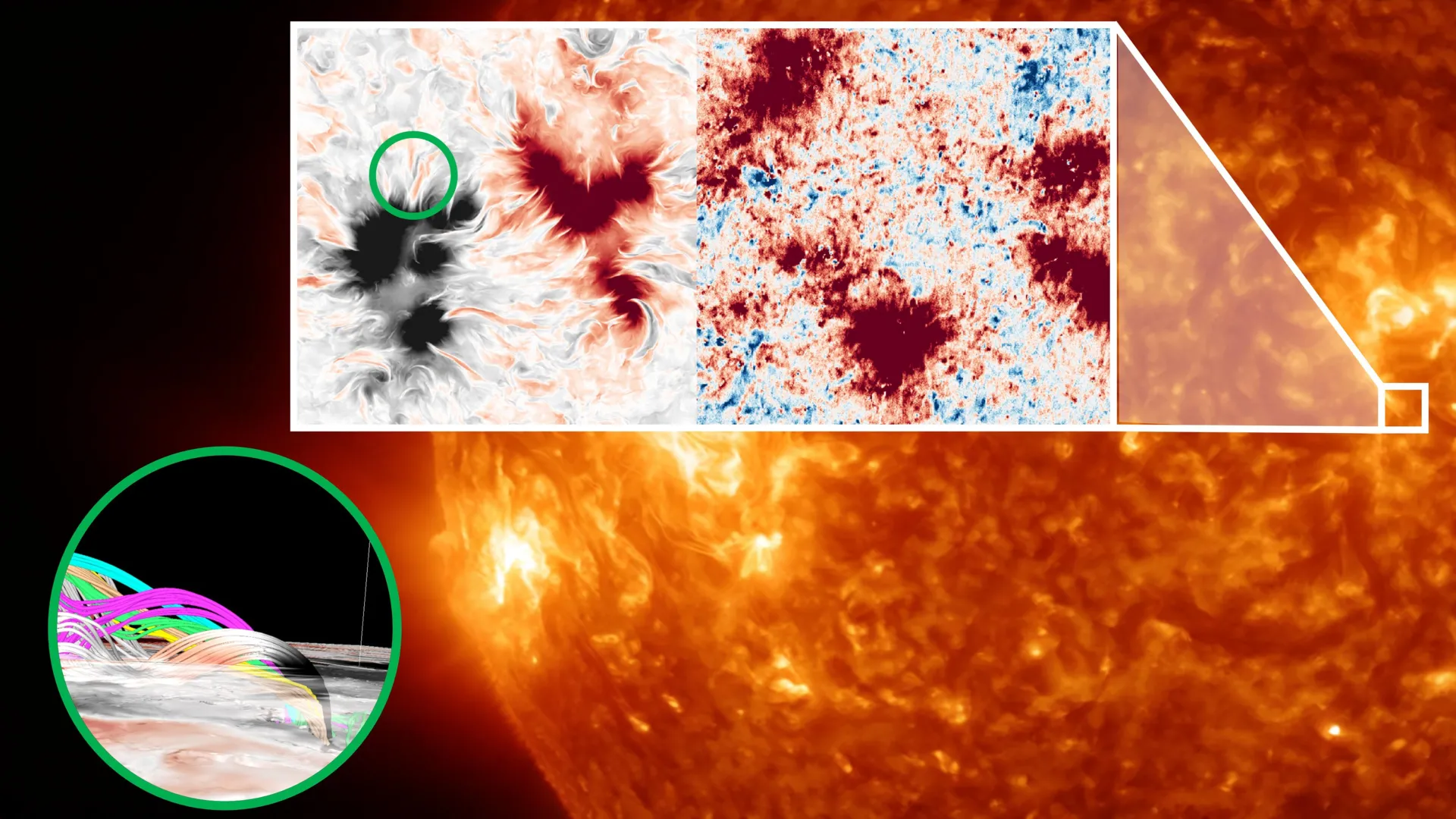
Sunrise-III, a solar observatory carried to the stratosphere by high-altitude balloon in 2024, detected an intricate network of thread-like magnetic structures above quiet regions of the Sun. An international research team led by the National Astronomical Observatory of Japan used the 1-meter telescope, which operated at approximately 35 kilometers above Earth, to measure magnetic fields in the chromosphere above the Sun's surface.
The observations revealed that the magnetic canopy, which extends through the chromosphere, contains far more elaborate thread-like features than previously expected. Computer simulations suggested that movements on the solar surface twist magnetic field lines to create these intricate structures. The instrument SCIP, a near-infrared spectrometer developed under NAOJ's leadership, measured magnetic fields continuously across different layers of the solar atmosphere to track how structures extend and change with altitude.
Quiet regions of the Sun, which cover most of its surface and lack prominent features like sunspots, had been difficult to study from the ground because Earth's atmospheric turbulence blurs fine details. Sunrise-III's elevated position greatly reduced atmospheric interference and allowed exceptionally detailed measurements.
The findings offer new clues to how energy travels upward through the solar atmosphere and contributes to heating the chromosphere, even in regions that appear calm.