The discovery of Teghaza 001 (Teg 001) in Mali in 2022 should serve as a wake-up call to space agencies worldwide: we need to bring Martian samples back to Earth systematically, not sporadically. Carl Agee's team at the University of New Mexico and Yang Liu's researchers at NASA's Jet Propulsion Laboratory have demonstrated something remarkable in their Science publication—that a single meteorite can reveal secrets about Mars' earliest history that rovers alone may never uncover. Teg 001, at 4.1 billion years old, is the oldest Martian igneous rock ever found, and its composition tells a story of a warm, wet world fundamentally different from the frozen desert Mars is today.
What makes Teg 001 extraordinary isn't just its age. Unlike Black Beauty (Northwest Africa 7034), which is a conglomeration of many different rock types, Teg 001 is a single unadulterated rock type—4.1 billion years old or older. As Agee explained, this homogeneity was 'a big surprise.' The meteorite contains high levels of manganese oxide, precisely the kind of indicator rovers like Curiosity search for as a sign of environments conducive to life. Oxygen-18 isotope analysis reveals that this rock interacted with water on Mars' ancient surface, with fluid-altered magnesium in its pigeonite crystals pointing to aqueous alteration. All of this evidence points to the Pre-Noachian period, when Mars may have resembled Earth far more than it resembles itself today.
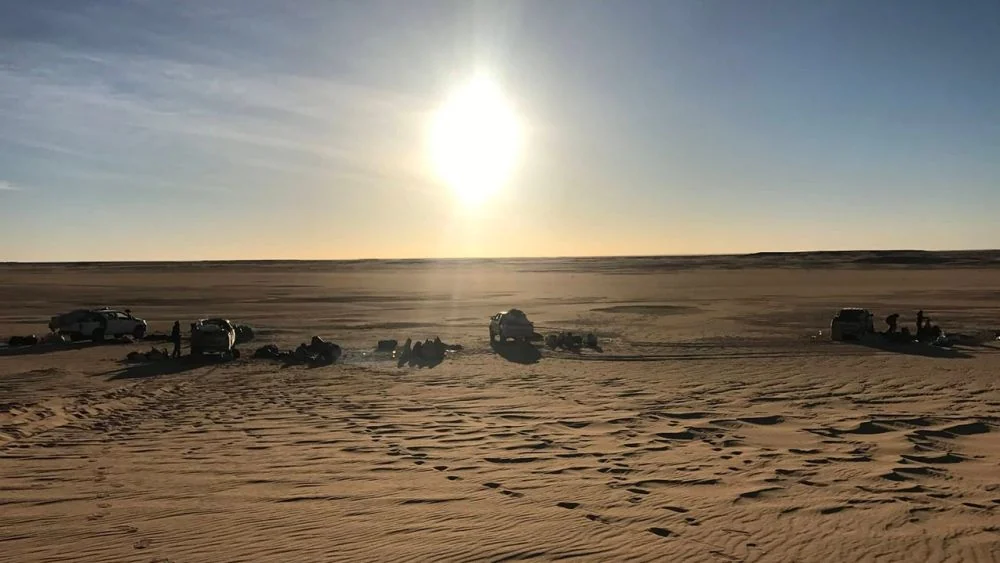
Yet here's the frustration: we found Teg 001 by chance in a Sahara desert. Nomads discovered Black Beauty the same way in 2011. We cannot rely on luck to study Mars' oldest rocks. The authors themselves acknowledge the fundamental problem: most meteorites are geologically young because violent impacts favor stronger, younger basaltic rocks. Ancient Martian crust, fractured and weakened by billions of years of bombardment, rarely survives the journey to Earth. This selection bias means we're systematically missing the very rocks that hold answers about whether Mars ever hosted life on its surface.
Agee poses the critical question: 'If there was ever abundant life on Mars, on the surface, not sequestered away in some subsurface, that would be the time that you would be looking at, the Pre-Noachian period.' We now have proof that the Pre-Noachian holds measurable geological signatures of habitability. Two rovers currently operating on Mars—Curiosity and Perseverance—represent decades of technological achievement, yet meteorite analysis has proven equally, if not more, informative about Mars' deep history.
The international space community should take note: NASA's planned Mars sample return mission cannot arrive soon enough. While orbiters and rovers contribute valuable data, they cannot match the precision of laboratory analysis on Earth. Teg 001 demonstrates that ancient Martian rocks, analyzed by teams like Liu's using sophisticated dating techniques on zircon crystals, unlock narratives about planetary habitability that rovers alone cannot decipher. We need a sustained, systematic program of Mars sample return—not occasional meteoritic gifts from the Sahara.