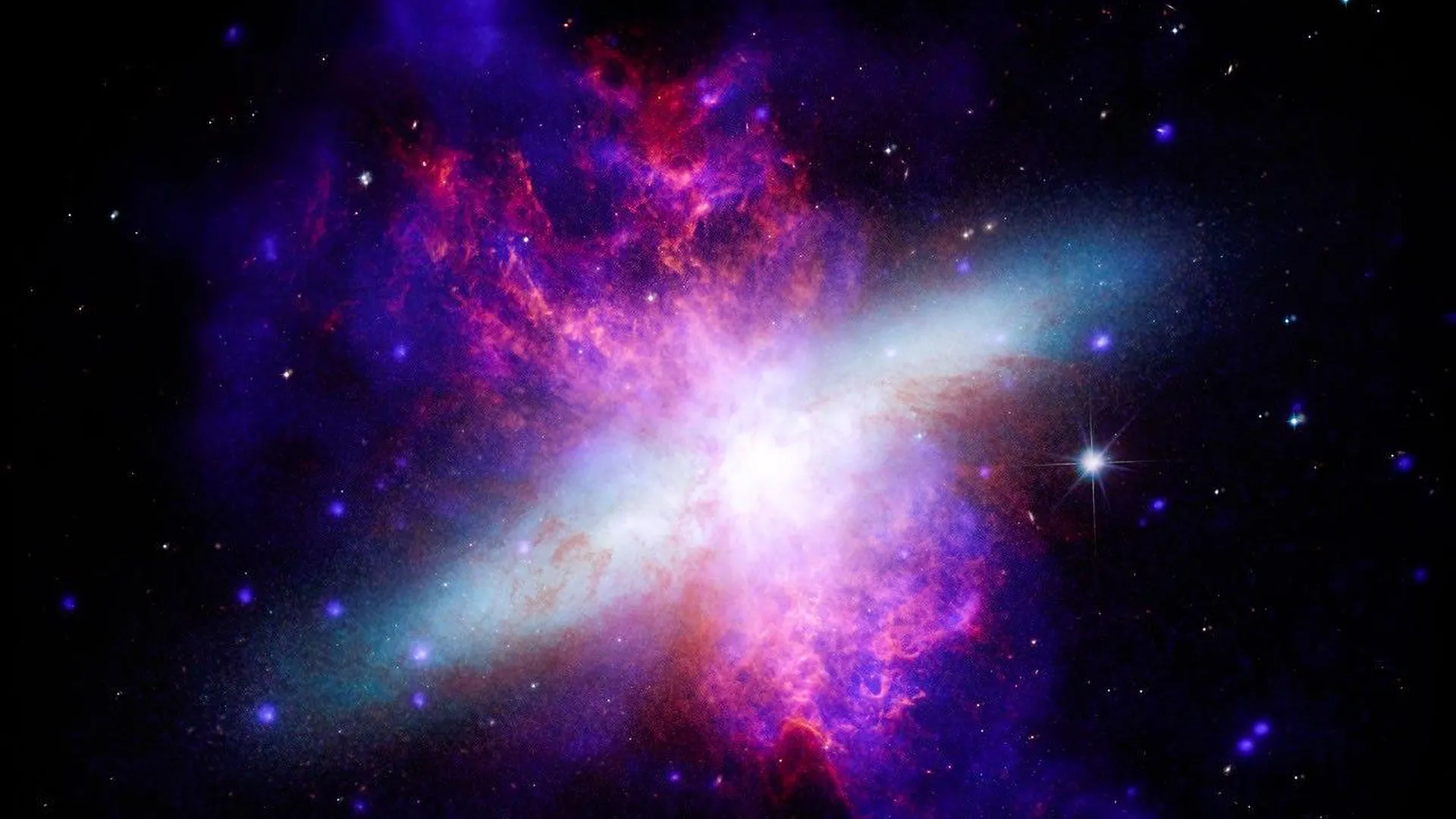
NASA released 16 new images from the Chandra X-ray Observatory combined with data from the James Webb Space Telescope, Hubble Space Telescope, IXPE, the Neil Gehrels Swift Observatory, NuSTAR, and ground-based observatories. The images reveal the diversity of galaxies and the extreme processes shaping them.
X-ray observations detect gas clouds heated to millions of degrees, material expelled by supermassive black holes, and debris from stellar explosions. These processes spread chemical elements through space, including elements that become part of planets and living organisms.
Spiral galaxies like Messier 33 and NGC 3938 show energetic star formation in their sweeping arms. Barred spiral galaxies NGC 1672 and NGC 1385 use their central structures to channel gas and fuel intense star formation. NGC 4725 demonstrates how an earlier encounter with another galaxy can stimulate star birth.
NGC 4631 (the Whale Galaxy) and Messier 82 (the Cigar Galaxy) display enormous halos and gas winds heated to millions of degrees, driven by stellar explosions. These outflows carry material thousands of light-years into space.
Supermassive black holes at galaxy centers launch jets and outbursts influencing entire galaxies. Centaurus A shows a powerful stream of high-energy particles shooting tens of thousands of light-years into space. In Messier 106, jets from the central black hole create unusual spiral structures. The Sombrero Galaxy (Messier 104) reveals a supermassive black hole surrounded by a widespread halo of hot gas and stellar remnants.
Arp 143 captures the aftermath of a direct galactic collision, producing an expanding ring and triggering new star formation. NGC 3256 and II Zw 096 show the chaotic consequences of merging galaxies. These collisions offer clues about the Milky Way's expected merger with Andromeda galaxy billions of years from now.
NGC 660 displays a rare polar ring structure with stars orbiting around the galaxy's poles. Messier 90 loses gas as it travels through the Virgo Cluster, stripping away material needed for new star formation.