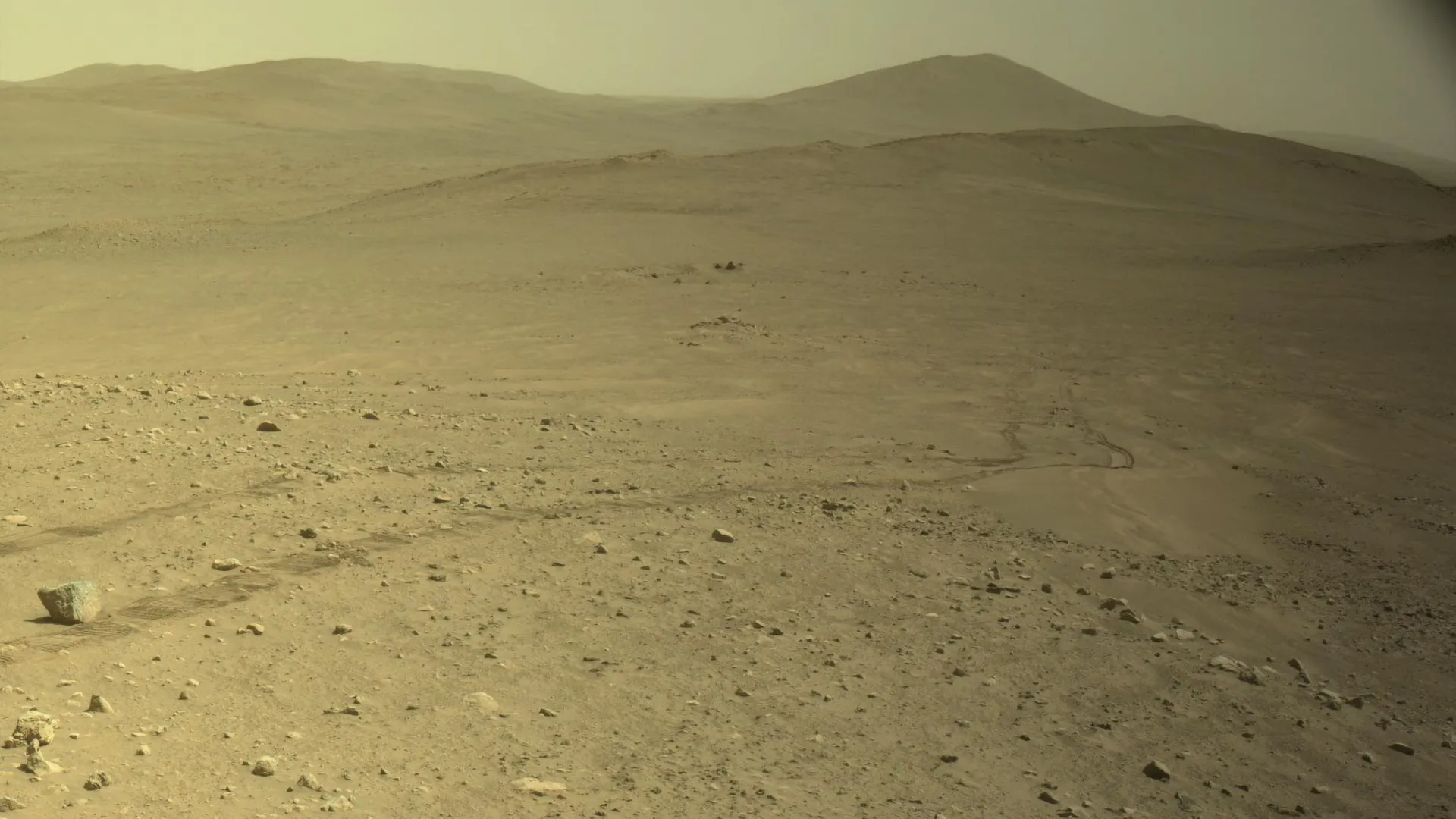
NASA's Perseverance rover traveled 45.22 kilometers (28.10 miles) across Mars, breaking the distance record for any vehicle on another celestial body. On Sol 2006, October 11, 2026, the rover surpassed the previous mark. Guinness World Records recognized the achievement with a commemorative plaque presented to Perseverance's engineering twin on Earth.
The rover had come within 200 meters of the record two months earlier but prioritized scientific exploration over distance. Perseverance spent weeks in an area with ancient rock formations, grinding rock surfaces and conducting detailed measurements before resuming its journey and passing the milestone.
Engineers improved Perseverance's driving capabilities through thousands of computer simulations and operational adjustments. The rover now tolerates tilts up to 24 degrees and has reduced clearance beneath its belly pan to 20 centimeters. Updated braking software prevents collisions with rocks, steering motor current limits nearly doubled, and new "dynamic slip tables" in flight software help predict wheel slip on different surfaces.
The rover uses onboard Global Localization (GBLC), technology that determines Perseverance's position on Mars without relying on directions from Earth. The system compares images from the Martian surface with orbital photographs to calculate location in global coordinates. This independence allows the rover to cover greater distances without repeated position fixes from Earth teams.
The additional processor for GBLC, originally installed in the Ingenuity Helicopter Base Station, was not designed for Mars radiation. Engineers developed software protections to help it operate reliably despite radiation-induced bit flips that could disrupt memory and software.
NASA is investigating generative AI to make Perseverance even more autonomous. The technology could generate driving plans for journey segments, providing guidance for the rover's Autonomous Navigation system. As Perseverance continues climbing the crater rim, these lessons shape technologies for future robotic exploration on distant worlds.