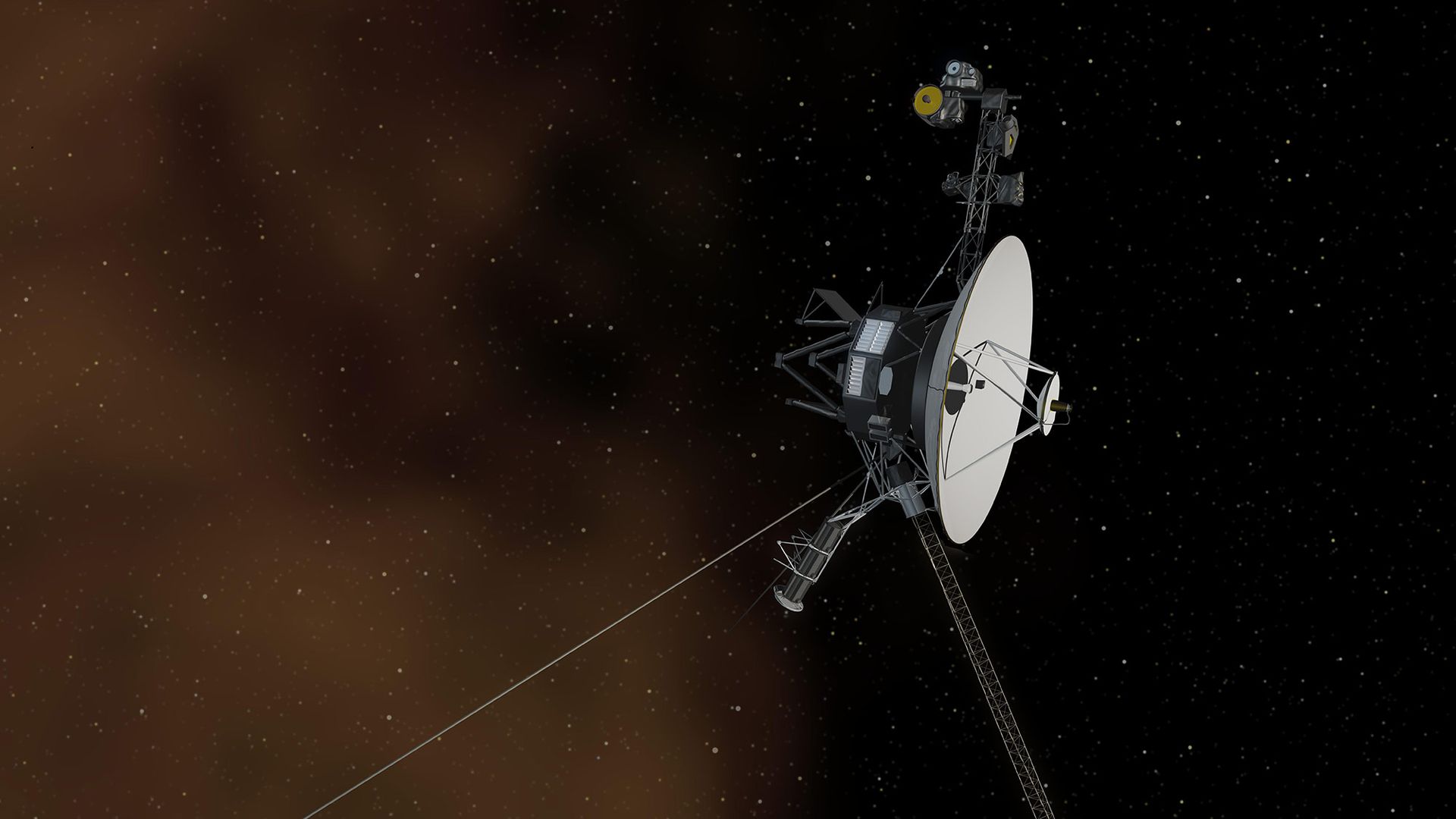
Voyager 1, humanity's most distant spacecraft at 16.09 billion miles from Earth, regained contact after a 48-hour communications blackout between October 18 and 20. The spacecraft resolved the glitch on its own before NASA engineers could send a remote fix.
Voyager 1 appears to have entered a safe mode automatically. One group of thrusters went offline and their backups engaged, a swap programmed to occur when spacecraft computers detect a problem. Engineers are still investigating the root cause.
The signal disappeared on October 18 and 19 when NASA's Deep Space Network attempted check-ins. Contact returned on October 20. "This is the first time we've seen the spacecraft do something like this, but we are also at a point in the mission where we have to expect the unexpected," Kareem Badaruddin, Voyager mission manager at NASA's Jet Propulsion Laboratory, said in an agency statement on October 29.
Voyager 1 will reach a one-light-day distance from Earth on November 18, meaning commands take nearly a day to arrive and responses take another day to return.
The 1977-launched probe and its twin Voyager 2 crossed into interstellar space years ago and remain operational. Both run on nuclear power that diminishes by four watts annually, down from 470 watts at launch. In early September, engineers shut off three devices on Voyager 1 and replaced them with lower-power alternatives in a reconfiguration called the "Big Bang." This adjustment could allow science instruments to operate longer than previously anticipated.