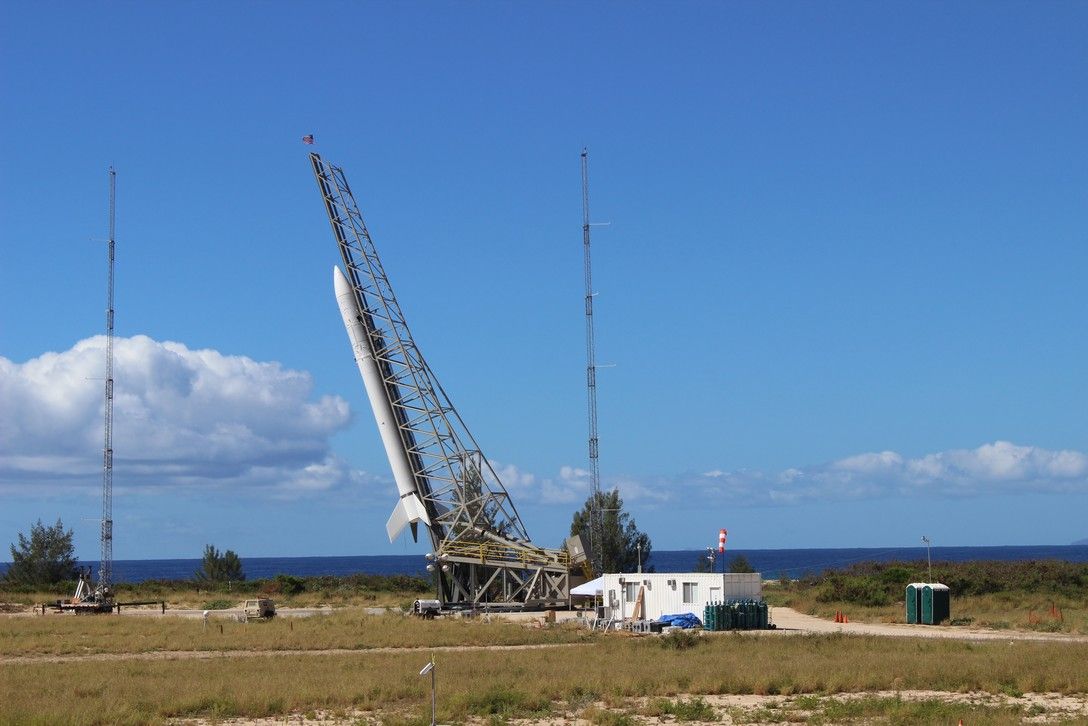
The United States Air Force's Super Strypi rocket failed during its inaugural launch on November 3, 2015, from the Pacific Missile Range Facility at Barking Sands, Kauai, Hawaii. The rail-launched vehicle lifted off around 9:45 p.m. local time but spun out of control and crashed less than a minute into flight, destroying all 13 small satellites aboard. A problem with the first stage motor likely caused the failure.
The rocket carried the ORS-4 satellite, also called HiakaSat, built by engineers at the University of Hawaii to capture Earth imagery and monitor the environment. Eight cubesats aboard supported NASA's Edison Demonstration of Smallsat Networks mission. Four additional cubesats from universities served as secondary payloads.
Super Strypi was designed as a modern three-stage successor to the 1960s Strypi sounding rocket. Powered by Aerojet Rocketdyne solid rocket motors, it could launch small payloads up to 300 kilograms into orbit for approximately $15 million per mission. The Air Force intended it to provide rapid-response launch capability for national security needs.
The program never recovered from the failure. Neither the Air Force nor Space Force attempted another Super Strypi launch. The Space Force instead turned to commercial providers for quick-turnaround launch support.