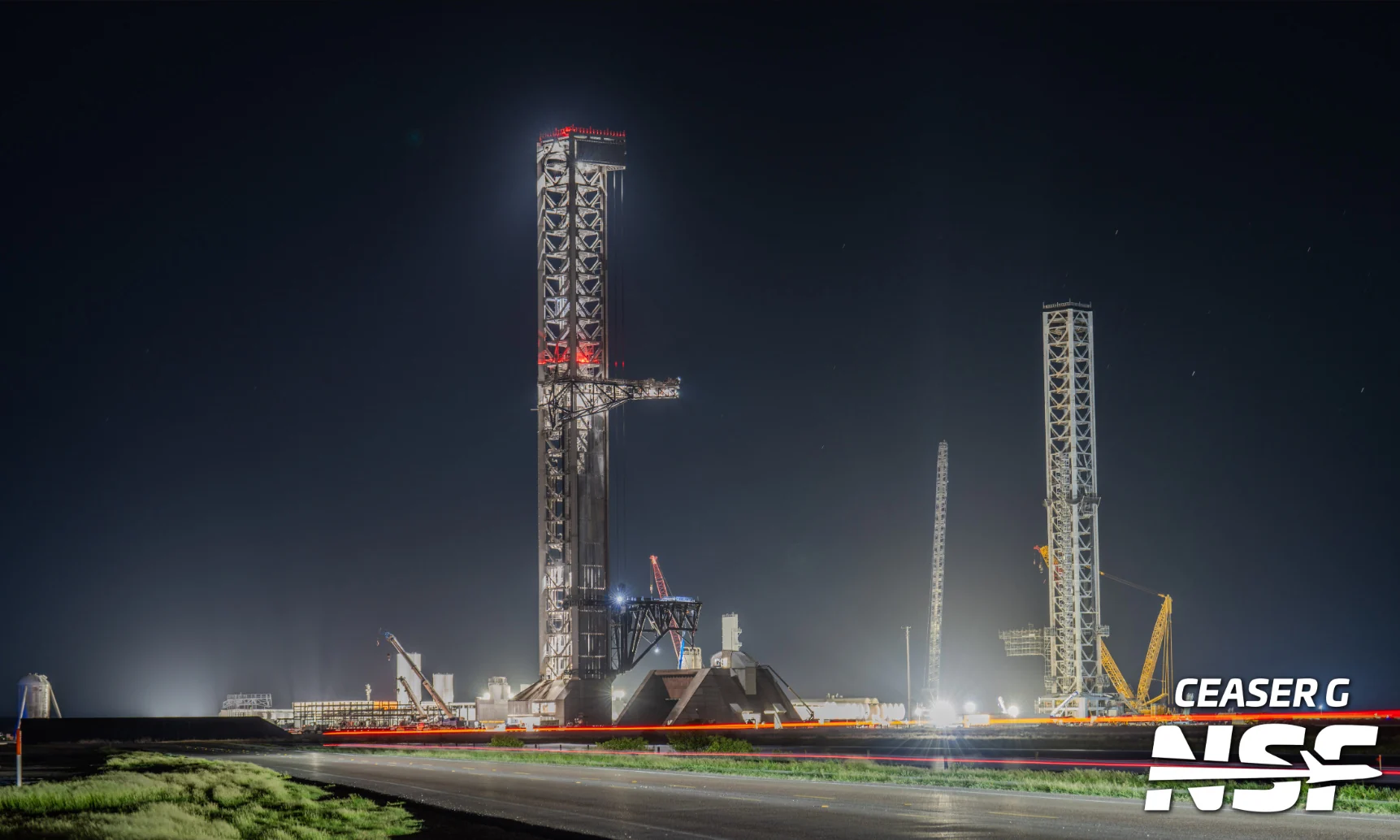
SpaceX is preparing Booster 22 and Ship 42 for Starship Flight 15, targeting a no-earlier-than launch of November 13. Both stages completed full-duration static fires and are in final checkouts at Starbase.
The flight would attempt to catch both the Super Heavy booster and the Ship at Pad 2. No Ship has yet been caught. It would also mark the first Block 3 booster catch and the first catch at Pad 2.
The FAA must approve a licence modification before the dual-catch profile can fly as planned. The open question involves permission for Ship 42 to return to the tower via an overflight of populated areas. SpaceX has not yet received that approval.
Ship 42 is scheduled for Flight Termination System charge installation and Starlink satellite loading. The working plan targets a mission of roughly 24 hours, allowing Ship 42's orbit to realign with a re-entry corridor back to Starbase. Controllers would keep early-return points available if they lack confidence in safe deorbit capability.
If Ship 42 completes the full day-long profile, it would complete about 15 to 16 orbits, making it by far the longest Starship mission yet. Flight 14 lasted just over three hours. That extended duration would deliver data on propellant boil-off rates and sustained performance in space, both relevant to the ship-to-ship propellant-transfer demonstration that NASA's latest milestone chart places in the first quarter of 2027.
Booster 23 and Ship 43 are being prepared for Flight 16, which is expected to launch from Kennedy Space Center's Launch Complex 39A. Ship 43 has finished cryogenic proof and catch-related testing and is receiving engines ahead of a static fire expected in December. That debut now looks more likely early in 2027 than before year-end.