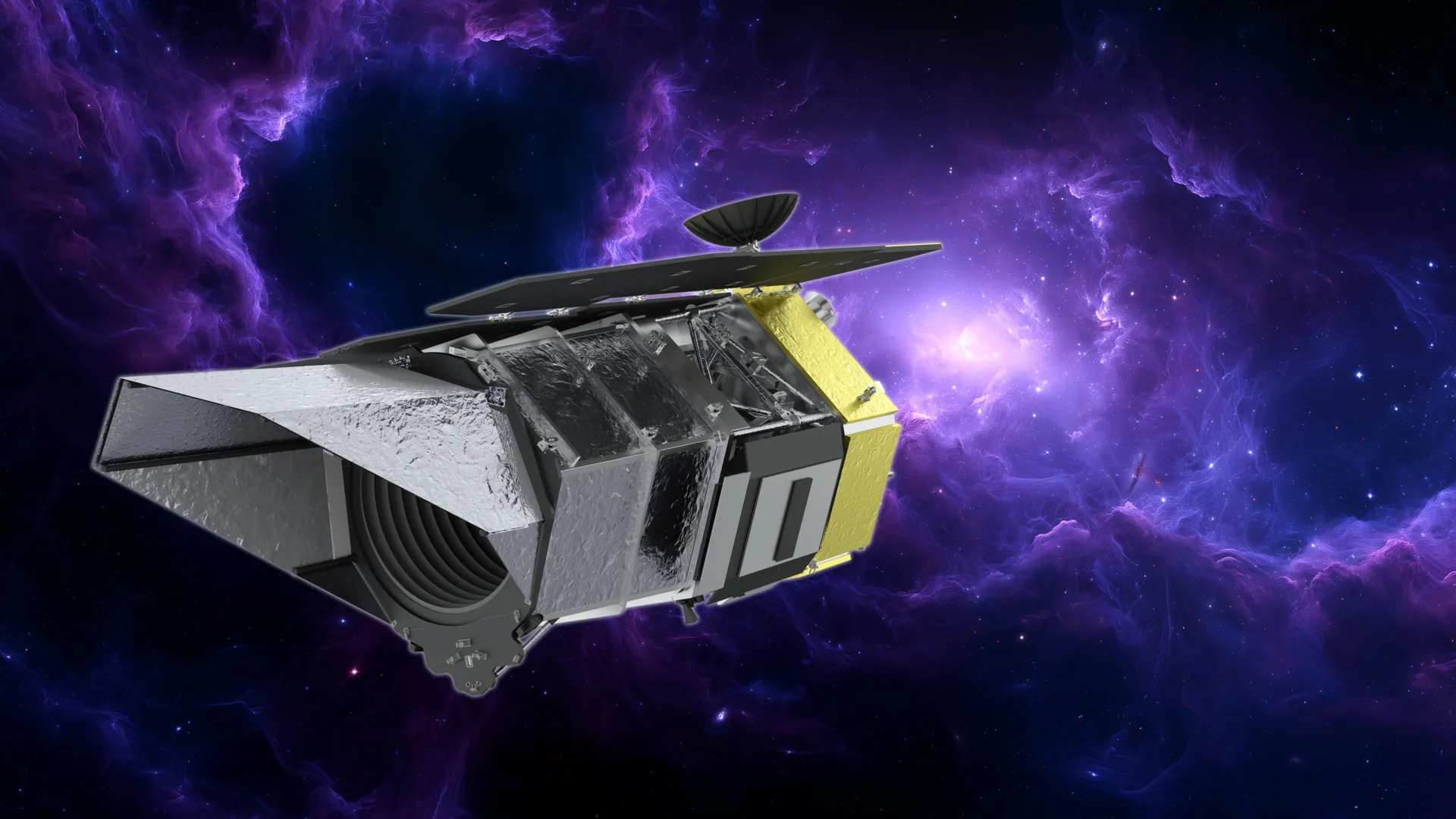
NASA's Nancy Grace Roman Space Telescope is performing nearly 30% better than predicted after engineers completed extensive testing and optical adjustments following the instrument's activation in September.
The Wide Field Instrument achieved an optical error of just 63 nanometers RMS, substantially better than the original requirement of approximately 90 nanometers RMS. This measurement describes how far incoming light deviates from a perfectly focused wavefront. At these dimensions, roughly 1,000 times thinner than a human hair, the improvement translates to sharper images across Roman's cosmic surveys.
Engineers tested each of the Wide Field Instrument's 18 detectors, the element wheel containing filters and optical components, the internal calibration system with its light-emitting diodes, the alignment mechanism, and the thermal control system. They also refined the telescope's overall optical alignment by moving its secondary mirror by approximately one-sixteenth of the diameter of a human hair.
"All of Roman's sweeping surveys will rely on the Wide Field Instrument," said Dave Hickey, a Wide Field Instrument systems engineer at NASA's Goddard Space Flight Center. "Many of the mission's primary goals, like studying dark matter and dark energy, wouldn't be possible without it, so it's both exciting and a huge relief to see that it's working well!"
Roman launched on August 30. The Coronagraph Instrument, which had been producing slightly out-of-focus images, now meets performance expectations. Engineers will continue testing the coronagraph's ability to block unwanted light and refining its deformable mirrors, which change shape to make precise corrections to incoming light.