The James Webb Space Telescope now has a new method to detect exoplanets hidden in starlight, even when the telescope reaches its stability limits.
Astronomers led by Rodrigo Ferrer-Chavez at Northwestern University developed FLIP, Physics-based Learning for Imaging Planets, to overcome a fundamental problem in exoplanet detection. Coronagraphs on the JWST's NIRCam and MIRI instruments block starlight, but telescope instabilities from thermal fluctuations and mechanical vibrations limit how faint a planet can be and still detected. Even nanometer-scale shifts in mirrors can distort the pattern of light reaching the detector.
The standard method for decades has relied on observing reference stars and subtracting their light patterns from target observations. But switching between reference and target observations introduces new instabilities that hide dim planets.
FLIP replaces reference stars with a "digital twin" of the JWST itself. The model reproduces how light travels through the telescope down to the smallest details, including imperfections and distortions. Researchers matched this model to real observations, then subtracted the simulated starlight from actual data with unprecedented precision.
"Planets are a million times fainter than their stars," Ferrer-Chavez said. "So, to image exoplanets, we need to remove that glare. That is a very tricky problem because even the tiniest changes in the telescope can affect how that glare appears."
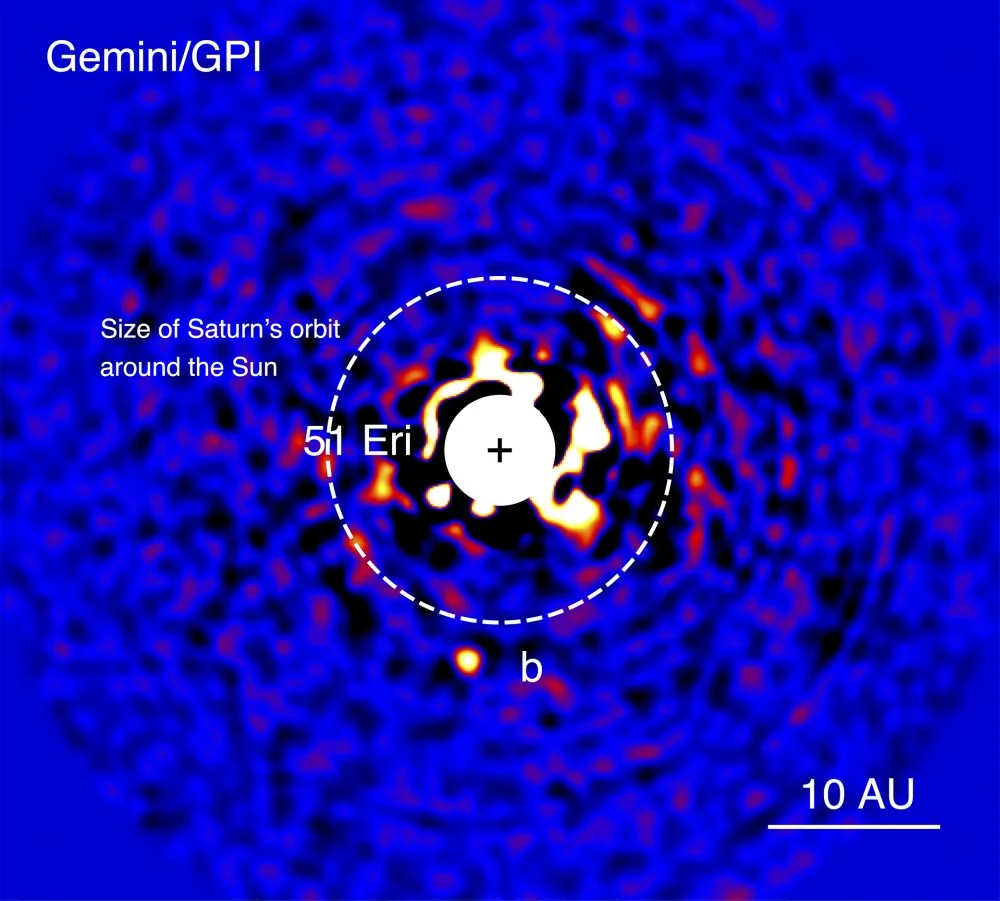
The team tested FLIP on 51 Eridani b, an exoplanet in the infrared wavelength where the JWST searches for carbon dioxide in atmospheres. Standard processing missed the planet. FLIP revealed it with a detection significance above 5 sigma.
Jason Wang, study co-author at Northwestern, noted that telescope builders face both known and unknown causes of instability. "There are known causes of instability and unknown causes. Small thermal changes could cause a mirror to expand or contract by a picometer. Telescopes like JWST have cryocoolers to keep the instrument super cold. Those coolers have little motors that can cause the mirrors to vibrate."
The research appears in Nature. Expanding the JWST's ability to directly image exoplanets opens the path toward imaging Earth-sized worlds with future observatories.