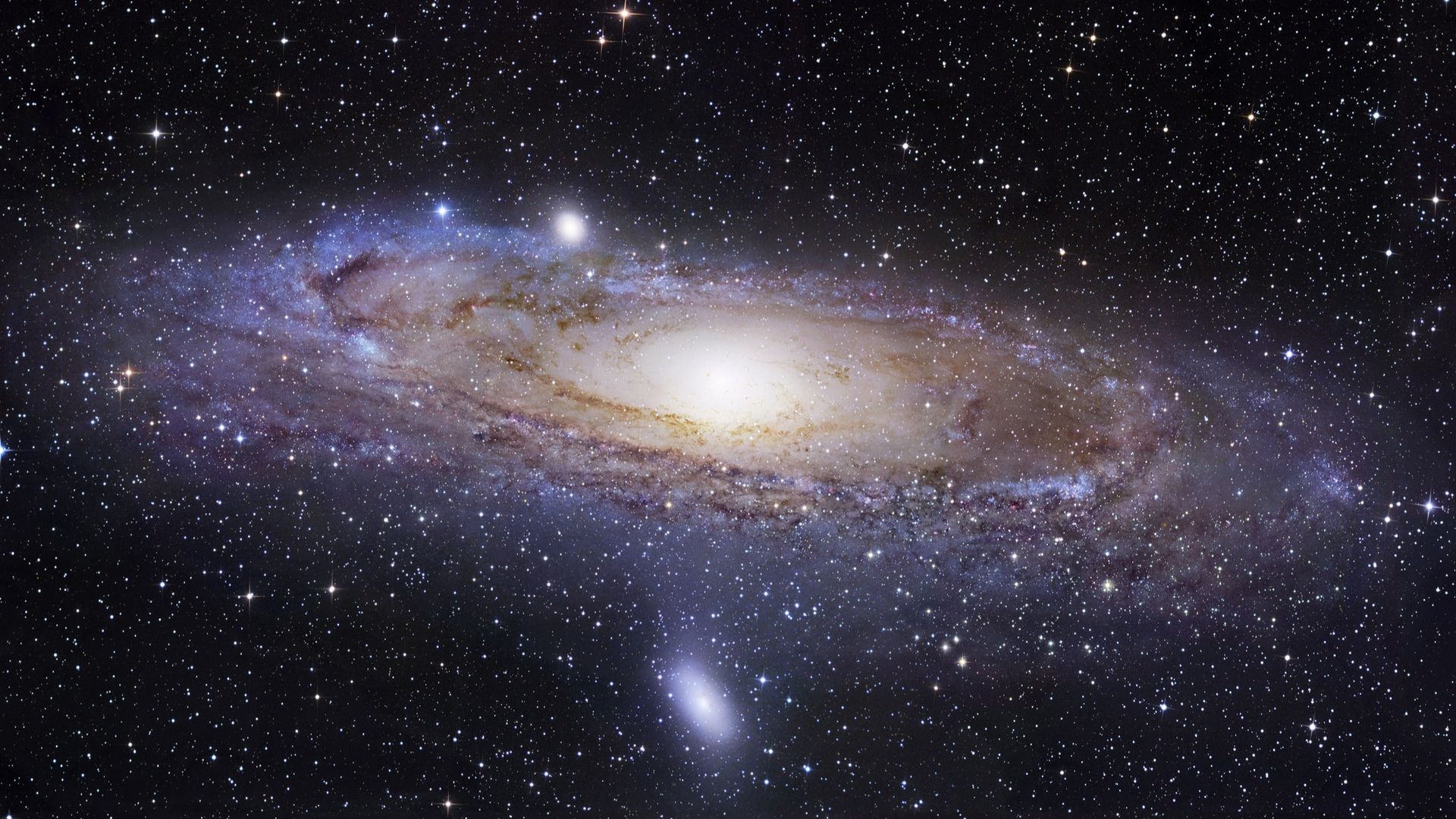
The Andromeda galaxy (M31) is visible to the naked eye from the Northern Hemisphere and can be located this week using star-hopping techniques. Early November is an optimal viewing period, with New Moon falling around November 9, providing several evenings with minimal moonlight interference.
To find M31, start with Alpheratz, a corner star of the Great Square of Pegasus, then move two stars left and two stars up. Alternatively, use the W-shaped constellation Cassiopeia as a guide, with its second V-shape pointing directly at M31. The galaxy appears as a faint, elongated patch with a brighter center rather than the spiral structure visible in photographs. Its full apparent extent spans several times the width of the full moon, though only the central region is typically visible to the eye.
M31 lies approximately 2.5 million light-years away. The Triangulum Galaxy (M33), at 2.7 million light-years distant, is technically the most distant object visible to the naked eye, though M31 presents a more realistic observing target.
Using binoculars, particularly 10x50 models, makes the galaxy's central region more obvious without requiring advanced equipment. A technique called averted vision, looking slightly beside rather than directly at the object, enhances detection of faint objects by engaging more light-sensitive portions of the retina.
The photons reaching your eye have traveled across space for roughly 2.5 million years. No screen or photograph is necessary to intercept this ancient light in your backyard.