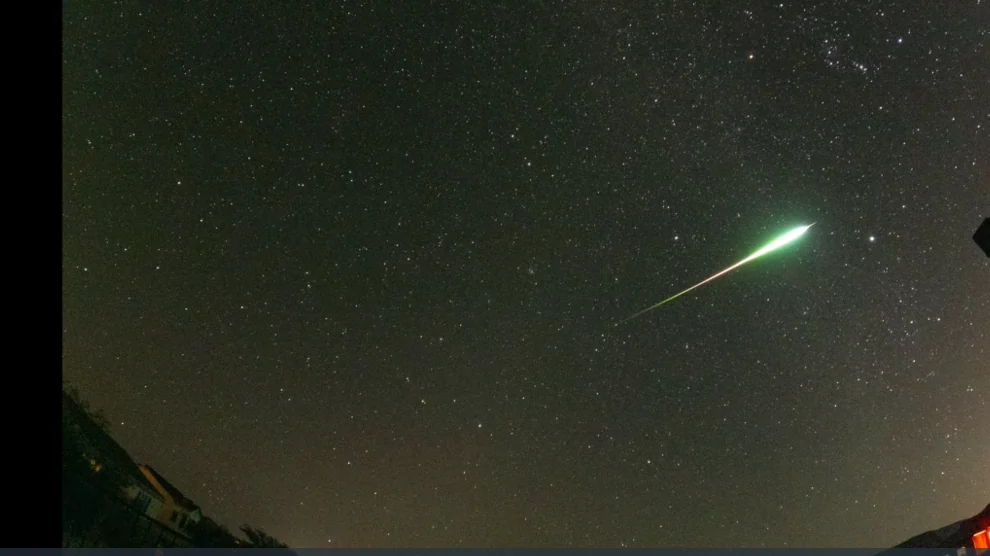
The Leonid meteor shower reaches its peak on November 17, 2026 at 3:00 Universal Time, with favorable viewing conditions for Europe at dawn and North America a few hours later. The Moon will be 41% illuminated and will set in the west as the shower's radiant rises in the east, reducing lunar interference.
The 2026 Leonids are projected to peak at about 20 meteors per hour. These meteors move exceptionally fast, approaching Earth nearly head-on with a combined velocity close to 70 kilometers per second, nearly the theoretical maximum for inner solar system meteors.
The shower originates from comet 55P/Tempel-Tuttle, which orbits the Sun every 33 years and will reach perihelion on May 20, 2031. The Leonid radiant lies in the "Sickle of Leo" asterism, tracking from the star Epsilon Leonis past the double star Algieba. Mars, Jupiter, the bright star Regulus, and the antihelion point will be nearby in 2026.
While 2026 is not expected to be a "storm year," the shower's true spectacle occurs once every three decades. The Leonid's great outbursts typically produce zenithal hourly rates exceeding 1,000 per hour. Historical records extend back to Arab annals from 902 AD. The Great Leonid Storm of 1833 sparked religious movements and helped shift scientific understanding of meteors from atmospheric phenomena to objects originating from space. On November 17, 1966, observed rates over the southwestern U.S. reached an estimated 160,000 per hour.
Current models suggest the next great storm year will occur in 2099, though respectable showers exceeding 100 per hour may occur in the early 2030s. Observers are encouraged to watch during early morning hours, when Earth hurls directly into the incoming meteor stream, and to report counts to the International Meteor Organization.