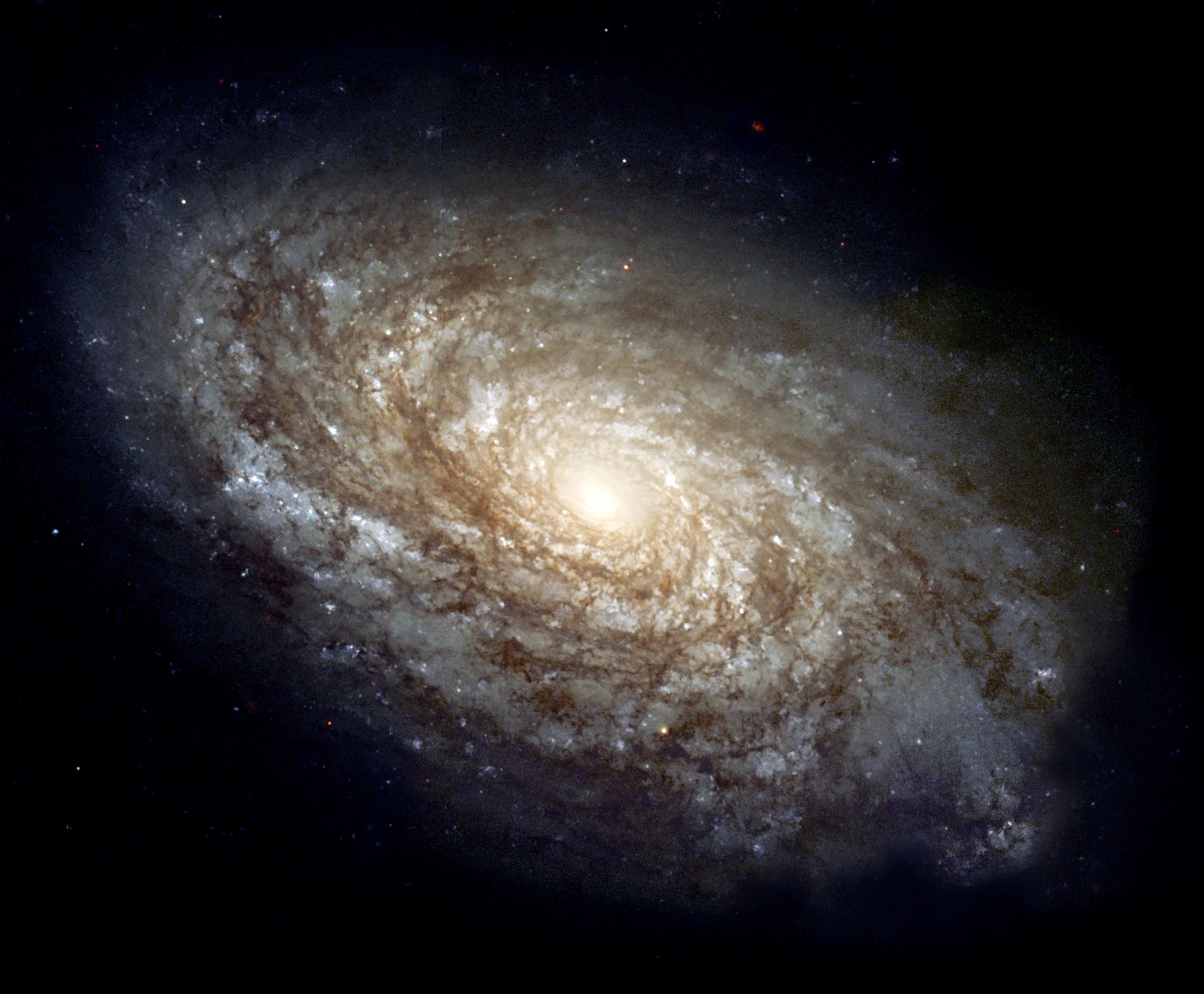
NASA's James Webb Space Telescope has observed that massive galaxies release large-scale gaseous outflows that suppress star formation, according to a new paper in Astrophysics and Space Science.
The outflows, powered by supernovae or energetic bursts from supermassive black holes at galactic centers, remove gas that would otherwise collapse and form new stars. JWST measurements reveal these outflows are more abundant and more powerful than previously thought.
The observations focus on "Cosmic Noon," roughly 8 to 12 billion years ago, when star formation across the universe peaked. Rebecca Davies, lead author and astrophysicist at Swinburne University of Technology in Melbourne, explained that growing supermassive black holes drive powerful winds that blow away star-forming gas. "With JWST, we can measure the amount of cold star-forming gas being ejected," Davies said.
Quenching, the shutdown of star formation, occurs when outflows remove gas from galaxies or heat it so intensely that it cannot collapse into dense clouds. Sirio Belli, associate professor at the University of Bologna and co-author, noted the implications for habitable systems. "If the Milky Way had been quenched at Cosmic Noon, it would likely not have formed many new stars in the last 10 billion years, and our solar system which is only 5 billion years old would not exist today," he said.
Davies identified possible triggers for the most powerful quenching outflows as galaxy mergers or radio jets launched by supermassive black holes. However, most outflows at Cosmic Noon maintain galaxies in equilibrium rather than causing complete quenching, preventing them from converting all their gas into stars too rapidly.