When NASA launched the Advanced Mid-Power Electric Rocket (AMPERE) Challenge, it did something remarkably smart: it recognized that the best way to accelerate breakthrough technology isn't always to build it yourself. By offering $500,000 split between two winning U.S. companies and opening access to its facilities and expertise at no cost, NASA has created a competition structure that could genuinely transform the commercial space sector. This is how you catalyze innovation in an era when government budgets are stretched thin.
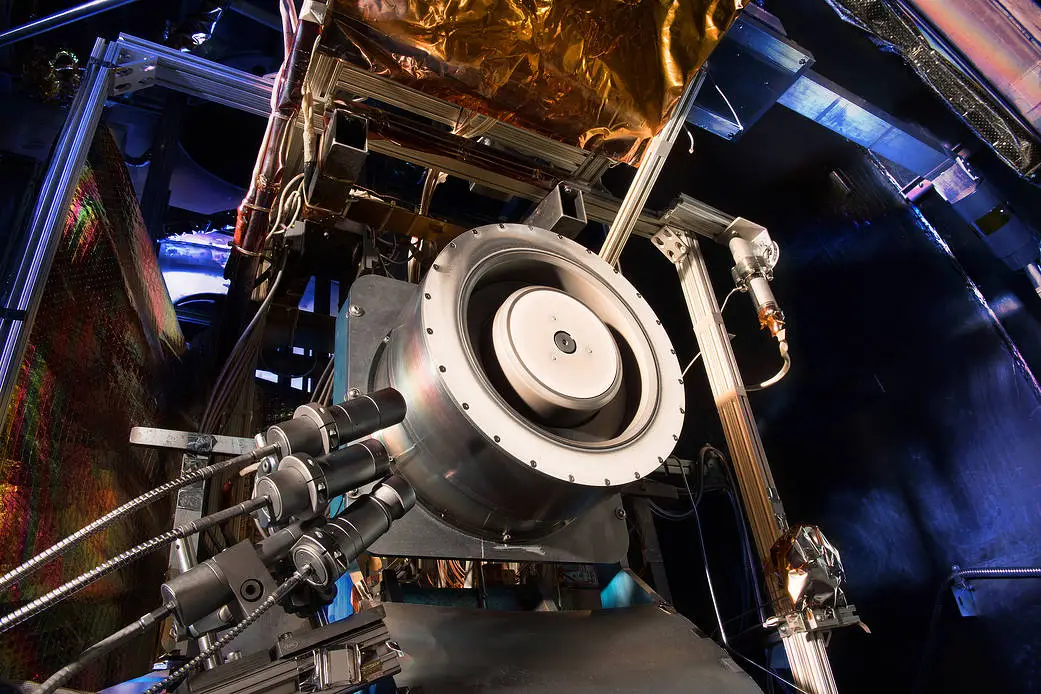
Hall effect thrusters represent exactly the kind of foundational technology that the space industry needs but hasn't yet perfected at mid-power scales. These systems use electric fields to accelerate propellant gas, delivering efficient thrust for long-duration missions that power satellites and deep space robotic vehicles. The technology works—we know this. What's missing is the commercialization pathway and the manufacturing maturity to make mid-power systems reliable and cost-effective. NASA identified this gap and responded appropriately.
What makes the AMPERE Challenge particularly compelling is Dr. Jason Frieman's statement from NASA's Glenn Research Center: the agency is explicitly trying to 'remove key barriers and facilitate commercialization by providing access to NASA subject matter expertise, state-of-the-art technologies, and world-class facilities at no cost to challenge winners.' This approach acknowledges an uncomfortable truth—American companies often have brilliant engineers but lack access to the specialized knowledge and testing infrastructure that only government agencies possess. By democratizing that access through competition, NASA is leveling a playing field that desperately needs leveling.
The three-phase structure also deserves credit. Phase 1 demands rigorous concept design and manufacturing plans before anyone receives funding. Phase 2 winners get up to $250,000 each plus collaboration with NASA personnel and no-cost licensing to NASA-developed Hall effect thruster technologies using krypton propellant. Phase 3 provides free prototype testing at NASA Glenn. This isn't handholding—it's strategic support that keeps winners accountable while removing unnecessary obstacles.
The AMPERE Challenge represents the first entry in NASA's Tech Maturation Prize series, which aims to accelerate development of breakthrough technologies while strengthening the U.S. space economy. Registration remains open until January 27, 2027, at 5 p.m. EST, administered through Yet2 and managed by NASA Glenn and the Jet Propulsion Laboratory in Southern California. For companies serious about mid-power electric propulsion, this opportunity should be impossible to ignore.
In a landscape where commercial space companies and government agencies often operate in separate orbits, this challenge proves they can still work together productively. NASA isn't trying to corner the market on thruster technology—it's trying to build one. That's exactly the mindset our space economy needs.