NASA awarded $171 million in seed funding to 302 small business projects through its Small Business Innovation Research and Small Business Technology Transfer program. The Phase I contracts provide up to $225,000 each to test feasibility of proposed innovations, while 98 Phase II awards offer up to $1.3 million each to continue earlier work and demonstrate technologies.
The funded projects address technology needs for Moon and Mars exploration. Opterus Research and Development received a Phase II award to develop modular rollable solar arrays that work in dusty surface conditions and can scale to 50 kilowatts, providing power for lunar infrastructure. Intelligent Fiber Optic Systems Corporation earned a Phase I award for a 10-foot extendable robotic arm with vision and touch sensors that can perform complex tasks autonomously on the Moon, such as cleaning solar panels or collecting scientific samples. The arm has potential Earth applications for inspecting power lines and nuclear reactors.
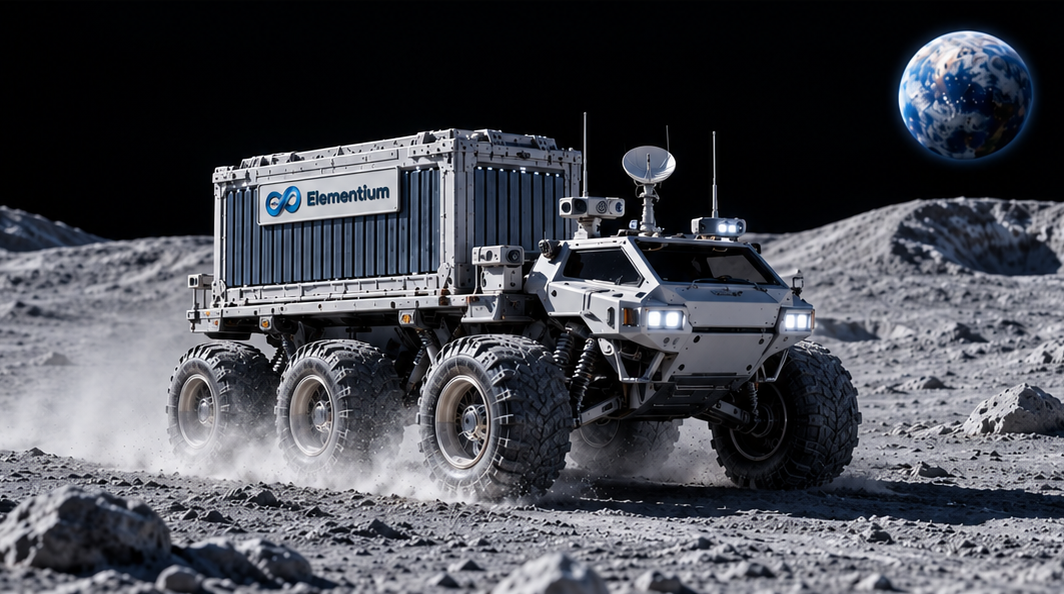
Elementium Materials Inc. secured Phase I funding to develop an ultra-cold-tolerant battery module capable of operating at minus 76 degrees Fahrenheit without active heating. This technology could sustain rovers and habitats through the 14-day lunar night and potentially on Mars, freeing up launch mass for additional scientific instruments.
A collaboration between Slate Geotechnical Consultants and the Colorado School of Mines received an STTR Phase I award to evaluate methods for preparing lunar regolith to support repeated landings with sturdy, reusable landing pads. The project will also investigate how rovers can repair and maintain these pads. Without prepared surfaces, rocket exhaust can blast loose regolith and create craters that damage spacecraft and nearby infrastructure.