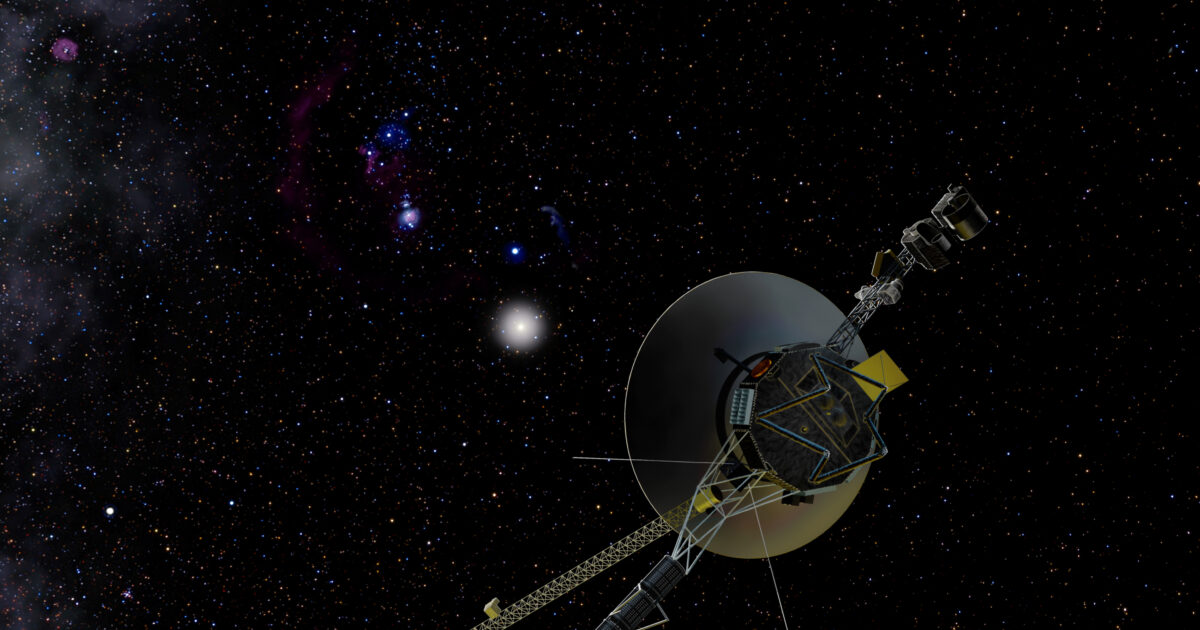
NASA's Voyager 1 probe has reached one light-day from Earth. The Planetary Society marked the milestone with new artwork by space artist Don Davis, depicting the view from Voyager 1's perspective. Voyager Project Scientist Linda Spilker discussed the mission's legacy on Planetary Radio.
SpaceX successfully caught the second stage of its Starship megarocket on November 14. After reaching orbit and deploying Starlink satellites, the booster returned to its launch tower and was caught by robotic arms.
Japan's Hayabusa2 probe has changed targets mid-flight. The Japan Aerospace Exploration Agency announced the spacecraft will now fly by asteroid 2015 BM510 in 2028 instead of 1998 KY26 in 2030. The decision came because Hayabusa2 has experienced faster-than-anticipated deterioration of its propulsion system. The probe is in its extended mission after successfully returning samples from asteroid Ryugu.
China's National Space Administration has solicited proposals for instruments on its Tianwen-4 probe, slated for launch around 2030. The mission includes a lander targeting Callisto, a moon of Jupiter. The lander would carry instruments to measure Callisto's magnetic field and analyze its surface chemistry.
Members of the U.S. Congress proposed a bill to increase NASA's science budget. The Senate Appropriations Committee released the proposal, which calls for the first increase in NASA science funding in nearly five years. If passed, the bill would reject proposed mission cancellations, direct NASA to draft announcements for new science mission opportunities, and fund both the Uranus Orbiter & Probe and the Habitable Worlds Observatory.