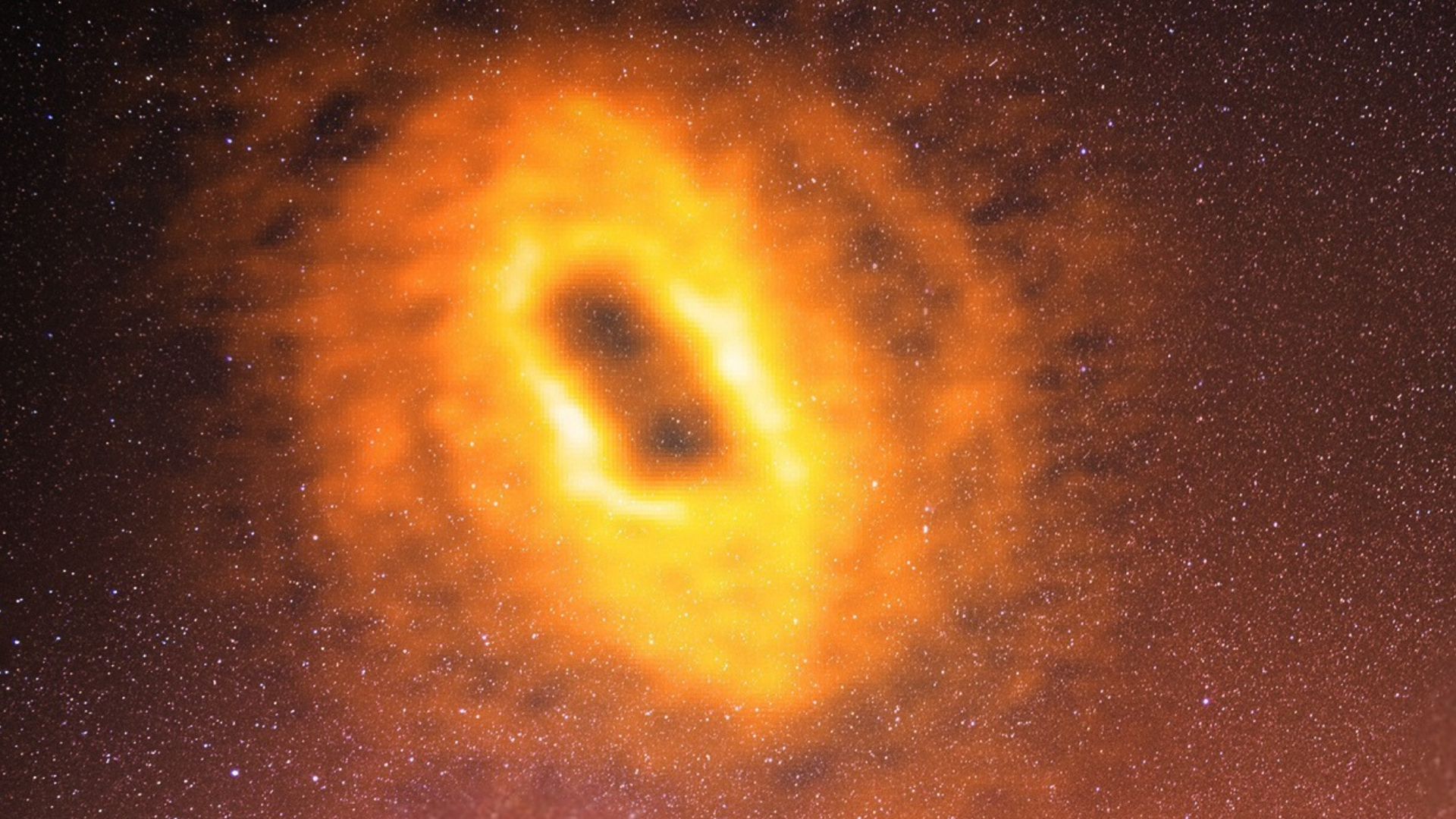
Researchers using the Atacama Large Millimeter/submillimeter Array (ALMA) in northern Chile have detected the first direct evidence of a dying star's final thermal pulse, the last violent outburst of nuclear fusion before a sun-like star transforms into a planetary nebula.
The observations focused on IRAS 06530-0213, located 12,000 light-years away in the constellation Monoceros. ALMA revealed a giant ring of molecular gas around an hourglass-shaped nebula forming in real time. NASA JPL researcher Raghvendra Sahai, who led the study, described the finding as "a physical snapshot of an event that, until now, we've mostly inferred from theoretical models. We've caught, for the first time, a star's final nuclear heartbeat, frozen in gas."
The gas shell extends roughly half a light-year wide and was ejected into space approximately 6,500 years ago. The team determined that for about 2,000 years after the thermal pulse, the star shed mass at a lower rate, then increased sharply over the following 1,000 years, creating a lumpy shell of gas with spiral-shaped filaments. The hourglass-shaped nebula began forming around 700 years ago.
The observations revealed unexpected chemistry around the dying star. ALMA detected an unexpected abundance of heavy isotopes of carbon, oxygen, and nitrogen, which does not conform to existing models of stellar element production. The team also failed to detect a companion star disk that prior research suggested should be present, challenging prevailing explanations for how dying stars develop their distinctive bipolar shapes.
Sahai stated, "IRAS 06530 shows that the story is more complicated than the tidy explanation we've been using."
The research was published in The Astrophysical Journal on November 20.