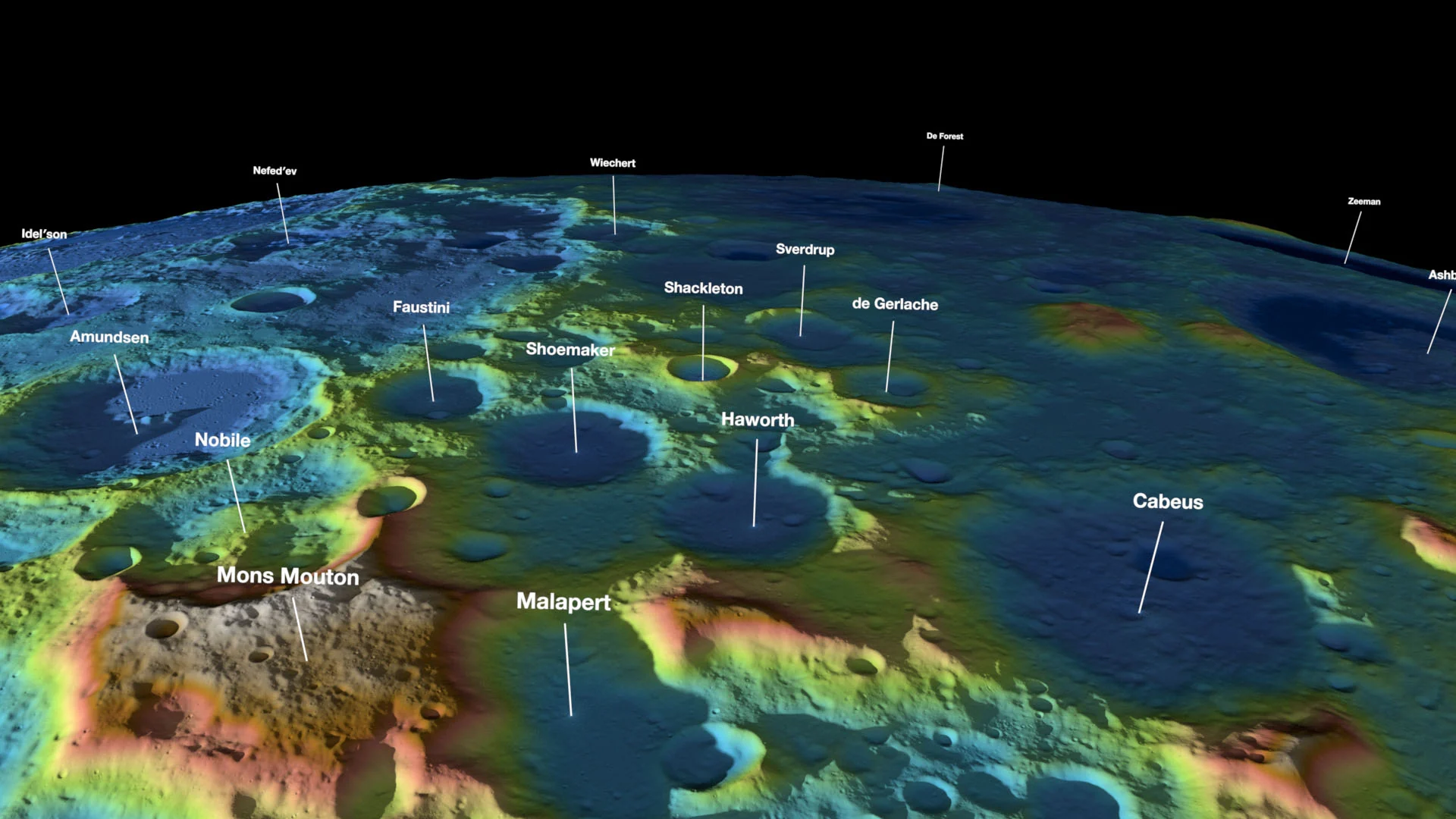
China's Chang'e-6 mission returned samples from the South Pole-Aitken basin, the Moon's largest impact crater. A new paper in Science Advances analyzed those samples alongside data from the Chang'e-4 lander and rover to reconstruct the geological history of major impacts that formed the basin.
The South Pole-Aitken basin sits on the Moon's far side, which never faces Earth directly. It ranks among the Moon's oldest, largest, and deepest impact craters. Until the Chang'e missions, scientists could only observe it from lunar orbit.
The combined dataset from Chang'e-6 samples and Chang'e-4 in-situ measurements revealed a violent chain reaction of impacts that built the basin. The findings also provide insights into dating other impact craters across the solar system.