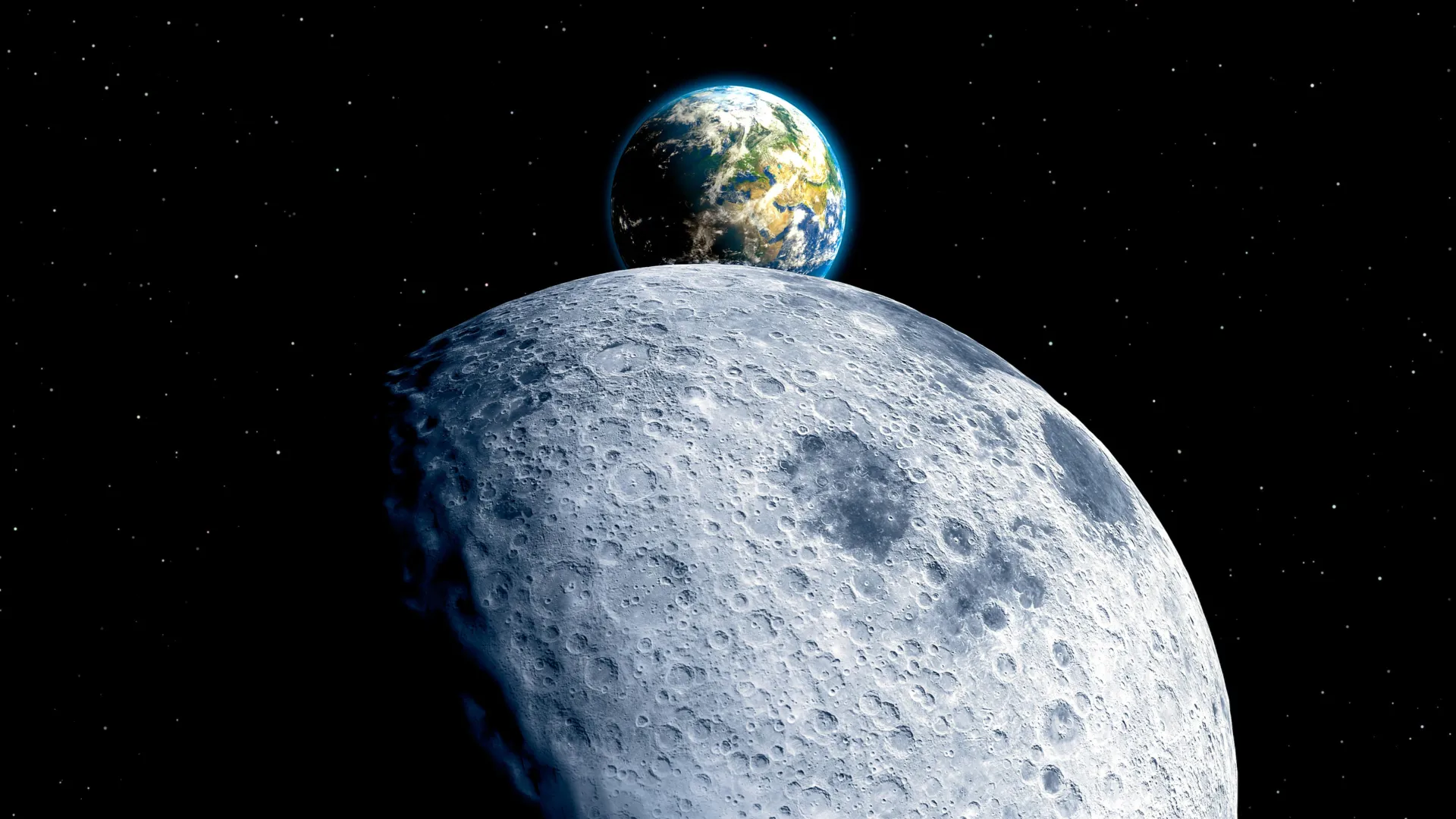
A research team led by Professor Hejiu Hui of Nanjing University analyzed lunar rocks from China's Chang'e-6 mission to investigate why the Moon's near and far sides differ so dramatically. The near side features dark volcanic plains and high concentrations of potassium, rare earth elements, and phosphorus (KREEP), while the far side displays ancient highlands with a thicker crust and few volcanic plains.
Samples from Chang'e-6 reveal a surprising uniformity in the Moon's mantle. Basalts and Mg-suite rocks from the far side show chemical signatures comparable to Apollo samples from the near side, indicating that mantle materials beneath both hemispheres share similar composition. However, the crust tells a different story. Far-side anorthosite samples contain more magnesium-rich material, and Mg-suite rocks from Chang'e-6 show extremely low rare earth element concentrations compared to Apollo samples.
The researchers propose that tidal heating from Earth shaped these differences. Early in lunar history, the Moon's magma ocean cooled uniformly. Once the Moon became tidally locked to Earth, gravitational forces generated more heat on the near side, triggering large-scale circulation within molten rock. Hot magma moved from the near side toward the far side, accumulating magnesium-rich crustal material and creating the far side's thicker crust. Meanwhile, late-stage materials enriched in KREEP and ilmenite-bearing cumulates concentrated on the near side.
This model connects the newly analyzed Chang'e-6 samples with the Moon's thermal history, offering an explanation for how a chemically similar mantle produced such different crustal compositions on each hemisphere.