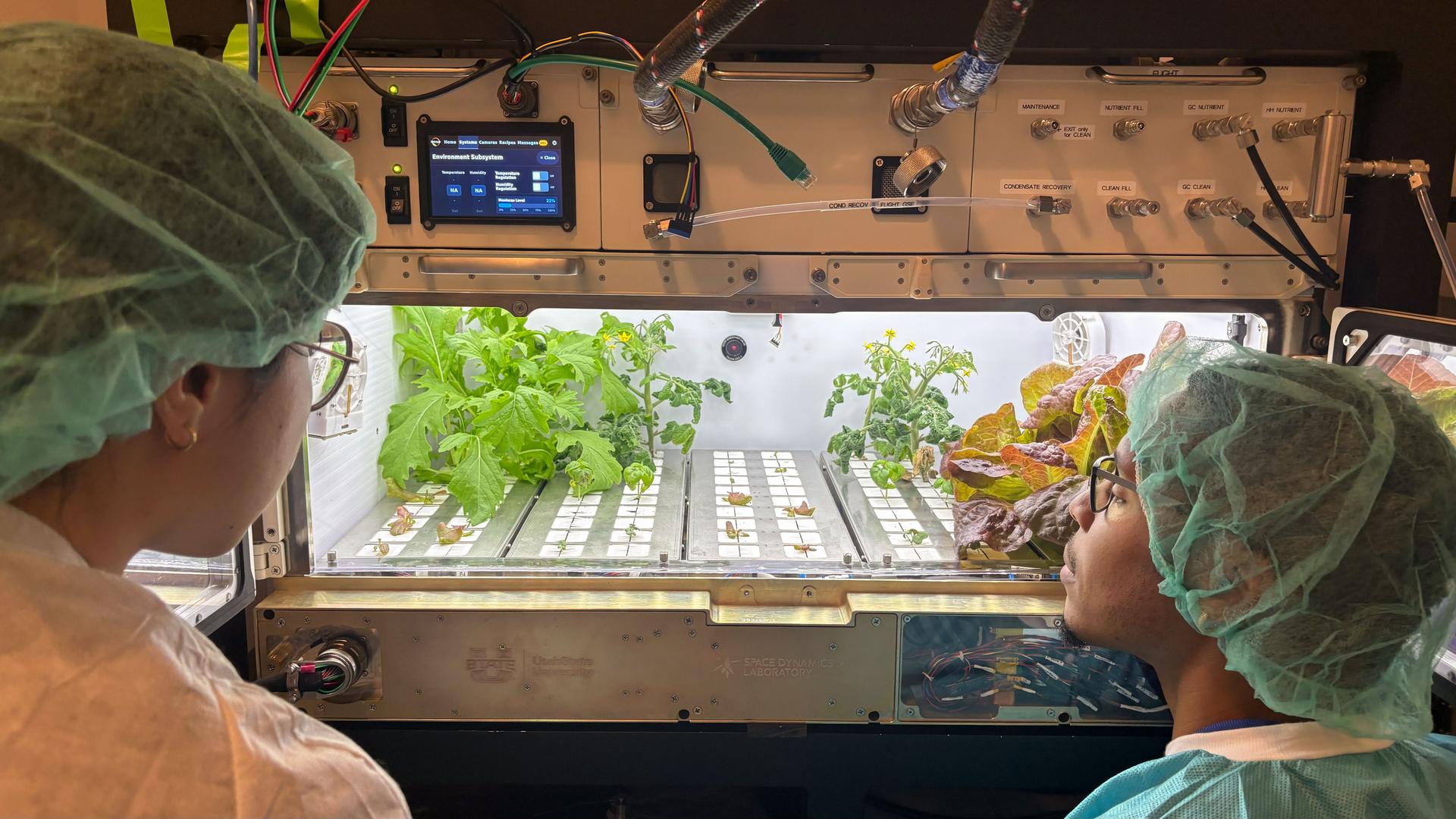
NASA's decision to send the Ohalo III growth chamber to the International Space Station aboard Northrop Grumman's 25th Commercial Resupply Services mission represents a critical inflection point for human space exploration. The agency has finally acknowledged what should have been obvious from the start: astronauts cannot eat promises. They need sustainable sources of food to travel farther and stay longer in space, and the experiments launching on NG-25 demonstrate that NASA is taking this necessity seriously at last.
The Ohalo III prototype is not merely another incremental research project. It is a first-of-its-kind space crops growth chamber designed to provide critical insights for developing safe, nutritious, and reliable crop production strategies for future Moon Base habitats and Mars missions. Researchers will validate the system's water delivery and volume optimization technology aboard the space station—work that must succeed if humanity intends to establish permanent settlements beyond Earth. This is not theoretical anymore. This is preparation.
What makes this mission particularly noteworthy is its dual benefit structure. Yes, knowledge gained from the space crop production system will help NASA understand how to feed astronauts on the Moon and Mars. But the investigation also could help inform agricultural practices such as vertical farming and indoor growing systems here on Earth. As populations grow and arable land shrinks, the technologies developed to grow food in the hostile environment of space may prove invaluable to billions of people facing food security challenges. NASA's Biological and Physical Sciences Division understands this: scientific discovery and exploration enable each other.
Alongside the crops research, NG-25 carries a precision health investigation that represents the next step toward enabling long-duration studies of human brain tissues in space. Building on a previous investigation that sent lab-grown models of the human brain called miBrains to the space station, researchers will validate a miniature fluid-handling system designed to mix, deliver, and maintain the nutrient-rich liquid needed to keep tissues alive. Potential neurological risks associated with spaceflight could be identified, and strategies to protect astronaut health could be developed. These experiments demonstrate that space exploration cannot be separated from human health research.
The NG-25 mission encapsulates what space science should be: ambitious, practical, and mutually beneficial. By studying biological and physical phenomena under extreme conditions, researchers advance the fundamental scientific knowledge required to go farther and stay longer in space while simultaneously benefitting life on Earth. NASA has set the course. Now the agency must maintain momentum and ensure that subsequent missions build on these foundations with the same urgency and vision.