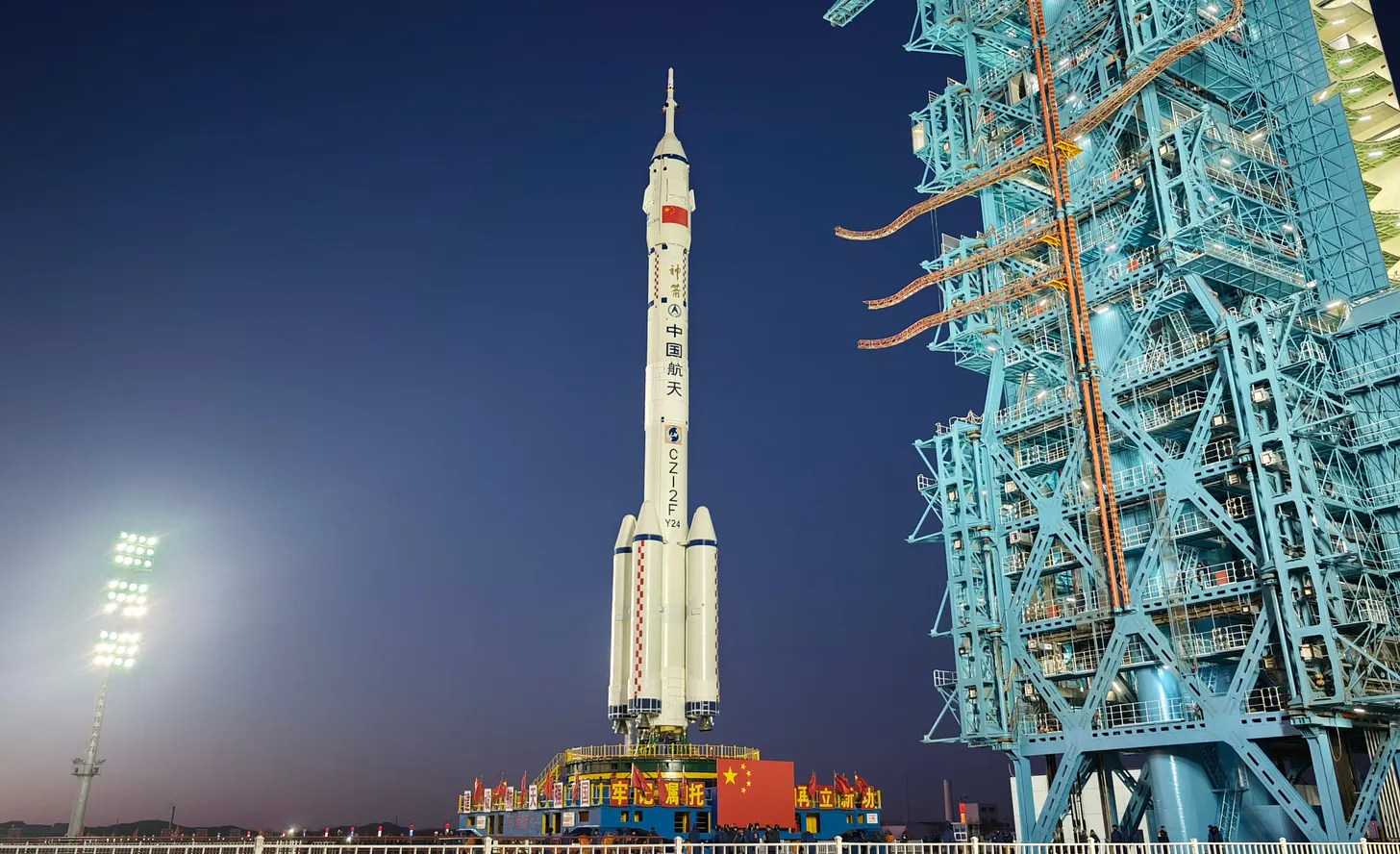
Muhammad Zeeshan Ali's journey to the Tiangong space station aboard Shenzhou-24, which launched on November 25 at 00:18 UTC, represents far more than a symbolic gesture timed to commemorate 75 years of Sino-Pakistani diplomatic relations. It marks a fundamental shift in how spacefaring nations access orbit—and raises important questions about what this new accessibility means for the balance of power in space exploration.
For decades, the United States and Russia maintained near-monopolies on crewed spaceflight, with occasional participation from allied nations through carefully controlled arrangements. Now China has demonstrated it can rapidly train international astronauts and integrate them into operational station missions. The fact that Ali and his backup Khurram Daud began training in April at the China Astronaut Research and Training Center in Beijing following a February 2025 agreement shows how quickly these partnerships can materialize. Ali will serve as payload specialist for approximately a week, conducting Sino-Pakistani experiments in microgravity before returning aboard Shenzhou-23. This isn't a brief tourist visit—it's a working mission with scientific objectives.
The Shenzhou-24 mission itself demonstrates China's operational maturity. Commander Tang Hongbo will become the first astronaut to visit Tiangong three times, following his previous assignments on Shenzhou-12 and Shenzhou-17 after his selection in September 2020. Meanwhile, Shenzhou-23 Commander Zhu Yangzhu will stay on for a further six months and become China's first astronaut to spend a year in orbit in a single visit. This is the eighth mission of the station's 'application and development' phase and China's 18th crewed spaceflight—numbers that speak to an increasingly confident and capable program.
The mission also highlights China's investment in infrastructure and reliability. The launch site underwent comprehensive preparation, including replacement of the UDMH propellant loading pump after more than 20 years of service and installation of 19 voltage stabilization units. This attention to detail matters. It was only a year ago, to the day, that Shenzhou-22 launched uncrewed as an emergency response after a suspected debris strike created a crack in the Shenzhou-20 return capsule's window. That the system could respond with a backup vehicle on short notice, then incorporate those same vehicles into the regular flight schedule, demonstrates genuine operational resilience.
The implications warrant serious consideration from spacefaring nations worldwide. If China can train Pakistani astronauts, integrate them into station operations, and conduct joint experiments—all while maintaining rigorous technical standards—the door opens for expanded partnerships across Asia, Africa, and beyond. Western nations should recognize this not as a threat to dismiss, but as a competitive reality that demands investment in our own launch capabilities and international partnerships. The age of exclusive access to space is ending.