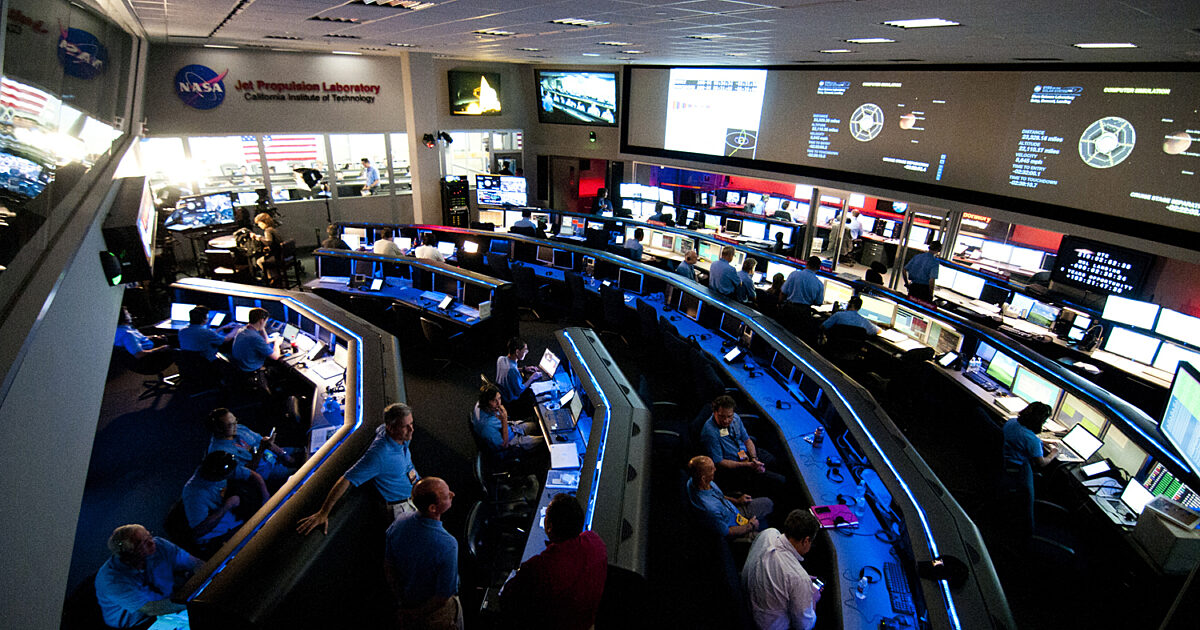
For the first time in its 90-year history, the Jet Propulsion Laboratory faces an uncertain future. On October 2026, NASA announced it would compete the contract to manage JPL, breaking with nine decades of automatic renewals under California Institute of Technology's stewardship. Texas A&M University has already submitted a bid, and potentially others will follow. This decision represents a fundamental shift in how NASA views one of its most productive and historically significant centers—and it threatens to unravel the unique institutional relationship that made JPL possible in the first place.
JPL's origins reveal why Caltech's management has been so enduring and effective. The laboratory emerged from Army support of Caltech graduate students launching rockets in the Arroyo Seco on Halloween 1936. As Peter Westwick, director of the Aerospace History Project at the Huntington-USC Institute on California and the West, explained in an interview that aired November 6, 2026, JPL was formally established in 1944 and grew under Army support through the Cold War before transferring to NASA. Crucially, JPL is not technically a NASA center but a federally funded research and development center—a distinction that has mattered enormously. Caltech's five-year contracts, renewed automatically until this year, allowed the institution to maintain long-term vision while remaining accountable to federal priorities.
The 90-year Caltech-JPL partnership succeeded precisely because it brought together a world-class academic institution with government objectives. Caltech had deliberately positioned itself as a center for aeronautics in the mid-1920s by hiring Theodore von Kármán and establishing GALCIT with Guggenheim Foundation funding. When Army leaders like General Hap Arnold learned that Caltech graduate students were experimenting with rockets, the institutional connection was natural and productive. This was not accident but alignment: an elite research university committed to excellence in technical fields, working with government agencies that valued rigorous science alongside practical applications.
Competitive bidding may sound like good governance, but it fundamentally misunderstands JPL's value. The laboratory's strength comes from decades of accumulated expertise, institutional relationships, and a culture that balances fundamental research with mission success. JPL transitioned from military rockets to planetary exploration not because it was forced to, but because Caltech cultivated both the intellectual capacity and the institutional flexibility to pivot when the Space Race demanded it. A management contract decided on cost or administrative criteria risks losing these intangible but essential qualities.
NASA should reconsider this competition. If the agency has concerns about JPL's management, those concerns should be addressed directly with Caltech through negotiation and performance metrics, not through a competitive bid process that treats JPL like any other contractor. The laboratory that sent rovers to Mars, probes to the outer planets, and helped define planetary science deserves stability and partners chosen for mission alignment, not the lowest bid.