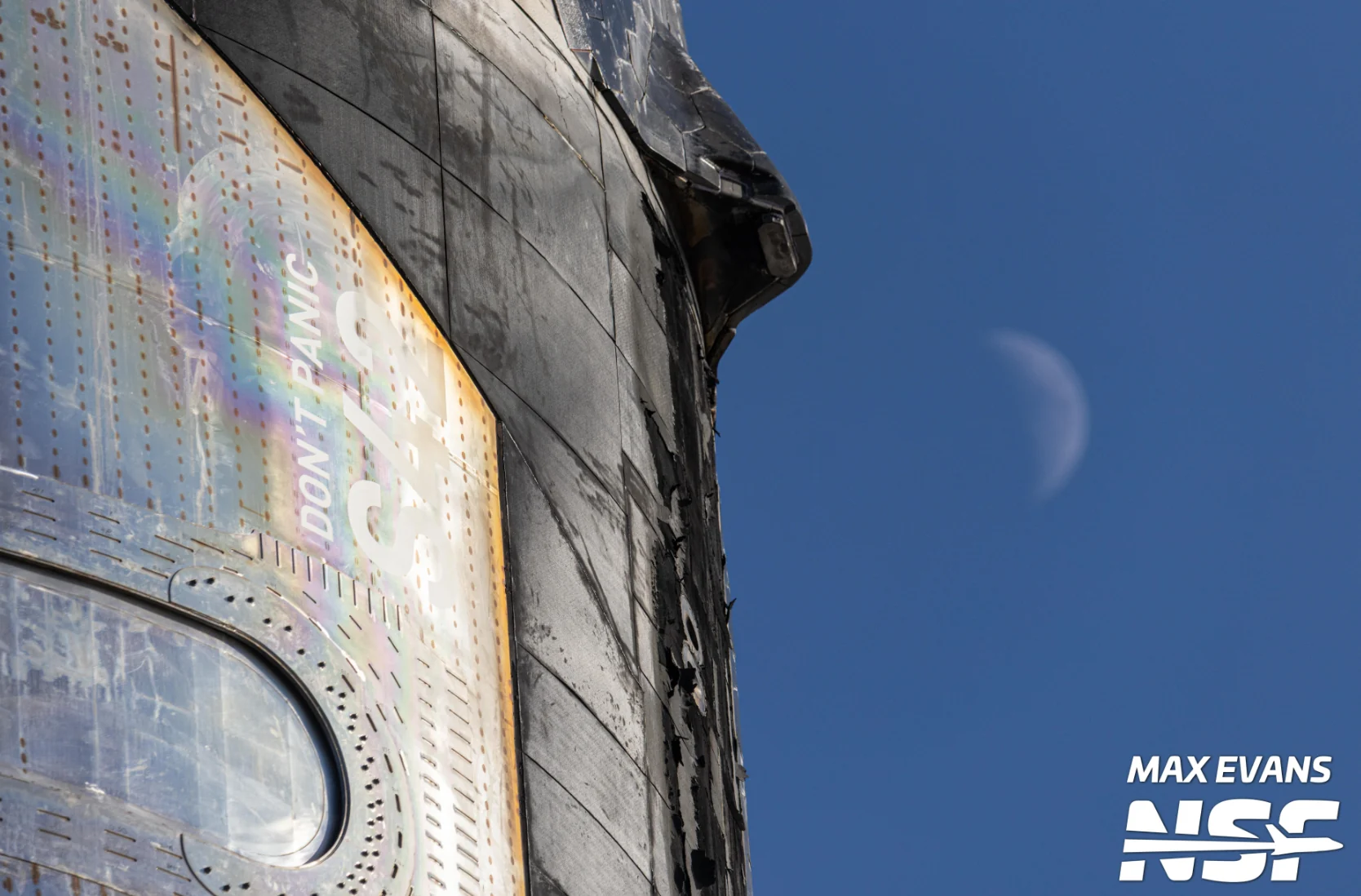
On Nov. 14, 2026, SpaceX achieved a monumental milestone when Ship 42 was caught by Pad 2's tower following a full orbital mission. This marks the first time in spaceflight history that anyone has recovered both stages of a rocket throughout its lifespan. It's an achievement worthy of celebration—but SpaceX's own statement on what comes next reveals the company still has critical work to do. According to the report, SpaceX will attempt this achievement on the same flight in the future, meaning the goal is not merely to catch one ship after going to orbit, but to catch both the booster and ship on every mission. That's an entirely different challenge.
The loss of Booster 22 on Nov. 13 at 4:47:36 pm CST underscores this point. After performing flawlessly during ascent with all 33 engines running until most engines cut off (MECO), and after a clean stage separation, Booster 22 performed a 32-engine boostback burn heading toward Pad 2. Yet late in its glide back, the booster called an automated offshore divert and completed its landing burn only two miles offshore before the Flight Termination System was initiated, destroying the vehicle. SpaceX CEO Elon Musk initially suggested the booster's Raptor engines may have underperformed during ascent or boostback, causing it to run out of propellant. However, Musk later tempered that conclusion, noting that "initial conclusions are often wrong to some degree. Full review of the flight telemetry is needed for high probability final conclusions."
While Musk said Booster 22 was already an older model and its loss shouldn't cause major delays for the program overall, the incident exposes a vulnerability in SpaceX's reusability model. The company is currently proving it can build at least one booster a month, yet losing hardware still matters. Each booster represents months of manufacturing and integration work, and each loss is data that must be analyzed before flying the next vehicle.
Ship 42's performance offers a counterpoint. The ship completed a clean ascent burn, deployed all 26 Starlink V3 satellites at T+00:35:50, and after a nearly 20-hour coast in orbit, executed a flawless return and catch. Ship 42 did suffer one small issue—some damage to the aft skirt from hot staging and a single tile missing on the centerline of the heat shield—but these problems are manageable. SpaceX has identified a solution: a steel wool mesh that can handle reentry heat while remaining strong enough for fast turnarounds during catches.
What matters now is whether SpaceX can replicate Ship 42's success reliably. The report states that Ship 42 will likely be put on display alongside Booster 12, treated as a historic artifact rather than a workhorse. That's fitting for a trailblazer. But SpaceX cannot build a sustainable, economical space program on historic artifacts. The company must prove it can catch not just one ship and one booster, but many of each, repeatedly and reliably. The real milestone will come when capturing both stages becomes routine, not remarkable.