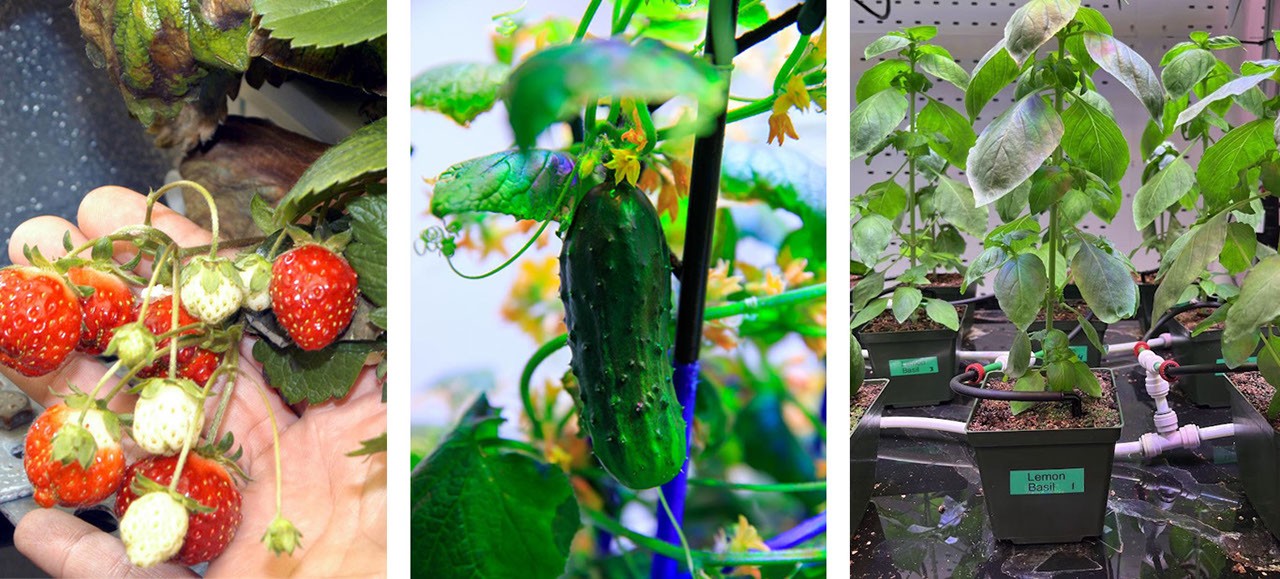
As NASA prepares for future missions to the Moon and Mars, the agency has identified something that goes far beyond keeping astronauts alive: keeping them sane and healthy through fresh food. Recent testing points to strawberries, cucumbers, and lemon basil as potential options for future explorers, and this week—as the nation celebrates Thanksgiving—it's worth acknowledging what this research truly represents. These crops aren't luxury items. They're essential infrastructure for human survival in deep space.
The science is compelling. Space crops can absorb carbon dioxide, produce oxygen, and recycle water—capabilities that become increasingly important as crewed missions extend farther from Earth. A new investigation from NASA's Biological and Physical Sciences Division is set to launch to the International Space Station, where the first-of-its-kind prototype growth chamber will provide critical insights for developing crop production systems for future Moon Base habitats and Mars missions. This isn't theoretical anymore. The testing is real and the results are promising.
Consider the strawberry trials. Researchers at NASA's Kennedy Space Center in Florida, working with NASA partners at The Australian Research Council Centre for Excellence in Plants for Space, tested a wild strawberry against NASA's leading candidate, 'Delizz.' According to a study published in September in the journal Life Sciences in Space Research, the wild strawberry produced twice as many buds, flowers, and fruit as Delizz when grown from seed. Yet NASA kept Delizz as its top pick because the wild strawberry grew too many runners that would consume valuable spacecraft room. This is the kind of practical decision-making that separates mission planning from fantasy.
Cucumbers could break new ground as the first crop from the gourd family grown in space. NASA-funded researchers recently evaluated cucumbers for their growth, yield, and nutrition under spaceflight conditions. According to a study published in August in the journal HortScience, while the plants showed some signs of enlarged leaves, they produced a steady stream of edible fruit. Meanwhile, lemon basil has passed its preliminary round of space crop testing at NASA Kennedy and successfully underwent seed sanitization, with next steps including assessment of its growth in plant pillows aboard the space station.
The psychological dimension matters as much as the nutritional one. Menu fatigue can quickly become a problem for astronauts, but fresh herbs like lemon basil help transform packaged meals into something new and satisfying, supporting human health and performance in space. Offering a variety of crops also increases plant biodiversity, which improves the likelihood of crop success on long-duration missions. NASA's Biological and Physical Sciences Division understands that going farther and staying longer in space requires more than engineering solutions. It requires growing gardens among the stars.