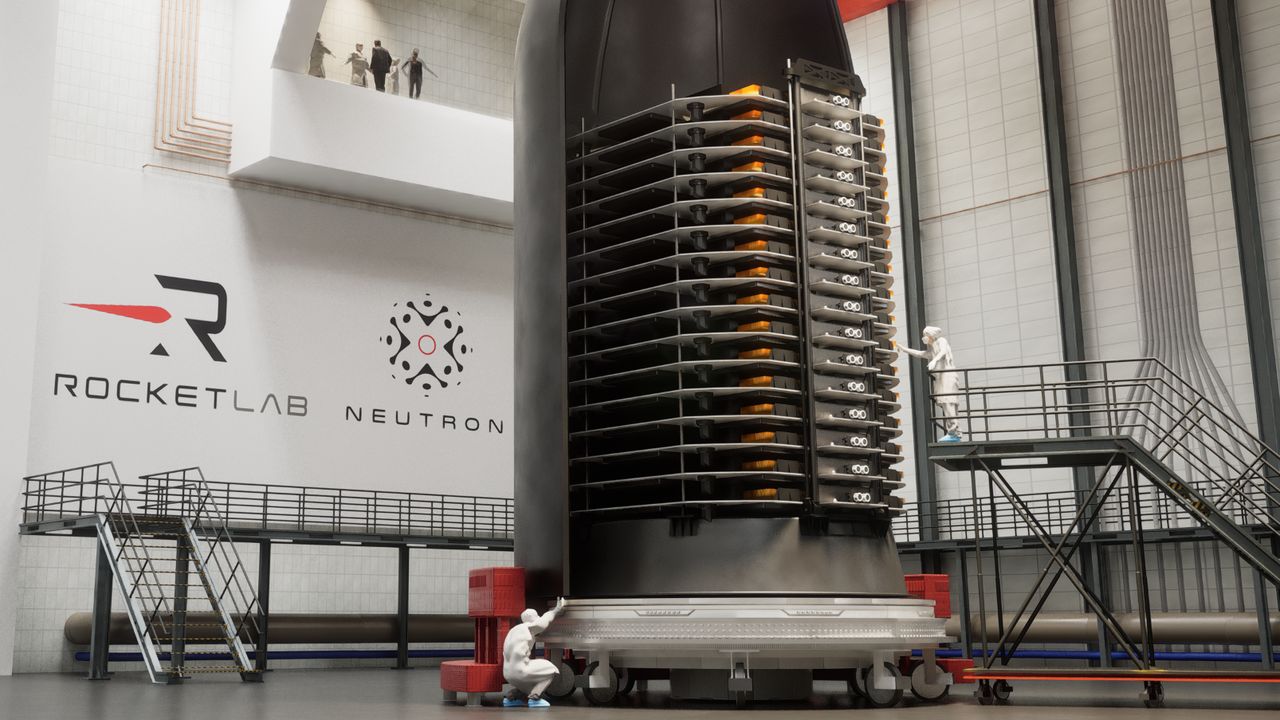
The U.S. Space Force awarded Rocket Lab a $397 million contract to manufacture a new constellation of small satellites designed to detect and track airborne threats from orbital vantage points. The peculiar "Flatellites" represent a shift in how the military approaches persistent surveillance and threat detection in increasingly contested airspace.
Rocket Lab, the commercial launch provider known for its Electron small-lift launch vehicle, will build these specialized spacecraft as part of the Space Force's broader effort to deploy distributed sensor networks in low Earth orbit. The term "Flatellites" derives from their compact, planar design, which differs radically from traditional cube-shaped satellites or larger intelligence-gathering platforms. This form factor allows manufacturers to pack more units per launch and reduces individual satellite costs while maintaining operational capability.
The contract underscores the Pentagon's pivot toward commercial aerospace partnerships for national security infrastructure. Rather than developing proprietary military systems entirely in-house, the Space Force increasingly taps established commercial providers like Rocket Lab to accelerate deployment timelines and leverage private sector innovation. Rocket Lab's track record launching small satellites regularly from its New Zealand launch site and its newly operational U.S. launch facility in Virginia makes the company a natural fit for rapid production schedules.
Threat detection from space operates on a different scale than traditional ground-based radar or fighter-interceptor networks. Satellites in low Earth orbit can observe large geographical areas continuously, spotting missile launches, aircraft movements, and other aerial activity across multiple regions simultaneously. Distributing dozens or hundreds of small sensors across multiple orbits creates redundancy and increases coverage reliability. A single satellite failure does not degrade the entire system's effectiveness.
The Space Force has invested heavily in what it calls "space superiority" architecture over the past five years. This includes the Space Domain Awareness program, which aims to track objects and threats in orbit and near-space environments. The Flatellites contract fits within this broader framework, extending situational awareness capabilities downward toward Earth's atmosphere and surface rather than focusing solely on orbital threats.
Rocket Lab faces significant manufacturing demands under this contract. The company must scale production substantially beyond its current capacity while maintaining quality standards for military-grade systems. The $397 million funding covers development, production, and initial deployment phases. Actual launch schedules and orbital deployment specifics remain classified or pending further announcement.
This award also reflects competitive pressure within the small satellite market. Companies like Axiom Space, Relativity Space, and others are developing manufacturing capabilities for rapid satellite production. Rocket Lab's proven launch cadence and existing Space Force relationships gave it competitive advantages in the selection process.
The Flatellites contract signals the Space Force's commitment to distributed sensing architecture. Rather than relying on a handful of large, expensive satellites vulnerable to counterattacks, the military increasingly favors networks of smaller, cheaper, replaceable assets. This approach aligns with broader Department of Defense strategy emphasizing resilience and redundancy in critical space-based systems.