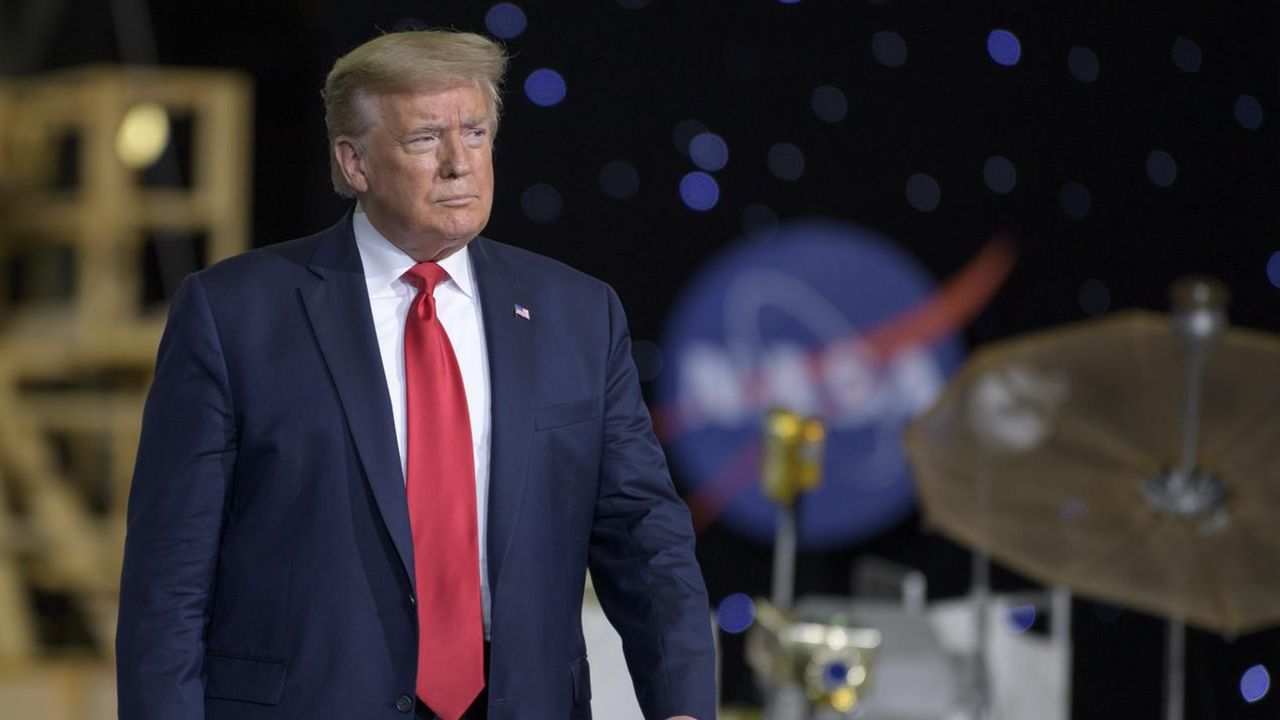
President Donald Trump signed a new national space policy that targets 1,000 U.S. rocket launches annually by 2030, representing a dramatic acceleration of American spaceflight operations. The policy overhauls how the federal government manages launch licenses, reentry operations, and orbital traffic to remove bureaucratic bottlenecks that have historically constrained launch cadence.
The current U.S. launch rate sits far below this target. In 2023, the United States conducted approximately 72 orbital launches. SpaceX alone has driven much of recent growth, launching 98 missions in 2024 across its Falcon 9 and Falcon Heavy vehicles. Reaching 1,000 launches annually would require a roughly 10-fold increase in operational tempo and represents an explicit federal commitment to spaceflight infrastructure expansion.
The policy addresses reentry management, a critical bottleneck for sustained launch operations. Current regulations require detailed safety assessments before orbital rockets can return to Earth. Streamlining reentry approval processes allows faster turnaround for reusable launch vehicles like SpaceX's Falcon 9 first stage, which has landed and reflown hundreds of times. The Federal Aviation Administration, which licenses launches and reentries, faces pressure to accelerate permitting timelines.
Launch infrastructure capacity also constrains American spaceflight. The nation operates only five licensed orbital launch sites: Cape Canaveral Space Force Station and Kennedy Space Center in Florida, Vandenberg Space Force Base in California, and two commercial facilities in Texas operated by SpaceX. Reaching 1,000 launches annually requires either massive expansion of existing pads or development of new licensed launch facilities, both time-consuming and expensive propositions.
The policy drives toward commercial competition. SpaceX dominates the American launch market, but Blue Origin seeks to operationalize New Glenn, its heavy-lift vehicle, within 18 months. Axiom Space and other companies plan suborbital and orbital operations. Removing regulatory friction favors companies with established infrastructure and operational experience, though it theoretically opens opportunities for new entrants with adequate safety records.
International implications emerge from this policy. Russia conducted roughly 650 launches at peak Soviet capacity in the 1980s. Surpassing that rate signals American confidence in commercial spaceflight maturity and reflects geopolitical competition for space dominance, particularly with China and Russia. High launch cadence supports national security objectives around satellite constellation deployment, rapid space launch for military missions, and maintaining technological leadership in space infrastructure.
The 1,000-launch target connects directly to emerging space architectures. The Space Force and Space Development Agency deploy thousands of satellites for communications and sensing networks. SpaceX's Starshield constellation for military users, alongside commercial Starlink expansion, demands sustained launch capacity. The Department of Defense increasingly relies on rapid launch for responsive space operations.
Achieving 1,000 launches annually depends on coordinated federal action. Congress must fund infrastructure modernization. The FAA requires expanded personnel and streamlined licensing procedures. The Department of Defense and Space Force must adjust planning to accommodate increased orbital activity and coordinate with commercial operators for range access and airspace management.
Private sector investment in manufacturing and infrastructure becomes essential. Rocket production rates, propellant supply chains, payload integration facilities, and launch operations personnel all require scaling. Companies like SpaceX, Blue Origin, and emerging competitors must demonstrate sustained operational reliability at dramatically higher launch frequencies.
The policy establishes ambitious targets, but execution determines success. Regulatory reform alone cannot build launch pads or manufacture rockets. The pathway to 1,000 annual American launches requires sustained commitment from government agencies, substantial private investment, and operational maturity across the commercial space industry.