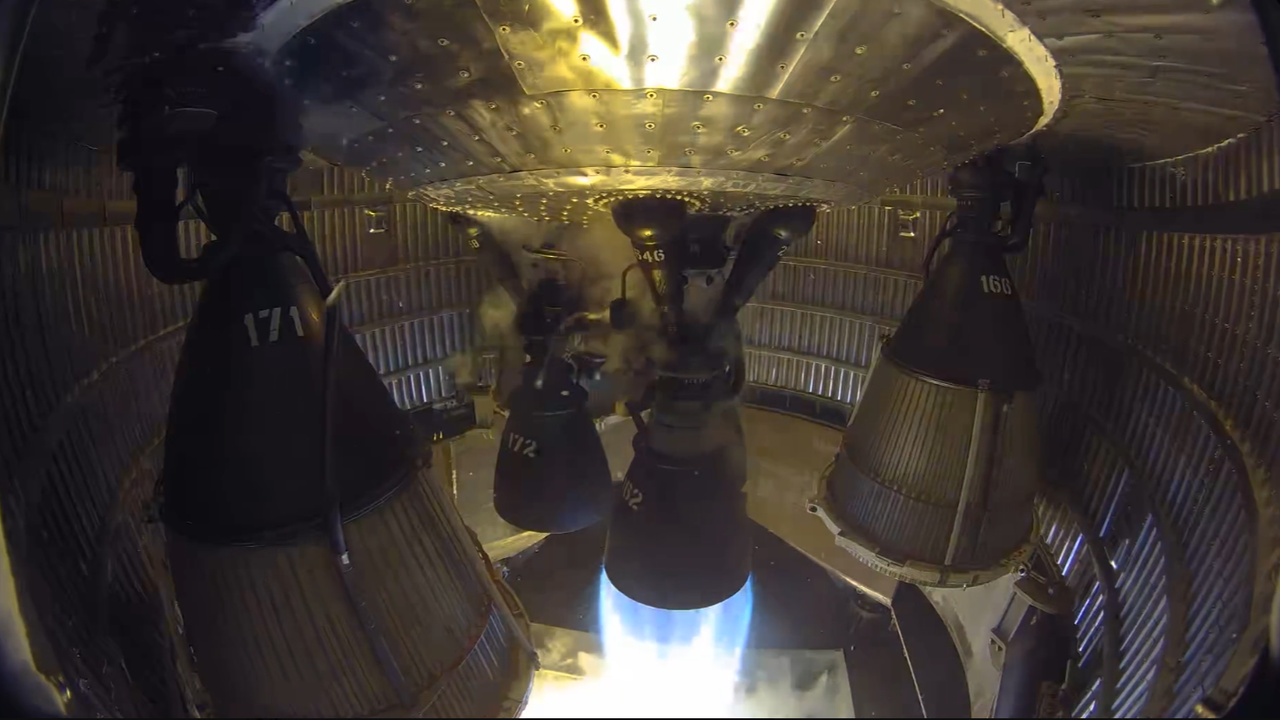
SpaceX conducted a single-engine test-fire of Starship on Wednesday, pushing forward preparations for the vehicle's first orbital flight test. The company ignited one of the Raptor engines mounted on Starship's aft section during the ground test at its Starbase facility in Boca Chica, Texas.
This engine test represents a critical validation step before SpaceX attempts an orbital trajectory. Starship, the fully reusable super-heavy lift launch system, stands 120 meters tall when stacked atop its Super Heavy booster. The integrated stack produces 17 million pounds of thrust at liftoff, making it the most powerful operational rocket ever built. Previous integrated flight tests have ended in explosions during ascent, yet each iteration has yielded engineering data that informs the next design cycle.
The Raptor 2 engines powering Starship burn methane and liquid oxygen, a propellant combination that SpaceX selected for deep space missions to Mars and beyond. Methane proves advantageous for in-situ resource utilization, allowing future missions to produce fuel from Martian CO2 and water ice. The engine test-firing validates ignition sequences, fuel flow rates, and turbopump operation under controlled conditions before full-stack launch.
SpaceX has conducted multiple integrated flight tests since April 2023. The first attempt resulted in rapid unscheduled disassembly at T+0 seconds. Subsequent tests improved booster separation and vehicle control. Test Flight 3 in April 2024 achieved booster catch for the first time, with the Super Heavy returning to the launch tower where mechanical arms, nicknamed "chopsticks," seized it mid-air. Test Flight 4 in June 2024 progressed further downrange, with Starship completing a controlled reentry and splashing down in the Indian Ocean.
The path to orbit requires Starship to coast through space after second-stage cutoff, then reignite engines for the final burn to achieve orbital velocity. Thermal protection systems must survive reentry heating in excess of 1,600 degrees Celsius. Landing legs must deploy and fire retro-thrusters to achieve a controlled touchdown.
Chief Engineer Elon Musk has outlined a cadence of rapidly iterative test flights separated by weeks rather than months. Each failure becomes a platform for improvement. Avionics, thermal tiles, engine performance data, and structural response all undergo scrutiny after every flight. This approach diverges from traditional aerospace development, where prototype vehicles undergo extensive ground testing before flight.
The orbital test flight carries no payload. Its purpose is demonstrating that Starship can reach space and return safely. Secondary objectives include validating stage separation, header tank pressurization, turbopump restart, and grid fin control authority during reentry. Station-keeping maneuvers in orbit will test reaction control systems.
Success in this orbital flight test moves Starship toward human spaceflight certification. NASA selected Starship as the lunar lander for Artemis III, targeting a crewed Moon landing in the late 2020s. Achieving reliable on-orbit propellant transfer, demonstrated during multiple flight tests, remains essential for lunar and deep space missions. Starship development directly supports NASA's Gateway lunar outpost architecture and eventual Mars exploration campaigns.