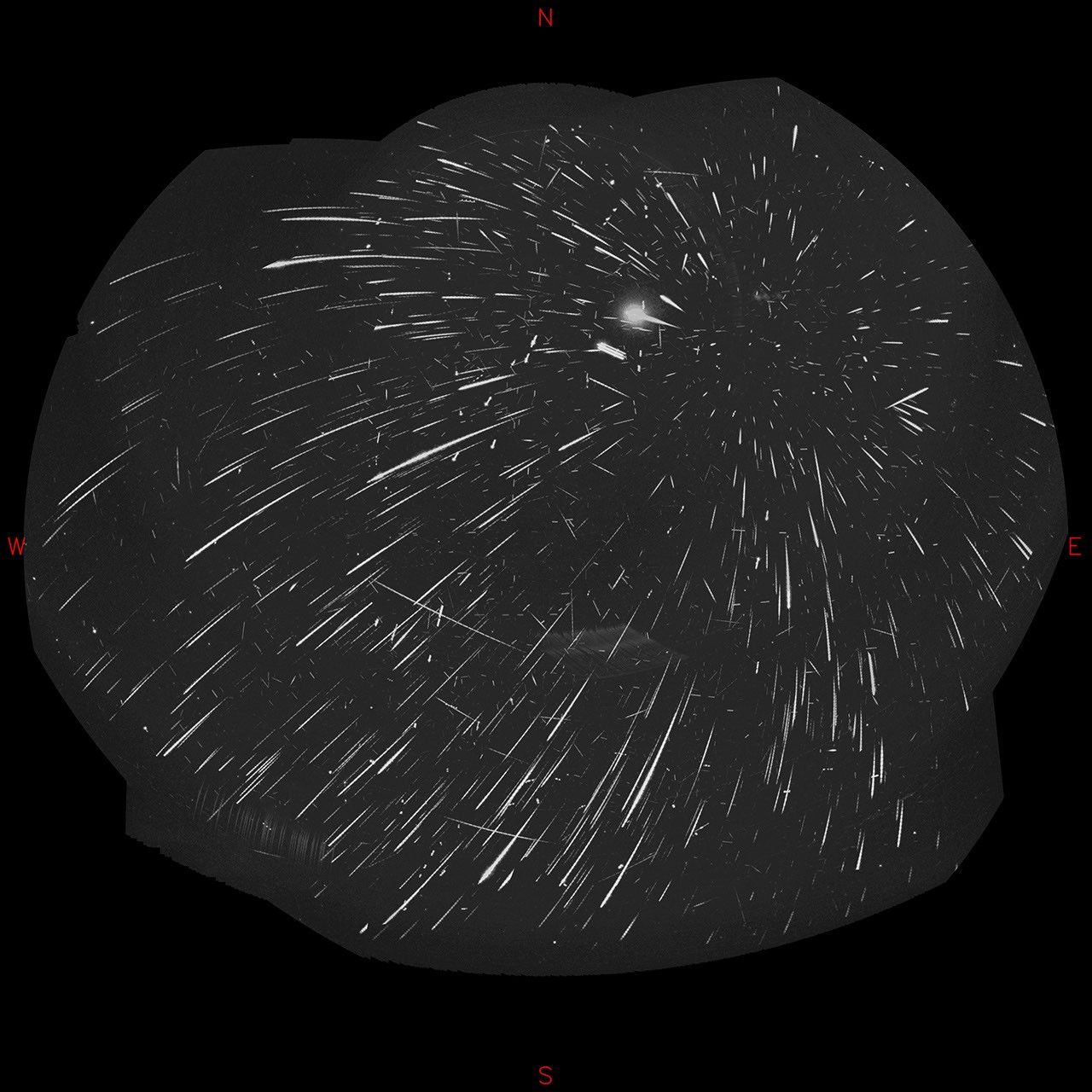
# Perseid Meteors Return in 2026 with Expected Peak Activity
The Perseid meteor shower will deliver one of the year's most reliable displays of shooting stars when it reaches peak activity in August 2026. NASA's Astronomy Picture of the Day (APOD) highlighted the Perseid event, documenting the annual celestial spectacle that occurs as Earth passes through debris left behind by Comet Swift-Tuttle.
The Perseids emerge from the constellation Perseus, radiating outward as particles from the comet's orbit collide with Earth's atmosphere at roughly 58 kilometers per second. This velocity generates the luminous streaks observers see from the ground. Unlike some meteor showers that vary dramatically from year to year, the Perseids consistently produce 50 to 100 meteors per hour at peak, making them among the most predictable and observable displays for stargazers at all experience levels.
The shower's peak typically spans several nights in mid-August. In 2026, optimal viewing will occur when moonlight does not wash out fainter meteors. Timing matters for observation. Best viewing comes after midnight, when the radiant point sits highest in the sky and Earth's rotation carries observers directly into the densest meteor streams. Light pollution suppresses visibility, so observers in rural areas away from cities capture substantially more meteors than urban dwellers.
Comet Swift-Tuttle, the parent body responsible for the Perseid debris stream, orbits the sun once every 133 years. The comet last approached Earth's vicinity in 1992. Its next closest pass occurs in 2126. Even during years when the comet itself sits nowhere near Earth, particles shed from its nucleus during previous passages continue circulating in predictable orbital paths, guaranteeing the Perseid shower's annual return.
The Perseids hold particular importance for meteor science. The shower's consistency allows researchers to track changes in atmospheric conditions and meteor composition across decades. Photographs and video recordings of individual meteors reveal the particle size distribution and mineralogical composition of cometary material. Citizen scientists contribute substantially to these observations through dedicated meteor monitoring networks that compile reports of sightings from across regions and continents.
NASA and space agencies worldwide encourage public participation in meteor observation. Detailed reporting through platforms like the American Meteor Society provides data that refines models of debris stream dynamics and helps predict future shower intensity. For 2026, observers need only clear skies, a comfortable place to recline, and patience. No special equipment required. Eyes adjusted to darkness for 20 to 30 minutes yield reliable meteor detection.
The Perseid shower connects observers directly to the solar system's architecture. Each meteor represents a tangible piece of cometary material, a fragment older than human civilization, burning up in the upper atmosphere. The shower transforms a periodic orbital intersection into a visible, visceral reminder that Earth inhabits a dynamic cosmos where rocks and dust move through space in intricate, predictable patterns. Watching the 2026 Perseids places viewers in direct contact with that broader cosmic reality.