# Partial Lunar Eclipse in August 2026 Will Reach 96% Coverage Across Multiple Continents
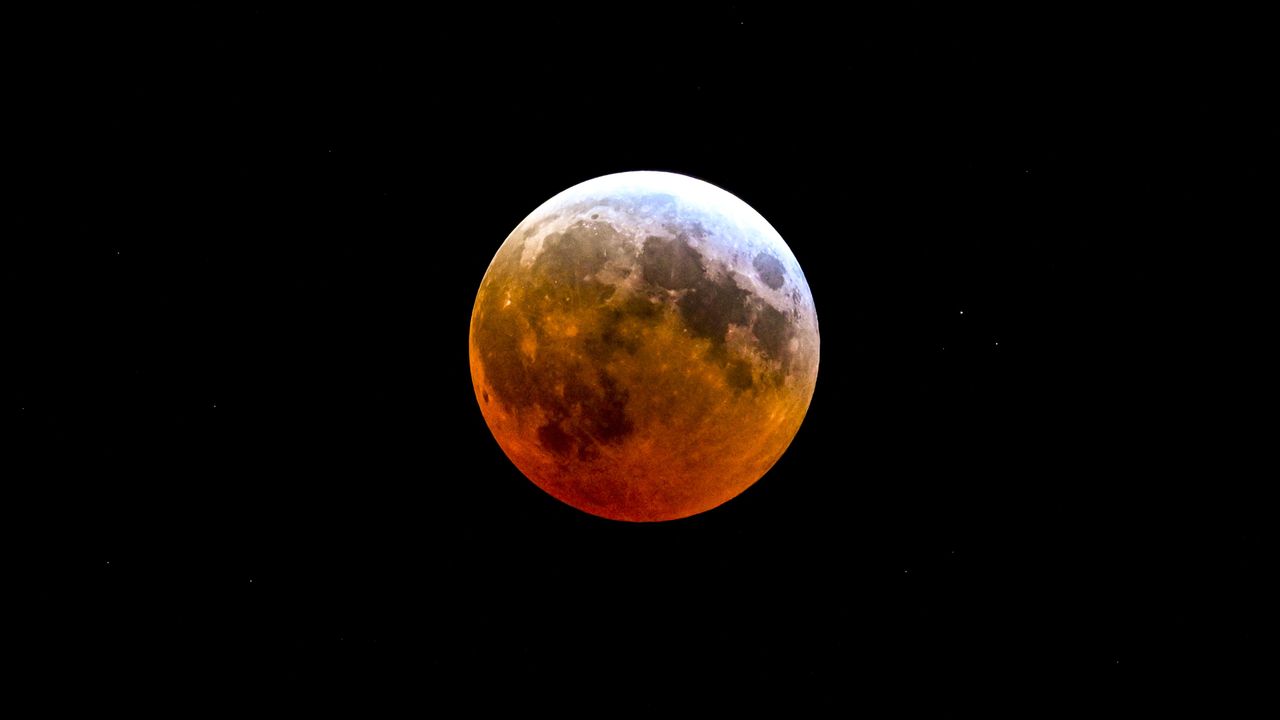
A substantial partial lunar eclipse will occur in August 2026, with the Moon passing 96 percent into Earth's shadow. This near-total eclipse will be visible from large swaths of the globe, making it one of the year's most observable lunar events for skywatchers across multiple continents.
The eclipse reaches its deepest point when the Moon ventures nearly to the edge of totality. During a partial lunar eclipse of this magnitude, observers will witness the Moon darkening dramatically as it enters the umbra, Earth's innermost shadow. The 96 percent coverage means only a thin sliver of the lunar disk remains illuminated by direct sunlight, creating a striking visual contrast between the dark eclipsed portion and the faintly glowing red rim at the Moon's edge.
Lunar eclipses occur when the Sun, Earth, and Moon align in perfect opposition, with Earth positioned between the other two bodies. Unlike solar eclipses, lunar eclipses are safe to observe without special equipment. The naked eye captures the event clearly, and binoculars or telescopes reveal additional detail in the shadow boundaries and lunar surface features within the darkened region.
The visibility zones for this August 2026 eclipse span Africa, Europe, Asia, and Australia. Observers in these regions will experience the eclipse at different local times, but all will witness the same celestial event. The partial phase lasts several hours, giving viewers in favorable locations an extended window to watch the Moon's gradual immersion into Earth's shadow and its eventual emergence back into sunlight.
Partial lunar eclipses of this depth remain relatively uncommon. While the Moon falls short of complete totality, the 96 percent figure places this event near the threshold where observers perceive the psychological shift from "partial eclipse" to "nearly total eclipse." The psychological impact of watching the Moon darken to such an extreme degree captivates both casual observers and serious astronomers.
The August 2026 eclipse carries educational value for understanding Earth's shadow geometry. As the umbra sweeps across the lunar surface, viewers can observe how Earth's shadow size and shape change relative to the Moon's distance. The shadow's curvature demonstrates Earth's sphericity, a reality that ancient astronomers recognized by observing exactly this phenomenon thousands of years ago.
For eclipse chasers and lunar enthusiasts, this event offers an accessible observational opportunity. Unlike total solar eclipses that require precise geographic positioning within a narrow path, lunar eclipses reward observers across entire continents. The event requires no special equipment, no travel to remote locations, and no eye protection beyond normal viewing practices.
Preparation for the August 2026 eclipse involves checking local circumstances for your specific latitude and longitude. Astronomical societies and planetariums will provide detailed timing information as the date approaches. Clear skies prove essential, as clouds completely obscure the event.