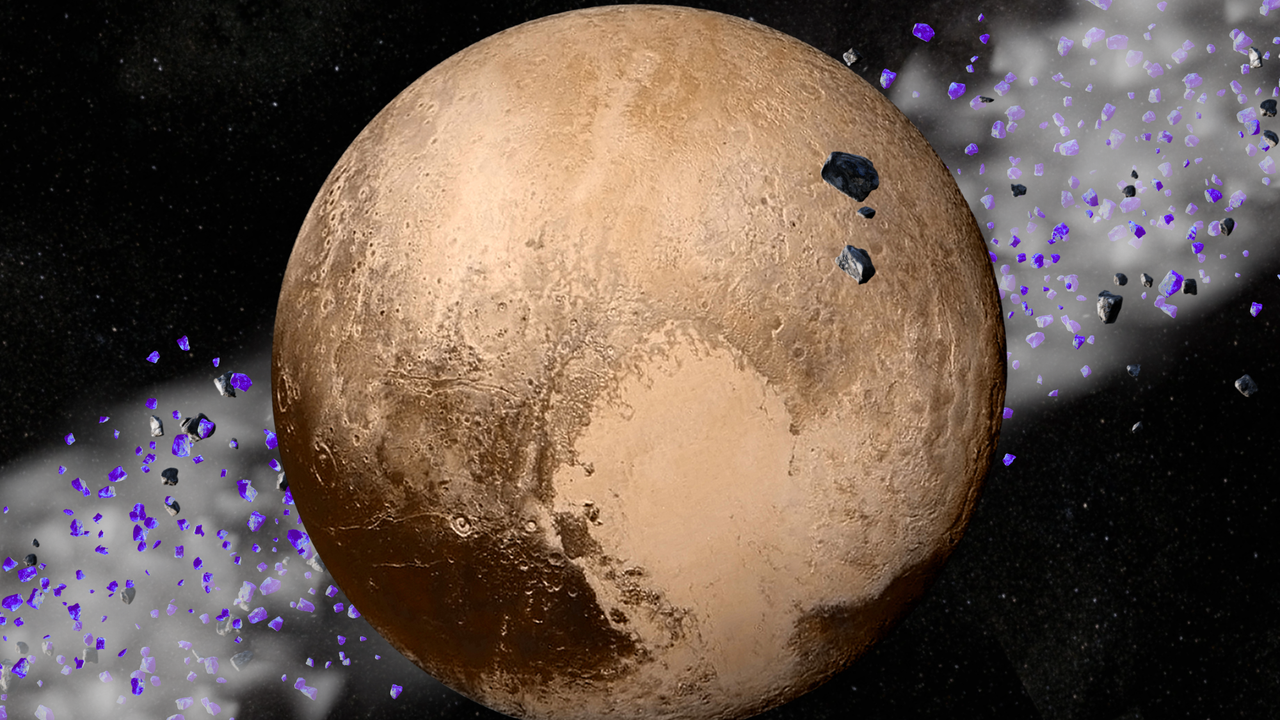
Pluto's reclassification as a dwarf planet in 2006 ranks among the most misunderstood decisions in astronomy. What appeared to the public as a demotion represented a scientific breakthrough that fundamentally reorganized how we understand solar system architecture and the diversity of worlds orbiting the Sun.
The International Astronomical Union established three criteria for planetary status. A celestial body must orbit the Sun, possess sufficient mass to achieve hydrostatic equilibrium (rounded shape), and clear its orbital neighborhood of other debris. Pluto satisfied the first two requirements but failed the third. The icy world shares its orbital zone with thousands of other Kuiper Belt objects. This straightforward classification problem led the IAU to create a new category: dwarf planet.
That decision opened scientific doors. Before 2006, Pluto occupied a unique, awkward position in planetary taxonomy. After reclassification, astronomers gained a coherent framework for understanding multiple classes of solar system bodies. Dwarf planets like Pluto, Eris, Makemake, and Haumea now form a recognized population deserving dedicated study.
Pluto itself benefited enormously. The reclassification shifted focus from the planet's perceived inadequacy to its actual scientific richness. NASA's New Horizons spacecraft reached Pluto in July 2015, revealing a geologically complex world of unexpected sophistication. Nitrogen ice plains, water ice mountains, and evidence of subsurface oceans transformed Pluto from a fuzzy concept into a tangible destination. The mission would likely never have received funding or priority had Pluto retained "full planet" status, which would have positioned it as an afterthought in planetary science.
The 2006 decision also validated discoveries that challenged our traditional understanding. Astronomers had been finding exoplanets since 1995, and many orbited stars in configurations that contradicted solar system assumptions. Eris, discovered in 2005, possessed greater mass than Pluto but remained unknown to public consciousness. How could a heavier object occupy a less prominent category? The dwarf planet classification resolved this paradox elegantly.
Today, eight planets orbit the Sun. They occupy distinct orbital zones and gravitationally dominate their neighborhoods. Meanwhile, a diverse ecosystem of dwarf planets, asteroids, comets, and Kuiper Belt objects demonstrates solar system variety. This framework reflects reality rather than historical convention or nostalgic attachment to a nine-planet model taught in twentieth-century classrooms.
The reclassification proves that science adapts when evidence demands it. Pluto retained all its geological complexity, orbital characteristics, and scientific interest. What changed was terminology and our collective understanding. The dwarf planet category transformed Pluto from an anomalous outlier into the prototype of an entire class of worlds worthy of exploration and study.
That reframing represents genuine progress. Solar system diversity is real. Recognizing and naming that diversity enriches astronomy and inspires deeper investigation into worlds once dismissed as peripheral.