# Sun Fires M6.9 Solar Flare and CME Toward Earth, Potentially Boosting Aurora Activity
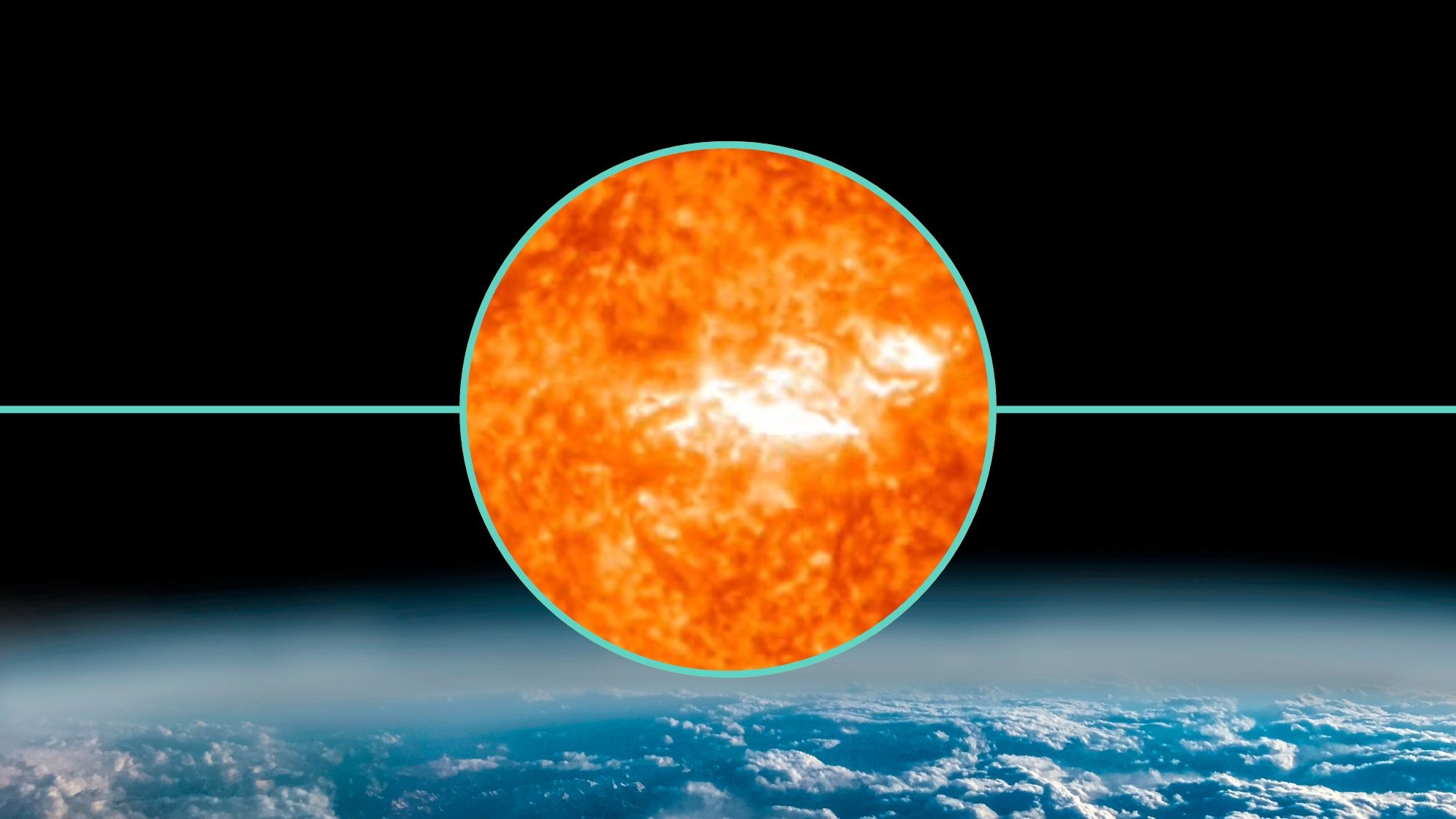
The Sun unleashed an M6.9-class solar flare this week from an Earth-facing active region, triggering a coronal mass ejection (CME) that scientists are tracking for potential arrival at Earth. The flare represents the latest in a series of energetic outbursts from the same sunspot region, which has remained geomagnetically active and pointed directly at our planet.
M-class flares occupy the middle tier of solar flare intensity, ranking below the most extreme X-class events but packing considerably more energy than smaller C-class flares. An M6.9 flare releases radiation across multiple wavelengths and accelerates charged particles to high speeds. When accompanied by a CME, the ejected plasma and magnetic field can interact with Earth's magnetosphere in ways that amplify geomagnetic disturbances.
The National Oceanic and Atmospheric Administration (NOAA) and NASA's Solar Dynamics Observatory have been monitoring the sunspot's output. Active regions like this one typically persist for days or weeks as they rotate with the Sun's 27-day cycle, allowing repeated opportunities for flare production. The fact that multiple powerful flares have originated from the same region indicates concentrated magnetic complexity at that location.
If the associated CME reaches Earth, it will compress and disturb the magnetosphere, potentially triggering a geomagnetic storm. The strength of any resulting storm depends on the CME's speed, density, magnetic field orientation, and the angle at which it strikes Earth's protective bubble of plasma and magnetic field lines. A direct hit from a fast-moving, strongly magnetized CME produces more intense geomagnetic activity than a glancing blow.
Geomagnetic storms rating G1 (Minor) through G5 (Extreme) on NOAA's scale have direct consequences for aurora watchers. Higher latitude observers in Canada, Scandinavia, Alaska, and other far-northern regions see auroras during routine solar wind conditions. When geomagnetic storms intensify, the auroral oval expands southward, bringing green and red lights visible from mid-latitude cities that rarely see them. A G3 (Strong) or higher storm can push auroral displays into the continental United States, turning them visible from places like Minnesota, Wisconsin, and the northern Great Lakes.
The timing matters for forecasting. CMEs travel at speeds ranging from under 300 kilometers per second to over 3,000 kilometers per second. Slower events take 3 to 5 days to reach Earth, while extremely fast ones arrive within 24 to 36 hours. NOAA's Space Weather Prediction Center issues forecasts based on satellite observations of CME departure, propagation angle, and estimated arrival windows.
The current solar cycle, Cycle 25, entered its maximum phase in 2023 and continues producing elevated levels of solar activity. This period naturally brings more frequent flares and CMEs than the quiet phases of the solar cycle. Forecasters expect this elevated activity to persist through 2024 and into 2025, creating recurring opportunities for geomagnetic storms and aurora sightings at unusual latitudes.
Aurora enthusiasts monitoring space weather alerts can track real-time updates from NOAA's Space Weather Prediction Center and check aurora forecast maps showing where auroras become visible at various geomagnetic storm levels. Observers in northern regions should watch the forecast graphs for signs of intensifying activity over the next 24 to 72 hours.