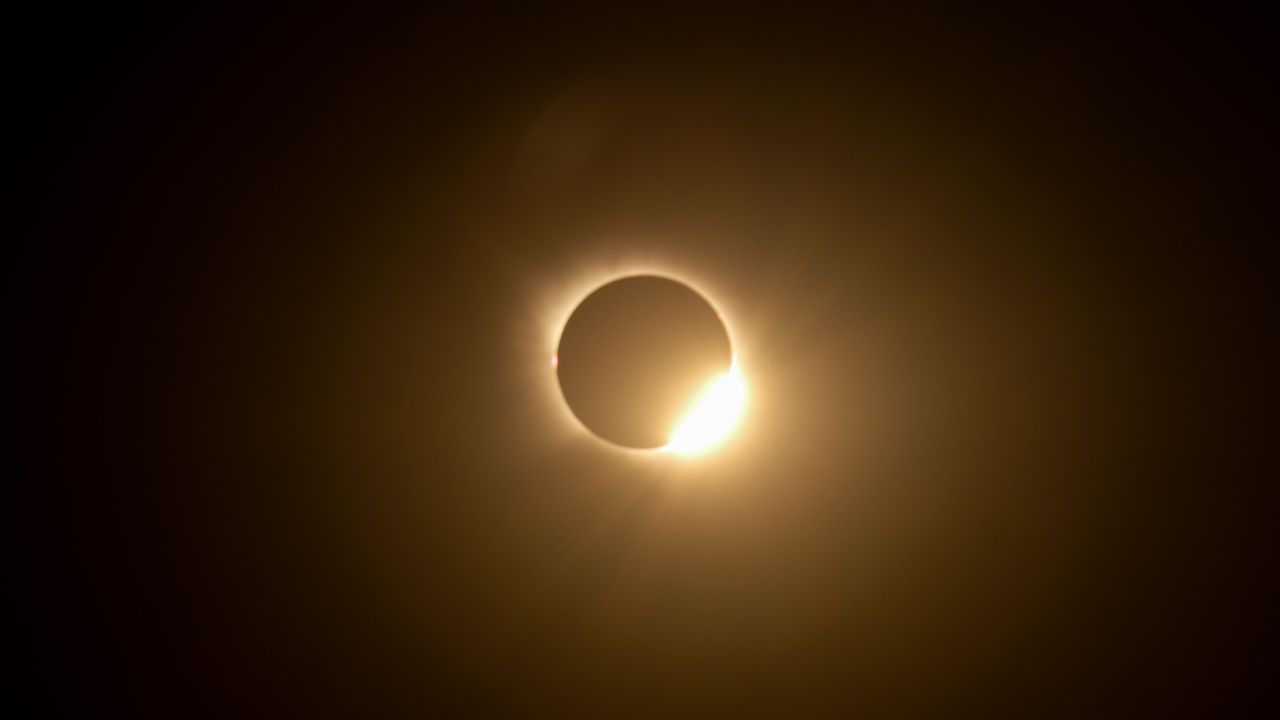
# A Black Star in Spanish Skies: Witnessing the August 12 Total Solar Eclipse
Spain hosted one of 2026's most dramatic astronomical events on August 12, when a total solar eclipse traced its path of totality across the Iberian Peninsula. The eclipse drew observers from across Europe and beyond, including amateur astronomers and citizen scientists determined to witness one of nature's most visceral celestial events.
The path of totality during a total solar eclipse creates conditions found nowhere else on Earth. The Moon slides directly between the observer and the Sun, blocking the solar disk completely for a brief window. During those minutes of totality, the Sun's corona becomes visible, the sky darkens dramatically in what appears as a false twilight, and stars emerge in daytime. Temperature drops rapidly. The effect transforms the landscape into an otherworldly stage.
Spain's geography positioned the country ideally for this eclipse. The path of totality crossed significant portions of the country, offering observers in major population centers and accessible locations along the track exceptional viewing opportunities. This accessibility drew groups of citizen scientists, amateur astronomers, and eclipse chasers who coordinated travel plans and observation strategies months in advance.
Citizen science plays a pivotal role during total solar eclipses. Professional astronomers have studied eclipse phenomena for centuries, but the 2026 eclipse offered fresh opportunities for coordinated observations. Amateur observers collected data on corona structure, timing measurements, and atmospheric effects. Some tracked how wildlife responded to the sudden darkness. These contributions feed into broader scientific databases that help astronomers refine models of solar physics and atmospheric dynamics.
The Aug. 12 eclipse represented a specific moment in Earth's celestial mechanics. Every 18 months or so, a solar eclipse occurs somewhere on the planet. But total solar eclipses, where the Moon's shadow completely engulfs a location, remain rare from any single spot on Earth. The average location experiences a total solar eclipse only once every 375 years. This rarity drives the eclipse tourism industry and explains why observers travel thousands of kilometers to position themselves along the path of totality.
Spain's eclipse also occurred during an interesting period in solar science. The Sun moves through active and quiet phases in an 11-year cycle. Understanding how the corona behaves at different phases of this solar cycle requires observations from multiple eclipses across time. Data collected during the Aug. 12 eclipse contributed to that longer-term understanding of solar behavior.
For observers positioned along Spain's path of totality, the experience transforms abstract astronomy into direct physical observation. The sudden darkness at midday produces a profound psychological effect. The corona's delicate filaments and bright rays become visible only during totality. The eclipse horizon, where a thin line of bright sky remains visible on the horizon beyond the Moon's shadow, creates a landscape unlike any other on Earth.
Those who traveled to Spain for Aug. 12 joined a tradition stretching back centuries of eclipse chasers and scientific observers. From Spain's vantage point, they witnessed the Moon completely eclipse the Sun, transforming day into twilight and revealing the solar corona in all its complexity.