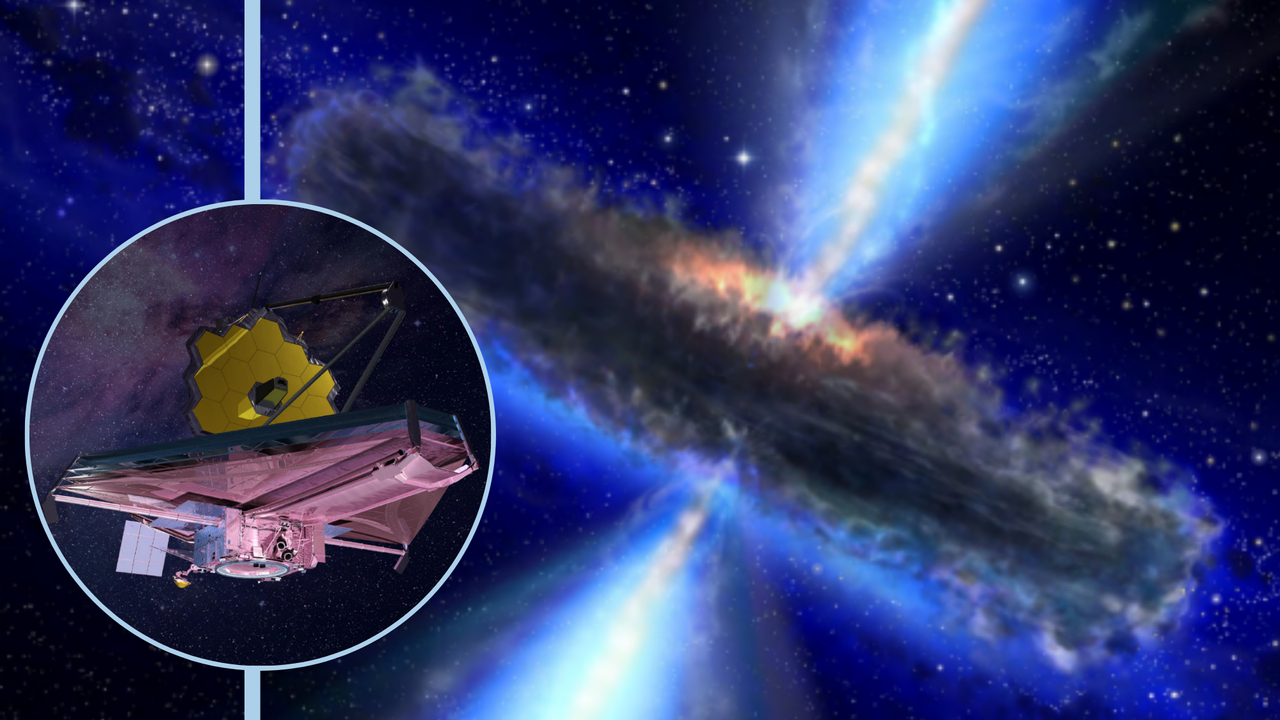
The James Webb Space Telescope has delivered a stark finding about planetary formation. Astronomers examining 72 young sun-like stars detected evidence that planets form far faster than previously thought, and that the window for their creation narrows dramatically within just a few million years.
The research reveals a crucial constraint on how planetary systems emerge. Protoplanetary disks, the swirling clouds of gas and dust orbiting newborn stars, do not remain intact for extended periods. Instead, they dissipate rapidly. This rapid depletion means that planets must coalesce within a compressed timeline or risk never forming at all.
JWST's infrared capabilities proved essential for this discovery. The telescope observed dust masses in disks around stars ranging from roughly 1 to 10 million years old. The data showed a dramatic decline in disk mass as stars age. Young systems harbor abundant material for planet building. Older ones reveal significantly depleted reservoirs. The transition occurs faster than models had predicted.
Previous ground-based telescopes like Spitzer and Herschel hinted at rapid disk evolution, but JWST's enhanced sensitivity and resolution provided definitive confirmation. The infrared observations penetrate the dust clouds that visible-light telescopes cannot see through, revealing the actual architecture of forming planetary systems.
The implications reshape our understanding of planetary birth. If planets must assemble in mere millions of years rather than tens of millions, the formation process operates at a frantic pace. Dust grains must collide and stick together, growing into pebbles, then planetesimals, then planetary cores. This sequence cannot afford delays.
This timeline has direct consequences for planet frequency across the galaxy. Stars that form in lower-density environments may struggle to accumulate sufficient material before their disks evaporate. Dense stellar nurseries, by contrast, provide abundant dust that feeds rapid planet assembly. The location where a star forms thus fundamentally influences whether planetary systems will orbit it.
The study involved JWST's Mid-Infrared Instrument, which detects thermal radiation from warm dust. By measuring dust masses at different stellar ages, astronomers established a clear evolutionary sequence. The youngest systems contain the most dust. The oldest contain the least. No ambiguity existed.
This research directly informs the search for exoplanets and the conditions that produce habitable worlds. Earth's solar system formed approximately 4.6 billion years ago, but the initial planet-building phase concluded within the first few million years. The Jovian planets, Saturn, and the terrestrial planets all assembled during this compressed window. Our existence hinged on this race against time playing out favorably around our infant sun.
The discovery also refines models used by astronomers studying protoplanetary disks in nearby star-forming regions like Orion and Taurus. Future JWST observations will track individual disk systems as they evolve, potentially capturing the moment when disk dispersal accelerates or when large planets carve gaps through the dust.
JWST's contribution transcends a single study. Each observation reveals layers of complexity in how planetary systems form, exist, and eventually stabilize. The 72-star survey represents one data point in an expanding catalog of JWST discoveries that challenge, refine, and rebuild planetary science models. The universe builds worlds on a tighter deadline than astronomers once imagined.