# The Astronomy of Almost: Why Near-Misses Matter More Than We Think
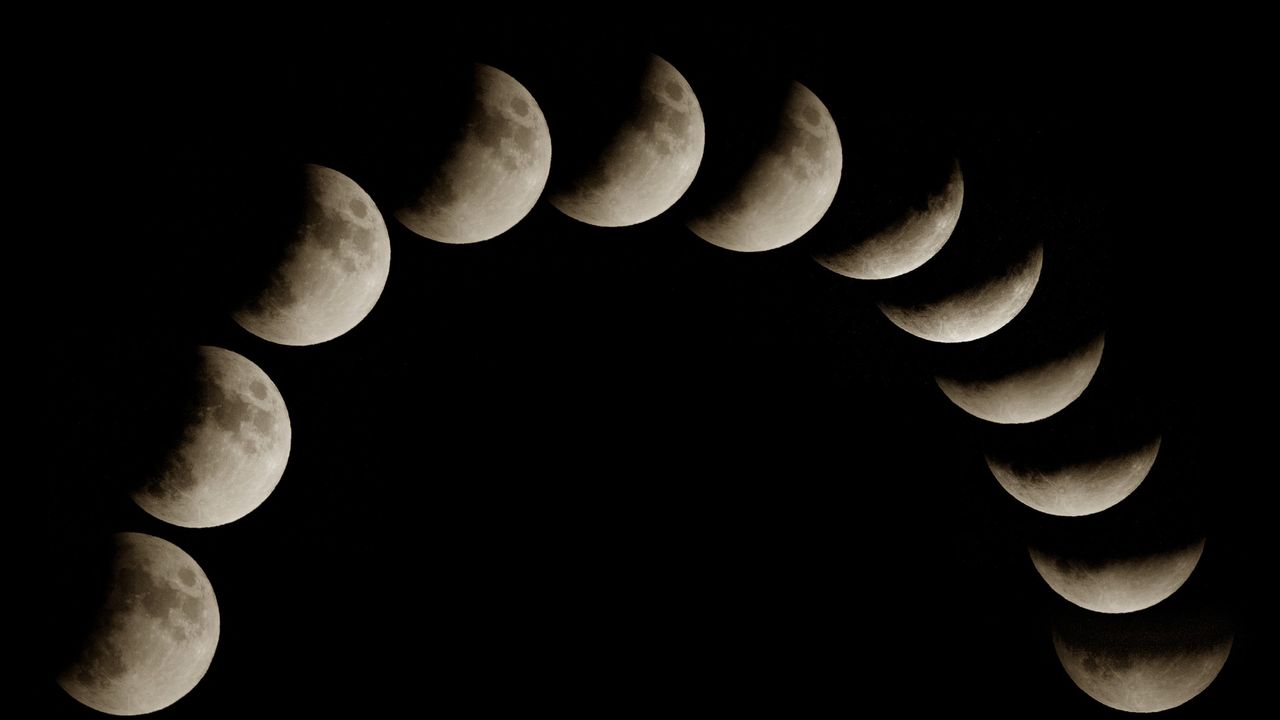
Astronomy rewards patience, precision, and the willingness to celebrate events that fall short of their most dramatic potential. The near-miss lunar eclipse that recently captured attention offers a perfect window into why partial phenomena, grazing occultations, and faint celestial objects deserve genuine scientific and observational enthusiasm.
A partial lunar eclipse occurs when Earth's shadow covers only part of the Moon's surface, leaving the body partially bathed in Earth's umbra while the rest remains in penumbra or full sunlight. Unlike a total lunar eclipse, where the Moon can turn deep crimson due to Rayleigh scattering of sunlight through Earth's atmosphere, a partial eclipse produces subtler effects. The boundary between shadow and light becomes sharp and measurable. Observers can track the exact moment the shadow touches the lunar surface and calculate Earth's shadow diameter with remarkable accuracy from ground-based observations.
These near-events carry scientific weight that totality sometimes overshadows. When the Moon grazes Earth's shadow rather than plunging fully through it, astronomers gather data on atmospheric conditions, measure the precise shape and size of Earth's shadow cone, and refine models of celestial mechanics. The 1973 observations of a grazing lunar eclipse allowed researchers to detect variations in Earth's shadow that improved eclipse prediction models for decades.
Partial occultations offer similar benefits. When a star passes behind the Moon's edge rather than behind the lunar disk itself, the star's light dims gradually rather than extinguishing suddenly. This gradual dimming reveals the Moon's topography in exquisite detail. The star's light bends around lunar peaks and craters, creating a precise profile of the lunar surface at that location. Professional astronomers use grazing occultations to map features as small as 100 meters across.
The cultural appeal of total events is undeniable. A total solar eclipse draws crowds of millions. A total lunar eclipse produces a striking blood-red Moon visible from half of Earth. These spectacles inspire wonder and drive public engagement with astronomy. Yet the near-misses carry their own drama. They demand more from observers. They require knowledge, calculation, and the ability to recognize subtle changes in light and shadow.
Faint objects present another category of astronomical almost-events. Nebulae barely visible through telescopes, distant galaxies requiring hours of patient observation to distinguish from background stars, and asteroids at the limits of detection all demand dedication. These objects will not blaze across the sky or dominate the evening news. Yet their observation connects us directly to the structure and history of the universe.
The Moon's grazing shadows, the gradual dimming of occulted stars, the faint glow of distant galaxies, these moments ask something of us. They ask that we look carefully, that we understand what we are looking at, that we find meaning in subtlety rather than spectacle alone. Astronomy thrives not only in the moments of total eclipse or dramatic cosmic events, but in the careful, precise observation of phenomena that most people never notice. The near-miss teaches us to pay attention. It teaches us that the universe reveals its secrets to those willing to watch closely.