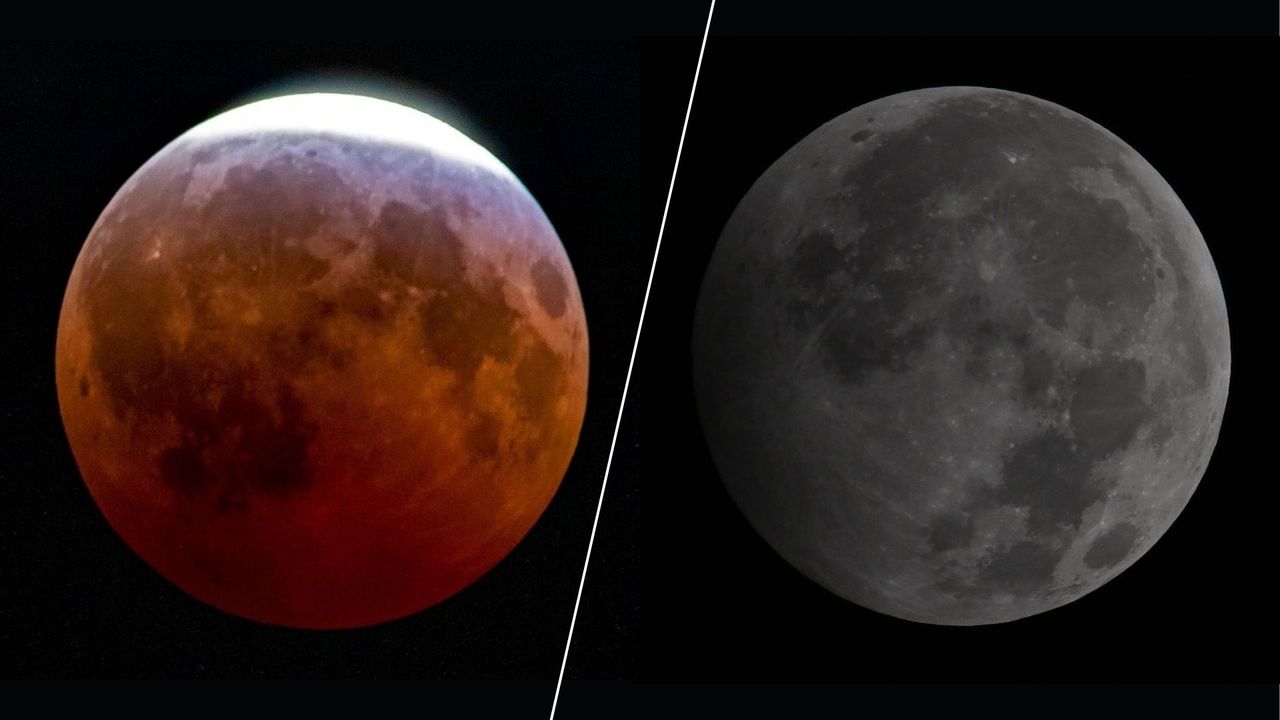
Earth's shadow will next envelop the moon during a partial lunar eclipse on August 18, 2026. This eclipse will occur when the moon passes through Earth's outer shadow, or penumbra, before entering the umbra, the planet's inner and darkest shadow cone.
The August 2026 eclipse represents one of several lunar eclipses scheduled across the coming years. Lunar eclipses happen only during full moon phases when Earth positions itself directly between the sun and moon. The geometry must align precisely. The moon's orbital plane crosses Earth's orbital plane at two points called nodes. Eclipses occur when the full moon coincides with these nodes.
Following the 2026 eclipse, stargazers can anticipate additional lunar eclipses in subsequent years. The lunar eclipse calendar extends well into the future, with NASA and other space agencies maintaining detailed predictions decades in advance using gravitational models and precise orbital data.
Partial lunar eclipses differ from total lunar eclipses. During partial eclipses, the moon enters Earth's umbra but never becomes completely shadowed. The moon's surface still receives some direct sunlight around its edges, creating a distinctive crescent appearance. Total lunar eclipses occur when the moon travels completely through Earth's umbra, often displaying a reddish coloration known as a blood moon. This copper-red hue results from sunlight refracting through Earth's atmosphere, filtering out blue wavelengths while bending red light onto the lunar surface.
The August 2026 eclipse will be visible from specific geographic regions on Earth. Lunar eclipse visibility spans the entire night side of the planet facing the moon, making them widely observable compared to solar eclipses, which cast shadows across narrow geographic corridors.
Understanding lunar eclipse timing relies on orbital mechanics developed over centuries. Ancient astronomers recognized patterns in eclipse occurrence. The Saros cycle, identified by Babylonian astronomers, repeats every 6,585.3 days (roughly 18 years and 11 days). Eclipses separated by one Saros interval share similar geometry, occurring in the same lunar node with comparable shadow geometry.
Modern eclipse predictions employ sophisticated computational methods. Space agencies use data from lunar orbiters and ground-based telescopes to refine the moon's orbital parameters. These measurements account for tidal forces, which slowly alter the moon's orbit at approximately 3.8 centimeters per year.
The August 2026 eclipse occurs during a period of renewed lunar exploration interest. NASA's Artemis program aims to return humans to the moon by the late 2020s. Commercial lunar landers operate on the surface. Understanding lunar cycles and eclipse mechanics remains relevant for mission planning, particularly for operations requiring specific lighting conditions or thermal management during eclipse periods.
For amateur astronomers and casual observers, lunar eclipses require no special equipment. The naked eye provides sufficient capability to observe the shadow's progression across the lunar disk. Binoculars or telescopes enhance surface detail visibility, revealing crater formations and mountain ranges as Earth's shadow gradually darkens portions of the moon.