# Ancient Alien Signatures May Lurk in Moon Dust, New Research Suggests
The search for extraterrestrial intelligence faces a fundamental timing problem. SETI programs have long relied on detecting radio signals from alien civilizations broadcasting now. But the universe is far older than human civilization. If intelligent life existed a billion years ago, or even millions of years in the past, radio waves would have long since dissipated into space. A new paper circulating on arXiv proposes an unconventional solution: ancient lunar dust may preserve physical evidence of technological civilizations that flourished in Earth's deep past.
The argument hinges on a simple observation about planetary contamination. Meteorite impacts across the solar system scatter material across vast distances. When large asteroids or comets hit a world, they eject rocks and dust that travel through space, eventually landing on other celestial bodies. Earth has received countless meteorites from Mars. The Moon has received material from Earth. This process means that advanced civilizations inhabiting other worlds billions of years ago could have left physical traces on the lunar surface without ever visiting Earth.
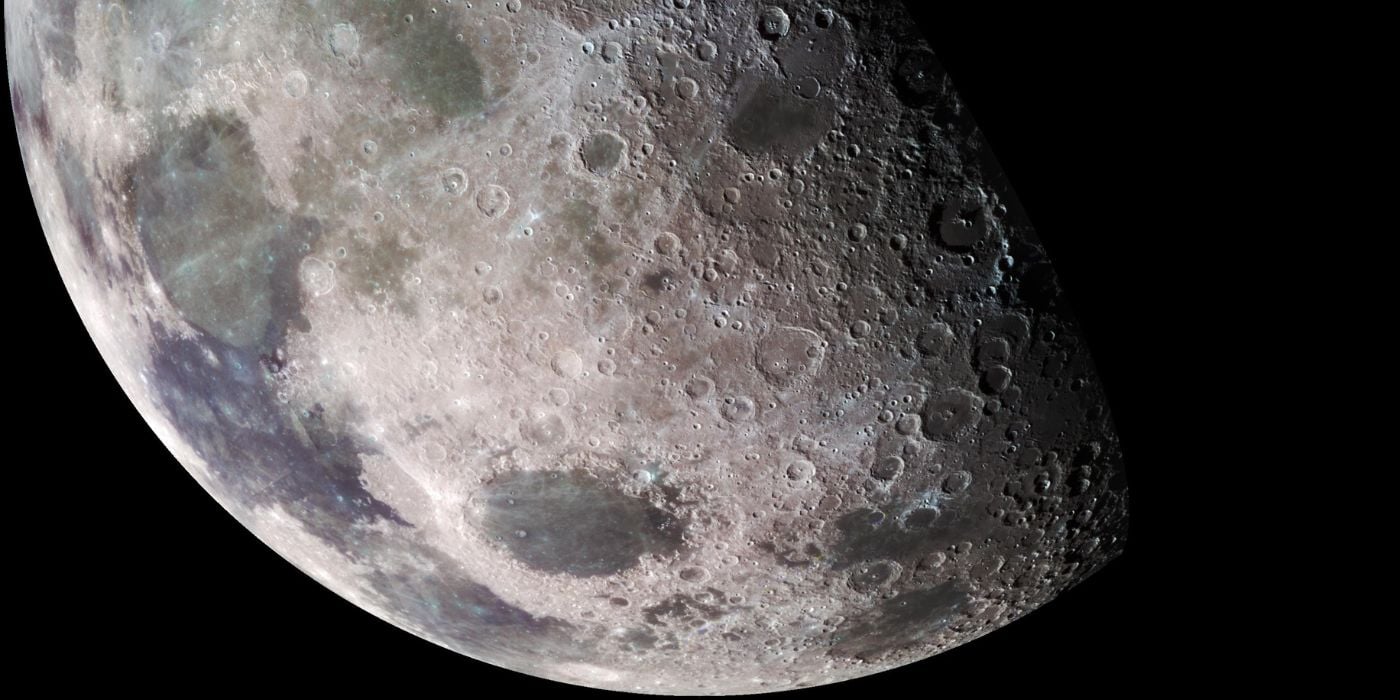
Moon dust, accumulated over billions of years, represents an archive of solar system history. Unlike Earth's surface, which undergoes constant erosion and plate tectonics that destroy ancient rocks, the lunar regolith remains relatively undisturbed. Microorganisms, spores, or technological artifacts from extinct alien civilizations could theoretically be preserved in these layers, protected from radiation and weathering by the lunar surface itself.
The paper reframes SETI from a problem of synchronicity into one of archaeology. Instead of waiting for current broadcasts, scientists could analyze lunar soil samples for anomalous chemical signatures, isotopic ratios, or micro-artifacts that would suggest technological origin. NASA's Apollo missions collected 382 kilograms of lunar material. The Artemis program aims to return astronauts to the Moon and collect substantially more samples beginning in 2026. Future lunar bases could enable systematic excavation of deeper layers, reaching regolith that formed when the galaxy may have hosted numerous technological civilizations.
This approach does not require waiting for aliens to transmit messages today. It also sidesteps the assumption that technological civilizations maintain radio communication for billions of years. Civilizations rise and fall. Some may have developed interstellar travel or left behind structures or probes. Others may have collapsed. But material evidence persists. A single preserved artifact, circuit fragment, or isotopic signature inconsistent with natural processes would transform the search from speculation into confirmation.
The concept builds on ideas from panspermia research, which examines how life itself travels between worlds via meteorite transport. If biological material can survive cosmic journeys, so could durable technological remnants or biosignatures from extinct civilizations. The Moon offers a particularly compelling location because it lacks an atmosphere or magnetic field to strip away incoming material, and its surface provides excellent preservation conditions for ancient deposits.
This research does not prove aliens existed. It proposes a testable methodology. As humanity returns to the Moon and establishes longer-term presence there, systematic analysis of lunar samples becomes feasible. The cost and effort required to examine buckets of moon dust pales compared to deploying galaxy-spanning radio arrays. If technological civilizations flourished elsewhere in the cosmos before humanity emerged, the Moon may hold the only evidence remaining.