# No Cities on the Moon—There Isn't Enough Water, Scientists Say
The detection of water ice in permanently shadowed craters near the lunar poles has ignited plans for human settlement that range from research outposts to industrial operations. Recent analysis, however, challenges the viability of sustained lunar civilization at the scales proponents envision.
Scientists have confirmed water exists in lunar polar regions through multiple spacecraft observations. NASA's Lunar Reconnaissance Orbiter, India's Chandrayaan-1, and other missions detected hydrogen signatures consistent with water ice trapped in craters that never receive sunlight. The findings shifted lunar exploration strategy dramatically. Instead of viewing the moon as a barren outpost for brief visits, space agencies and private companies began conceptualizing permanent human presence with mining operations, fuel depots, and eventually towns.
The arithmetic of available water presents the first constraint. Estimates for total water ice at the lunar poles range from millions to billions of tons, but the usable fraction remains limited. Water locked in polar ice exists within craters often kilometers deep and difficult to access. Mining operations would require extensive infrastructure just to extract modest quantities. For drinking and life support, a permanent crew of 100 people needs roughly one ton of water per month. That calculation scales poorly when extended to cities of thousands.
The second challenge involves sustainability economics. Transporting supplies from Earth to the moon costs approximately $100,000 per kilogram using current launch vehicles. Even with reusable rockets improving efficiency, delivering construction materials, equipment, and food remains prohibitively expensive. Lunar water extraction might eventually produce hydrogen and oxygen for rocket fuel, but decades of development precede energy independence.
Scientists also point to the hostile environment itself. Extreme temperature swings between 250 degrees Celsius in sunlight and minus 180 degrees Celsius in shadow degrade equipment and materials. Lunar dust, sharper and more abrasive than terrestrial sand, damages seals and mechanisms. Radiation exposure from cosmic rays and solar wind increases cancer risk without Earth's protective magnetic field. These factors demand continuous maintenance and regular replacement of equipment.
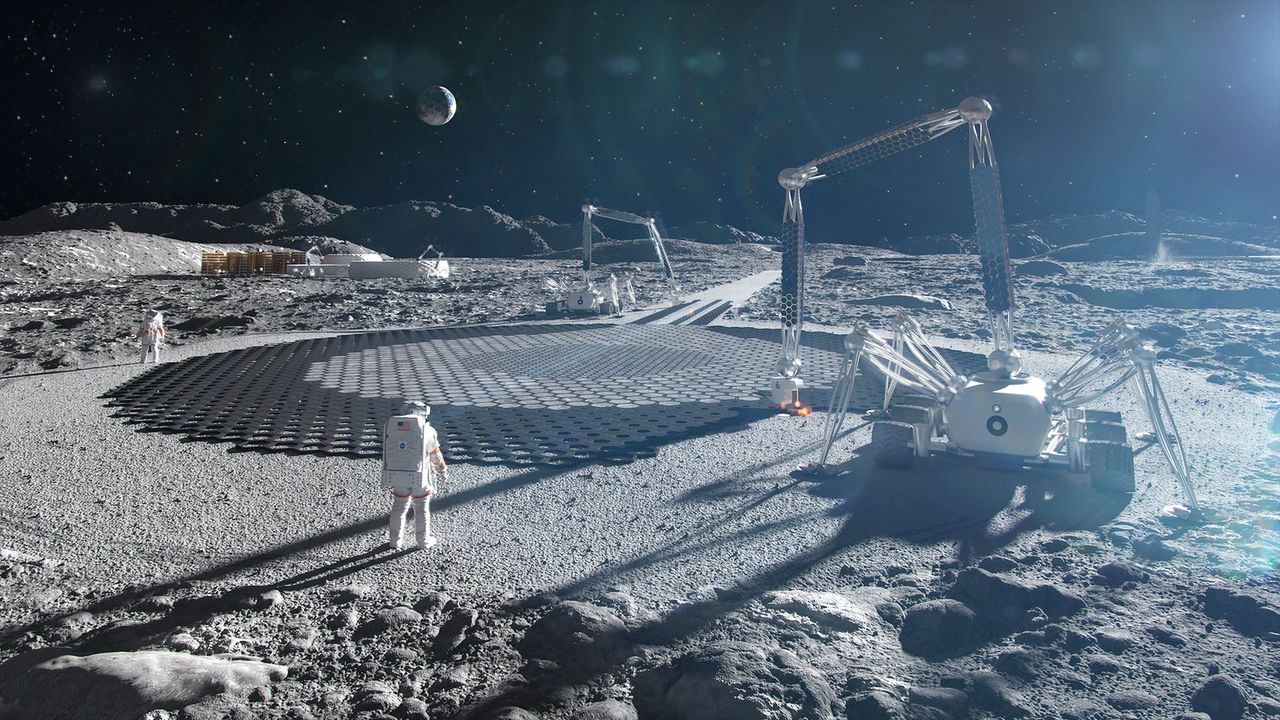
Current proposals for lunar bases acknowledge these constraints more realistically than earlier visions. NASA's Artemis program targets research stations supporting crews for weeks at a time, not permanent cities. These bases would focus on science and testing technologies for eventual Mars missions. Private companies like Axiom Space plan modular habitats expandable over time, operating within energy and resource budgets grounded in engineering reality.
The moon will host sustained human activity. Research stations, scientific outposts, and demonstration projects will proceed. Extracting water and producing fuel will occur in limited quantities. Heavy industry requiring massive material throughput will not materialize as envisioned in promotional materials.
The moon's role in human exploration centers on science and as a stepping stone to Mars and deeper space. That purpose remains genuinely ambitious without requiring cities that the environment cannot support.