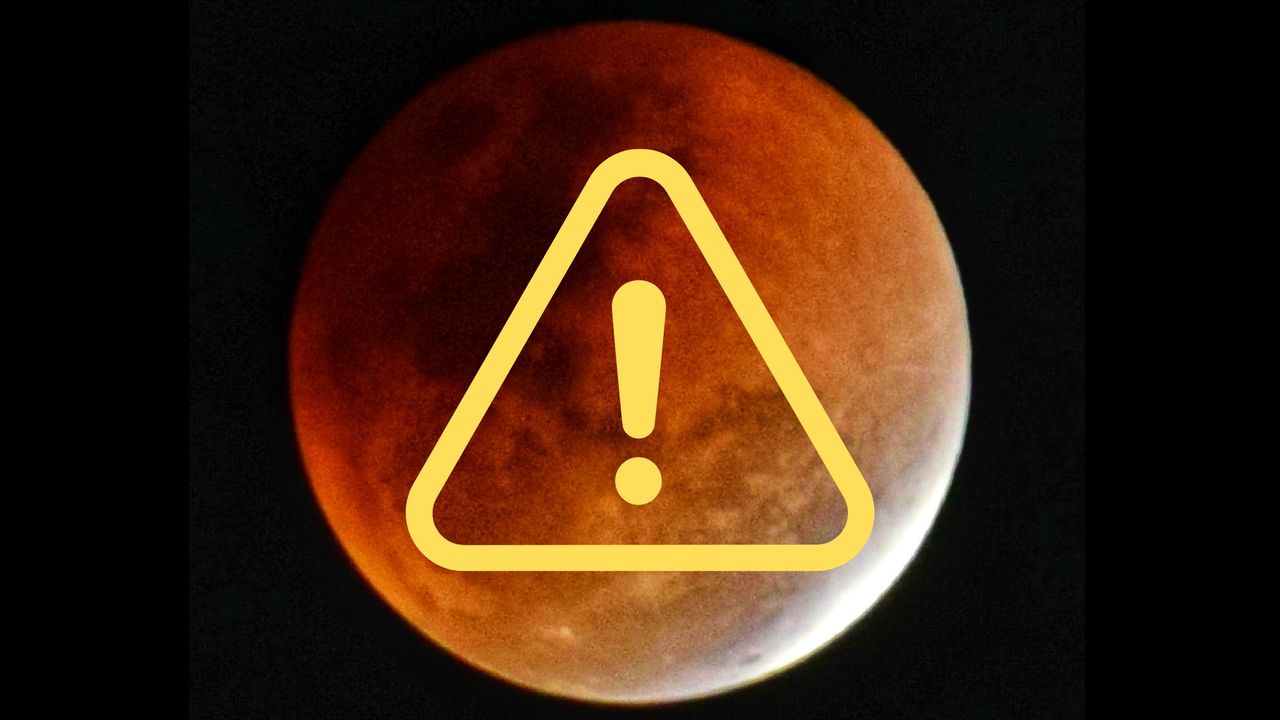
A deep partial lunar eclipse will cross the moon tonight, delivering the most dramatic celestial display of its kind until December 31, 2028. Millions of people across multiple continents will witness the moon slip into Earth's shadow, transforming its surface into a rusty red hue as it passes through the planet's umbra, the darkest region of its shadow.
During a partial lunar eclipse, the moon does not pass completely into Earth's shadow. Instead, a portion of the lunar disk enters the umbra while the rest remains illuminated by direct sunlight. The red coloration occurs because Earth's atmosphere bends sunlight around the planet, filtering out blue wavelengths and allowing red and orange light to reach the moon's surface. This phenomenon, called Rayleigh scattering, produces the distinctive copper or blood-red appearance that has inspired centuries of cultural mythology and scientific curiosity.
Tonight's eclipse ranks among the deeper partial lunar eclipses visible from Earth. The depth of a partial eclipse determines how much of the moon enters the umbra and how intensely red it appears. Deeper eclipses produce more dramatic color shifts across the lunar surface, creating a striking visual gradient from bright yellow at the eclipse's edge to deep crimson at the deepest point of shadow penetration.
Lunar eclipses occur only during full moons when Earth positions itself directly between the sun and moon. Unlike solar eclipses, which require specific geographic locations to observe totality, lunar eclipses remain visible from anywhere on Earth where the moon is above the horizon at the time of the event. This accessibility makes lunar eclipses valuable for broad public engagement with astronomy.
The next comparable lunar eclipse will not arrive until New Year's Eve 2028, making tonight's event particularly noteworthy for eclipse enthusiasts and casual observers alike. The 2028 eclipse will also be a partial lunar eclipse, though timing and visibility will differ from tonight's display.
Weather permitting, observers require only their naked eyes to witness the eclipse. Binoculars or telescopes can enhance details of the lunar surface and the shadow boundary's subtle features. Photography requires no special solar filters, unlike solar eclipse observation, making lunar eclipses accessible to photographers of all skill levels.
The eclipse unfolds over several hours as the moon gradually moves through Earth's shadow. The entire event, from first contact to final exit, can last several hours depending on the eclipse's geometry. Observers should consult local astronomical organizations or space agencies for exact timing specific to their location.
Tonight's lunar eclipse represents a rare opportunity to observe the interplay between Earth, moon, and sun from the ground. These events have shaped human understanding of celestial mechanics since ancient times, serving as proof of a spherical Earth and providing data for calculating planetary distances and sizes. Modern observations continue to contribute to lunar science, particularly regarding the moon's thermal properties and surface composition as it rapidly transitions from direct sunlight to deep shadow.