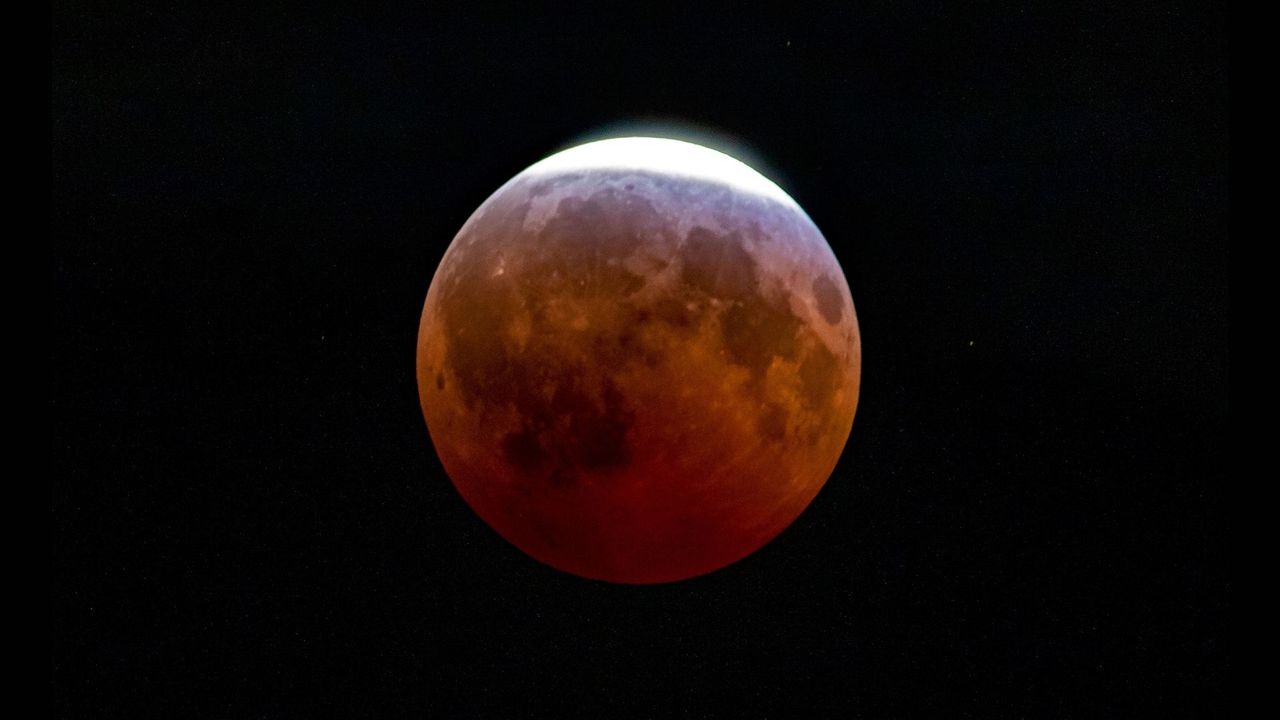
# Partial Lunar Eclipse Delivers Rare Spectacle as Moon Passes Through Earth's Shadow
Skywatchers across the globe captured stunning images of a partial lunar eclipse in August 2026, when Earth's shadow fell across the lunar surface in a display that approached the dramatic appearance of a total lunar eclipse. The event produced what observers described as an "almost blood moon," with portions of the Moon taking on a deep reddish hue as it passed through Earth's umbra, the planet's darkest shadow.
A partial lunar eclipse occurs when the Moon moves into Earth's umbral shadow but does not pass completely through it. During this phenomenon, sunlight refracting through Earth's atmosphere bends around the planet and illuminates the Moon with a coppery or blood-red tint on the portions inside the umbra. The August 2026 eclipse proved particularly striking because the Moon traveled deep into Earth's shadow, covering a substantial portion of its surface and producing the vivid coloration that typically characterizes total lunar eclipses.
These events differ fundamentally from solar eclipses. Lunar eclipses occur only during a full moon when Earth positions itself directly between the Sun and Moon. Solar eclipses require a new moon, when the Moon passes between Earth and the Sun. Lunar eclipses are visible from any location on Earth's night side, making them more accessible than solar eclipses, which require observers to be positioned along a narrow path of totality.
The August 2026 partial lunar eclipse provided astrophotographers with extended viewing windows compared to brief total solar eclipses. The entire eclipse event, from first contact through final exit from Earth's shadow, unfolded over several hours. This extended timeline allowed photographers across multiple time zones to capture the Moon's gradual transformation as it entered and exited Earth's shadow.
The reddish coloration visible during lunar eclipses results from Rayleigh scattering, the same atmospheric phenomenon that produces red sunsets on Earth. When sunlight passes through Earth's atmosphere during a lunar eclipse, shorter blue wavelengths scatter outward while longer red and orange wavelengths pass through and reach the Moon's surface. The intensity of this red coloration depends on atmospheric conditions on Earth, including volcanic dust and aerosol levels. A particularly dust-laden atmosphere produces a deeper, darker red eclipse, while clearer conditions result in a brighter, more copper-colored appearance.
Observers reported that the August 2026 eclipse created an ideal educational opportunity for the public to understand lunar eclipse mechanics. The progression of shadow across the Moon's face clearly demonstrated Earth's spherical shape and the geometry of Earth-Moon-Sun interactions. Amateur astronomers and casual skywatchers alike used telescopes and telephoto lenses to document surface details on the eclipsed portion of the Moon.
The August 2026 partial lunar eclipse demonstrated why lunar events continue to captivate observers despite being purely optical phenomena requiring no space missions or complex instrumentation. The visual drama of watching our planet's shadow advance across the Moon connects viewers directly to the celestial mechanics governing our solar system, reminding observers of their position within a precisely ordered cosmic dance.