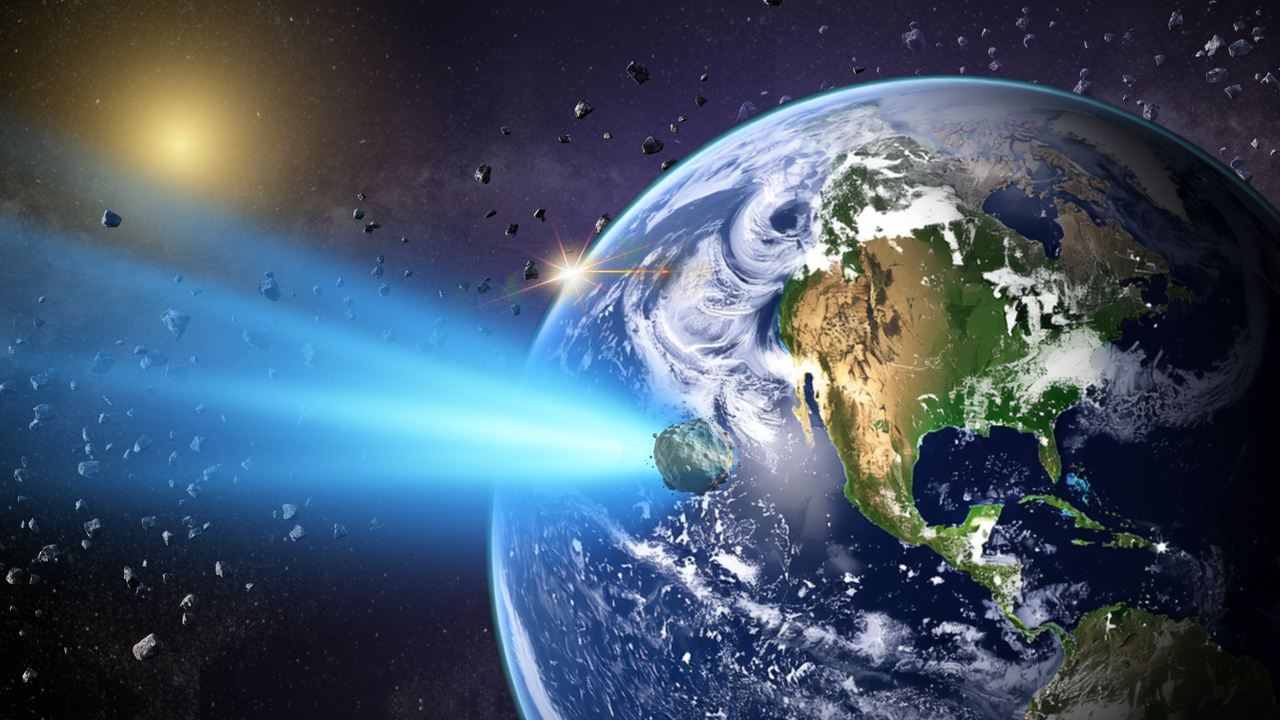
Scientists examining 75 meteorites that struck Earth have mapped the complete lifecycle of a space rock, identifying seven distinct stages from its journey through the vacuum of space to its arrival on the ground.
The research represents a systematic effort to understand what happens to meteorites during atmospheric entry, one of the most violent and transformative moments in a space rock's existence. Each stage reveals different physical and chemical processes that alter the meteorite's composition, structure, and appearance.
The first stage begins long before the meteorite enters Earth's atmosphere. Space rocks travel through the void as part of asteroid fragments or comets, often spending millions of years in stable orbits. The second stage arrives when gravitational interactions or collisions alter the meteorite's trajectory, sending it toward Earth. This transition can occur suddenly or gradually, depending on the orbital mechanics at play.
The third stage marks entry into Earth's upper atmosphere. At this point, the meteorite encounters increasing air resistance at altitudes above 100 kilometers. Friction generates extreme temperatures on the meteorite's surface, sometimes exceeding 1,600 degrees Celsius. This intense heating creates a thin layer of melted material called a fusion crust.
During the fourth stage, the meteorite continues its descent through progressively denser atmosphere. Ablation occurs as the outer material vaporizes and strips away from the surface. Shock waves form around the rapidly falling rock. The meteorite's brightness increases dramatically, creating the visible meteor streak that observers see from the ground. This luminous phase, called the meteoric phase, lasts from seconds to minutes depending on the rock's size and composition.
The fifth stage involves the meteorite's potential fragmentation. Larger rocks often break apart due to aerodynamic pressure and thermal stress. Some meteorites explode into multiple pieces at specific altitudes, creating meteorite falls rather than single impact events. Smaller fragments may survive intact while larger chunks separate into distinct pieces.
The sixth stage occurs as the meteorite slows below the speed of sound. Air resistance becomes less violent. The meteorite cools from its extreme surface temperatures. Dust and vaporized material that surrounded the falling rock dissipate into the atmosphere. The meteorite now falls under the influence of gravity alone, descending at terminal velocity.
The seventh and final stage concludes with the meteorite's impact on Earth's surface. Depending on the rock's velocity and composition at impact, it may create a crater, bury itself in soft ground, or shatter upon striking hard rock. Some meteorites have sufficient remaining velocity to penetrate deep into soil or ice.
This seven-stage model provides researchers with a framework for understanding how meteorites survive their ordeal through the atmosphere. Studying the 75 samples allowed scientists to identify patterns and variations in how different types of space rocks experience each stage. Iron meteorites, stone meteorites, and stony-iron meteorites each respond differently to atmospheric entry conditions.
The classification system helps planetary scientists predict how other planets with atmospheres affect incoming meteorites. Understanding meteorite behavior informs research into planetary protection, sample return missions, and the geological history of impact events that shaped Earth's surface across billions of years.