# September 2026 Brings Venus at Peak Brightness, Harvest Moon Encounters, and Autumn Equinox
September 2026 offers skywatchers a month of reliable naked-eye viewing opportunities, anchored by Venus at maximum brilliance, the Harvest Moon's appearance near Saturn and Neptune, and the autumnal equinox on September 22.
Venus dominates the evening sky this month, reaching peak brightness as it swings toward greatest eastern elongation. The planet will shine at magnitude minus 4.5, bright enough to cast shadows on clear nights and visible even in twilight conditions. Venus climbs steadily higher in the western sky after sunset throughout September, making it the easiest evening target for observers at all latitudes. Binoculars reveal the planet's crescent phase as it approaches inferior conjunction in the coming months.
The Moon provides a reliable guide to fainter objects early in the month. On September 10, use the waxing crescent Moon to locate Antares, the red supergiant star marking the heart of Scorpius. The Moon's proximity makes Antares easier to spot than usual. Three nights later, around September 13, the Moon points toward the Teapot asterism, the distinctive star pattern that outlines Sagittarius. These lunar guideposts work well because the Moon's brightness establishes a reference point in an otherwise faint region of sky.
The autumnal equinox arrives on September 22, marking the moment when day and night reach equal length in the Northern Hemisphere. At this instant, the Sun crosses the celestial equator, and the planet shifts into autumn in the north while spring begins in the south. The equinox moment occurs at a specific UTC time each year, creating precise observational value for astronomers tracking seasonal atmospheric changes.
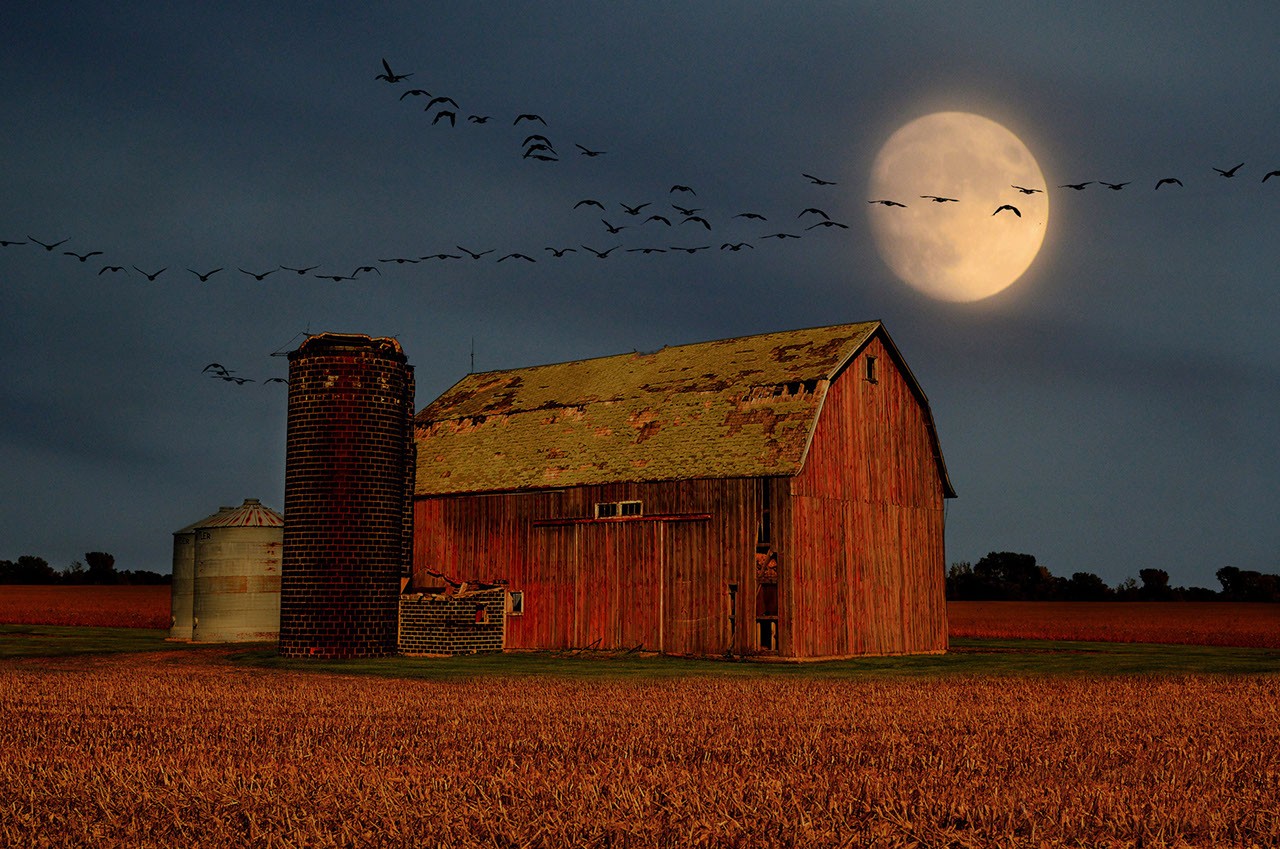
The Harvest Moon, September's full Moon, rises near the southeastern horizon around September 18-19. This full Moon carries its traditional name because it represents the brightest moonrise closest to the autumnal equinox, a distinction that matters for agricultural timekeeping. During Harvest Moon nights, the Moon rises at nearly the same time for several consecutive evenings, providing extended twilight illumination for late-summer field work.
Watch for the Harvest Moon's close approaches to outer planets this month. Saturn reaches opposition in September 2026, meaning it sits directly opposite the Sun as viewed from Earth, rising at sunset and remaining visible throughout the night at its brightest. Neptune also appears in the evening sky, though it requires optical aid to view. The Harvest Moon passes both planets during the month, creating opportunities to spot Saturn easily and use the Moon as a landmark for locating Neptune through binoculars or a small telescope.
September 2026 requires no special equipment beyond careful attention to timing and clear skies. Binoculars enhance the lunar detail and reveal Venus's phase, while a small telescope transforms the Harvest Moon into a landscape of craters and valleys. For observers in urban areas, Venus remains visible despite light pollution, and the Harvest Moon shines bright enough to wash out most stars, which can paradoxically make finding Saturn easier by reducing background stellar clutter.