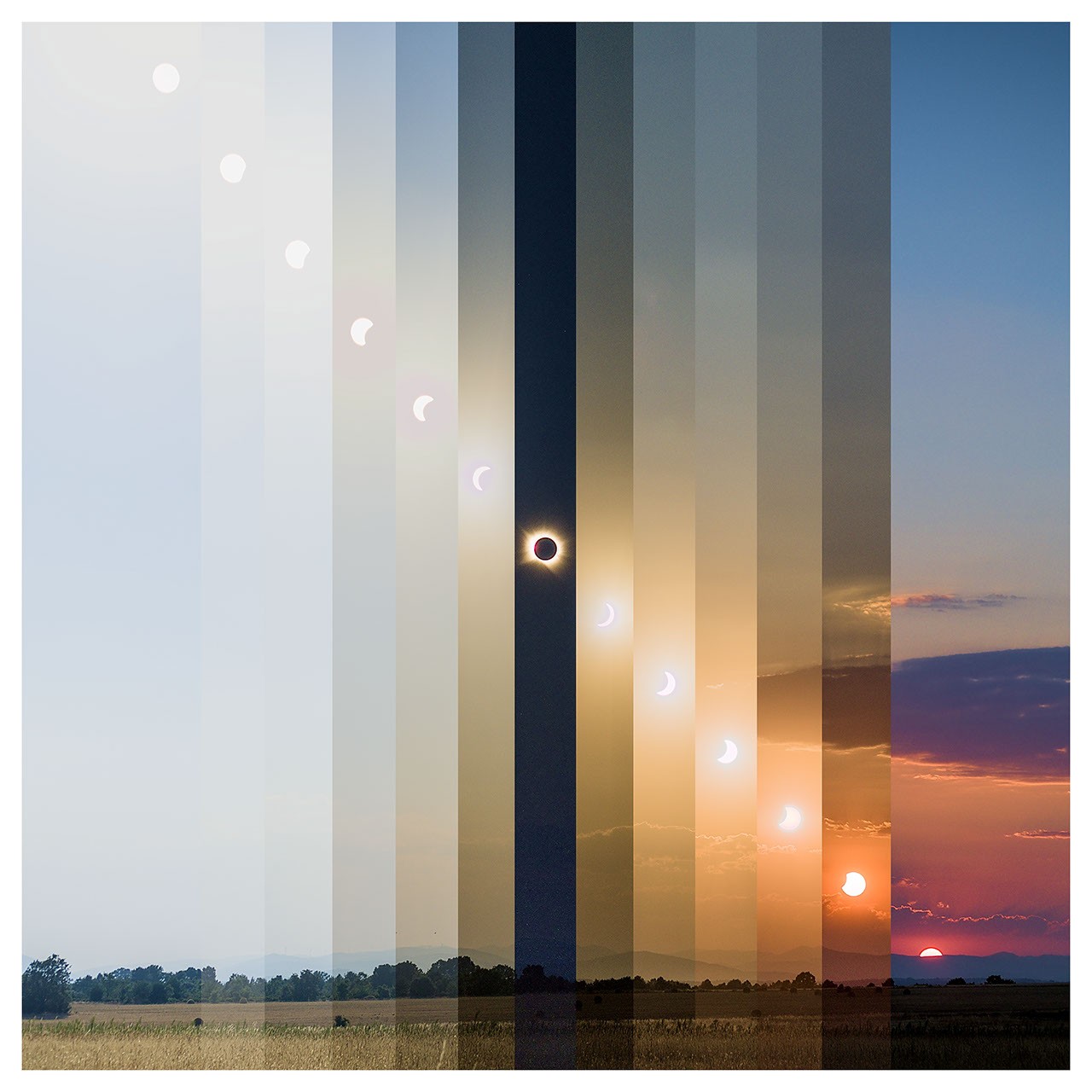
# Solar Eclipses Bridge Science and Human Culture in NASA's Latest Astronomy Picture of the Day
NASA's Astronomy Picture of the Day program has turned its lens toward the intersection of solar eclipses and human civilization, exploring how these celestial events have shaped culture across millennia and continue to drive scientific discovery today.
The APOD archive, maintained by NASA and featuring daily imagery from professional astronomers, regularly highlights phenomena that connect astronomical science with broader human experience. Solar eclipses represent one of the most visceral demonstrations of orbital mechanics that ordinary people can witness. When the Moon passes directly between Earth and the Sun, it casts a shadow across our planet's surface. For observers in the path of totality, daylight transforms to twilight, stars emerge in midday, and the Sun's corona becomes visible to the naked eye. These moments have historically triggered both fear and fascination across human societies.
From ancient Babylonian astronomers who tracked eclipse cycles using the Saros period to modern indigenous cultures that maintain eclipse-centered spiritual traditions, solar eclipses have left indelible marks on human history. Chinese, Mayan, and Greek civilizations all developed sophisticated predictive models to anticipate these events. Medieval and Renaissance astronomers used eclipse observations to refine calculations of Earth's diameter and the Moon's distance. Today, professional astronomers and citizen scientists use eclipses as natural laboratories to study the solar corona, test equipment in extreme conditions, and gather data otherwise impossible to collect.
The cultural resonance of solar eclipses extends beyond academic astronomy. Public engagement with eclipse events drives enrollment in STEM education, inspires amateur astronomers, and creates shared moments of wonder across entire regions. The total solar eclipse visible from North America in August 2017 drew millions of observers and generated billions in economic activity. Upcoming eclipses, including a total solar eclipse crossing southern Chile and Argentina in July 2019 and another crossing Spain and northern Africa in August 2026, continue to capture public imagination.
NASA's APOD platform serves as a crucial bridge between professional astronomy and the general public. Each day's image arrives with explanation written by research astronomers, making complex phenomena accessible without sacrificing accuracy. The archive now contains nearly three decades of daily entries, creating a comprehensive visual and educational resource. The program has become foundational to science communication, with educators worldwide integrating APOD into classroom curricula.
The September 2, 2026 APOD entry focuses on how solar eclipses unite scientific inquiry with cultural expression. This approach reflects a broader recognition within the astronomical community that understanding the universe requires both rigorous measurement and appreciation for humanity's long relationship with the cosmos. When millions of people gather to observe an eclipse, they participate in a tradition stretching back thousands of years while simultaneously supporting modern science.
Upcoming eclipse events offer opportunities to continue this dialogue between sky observation and cultural meaning. Astronomers, educators, and cultural institutions continue collaborating to ensure eclipse moments serve both scientific and educational purposes, maintaining humanity's connection to the dynamic celestial mechanics that govern our solar system.