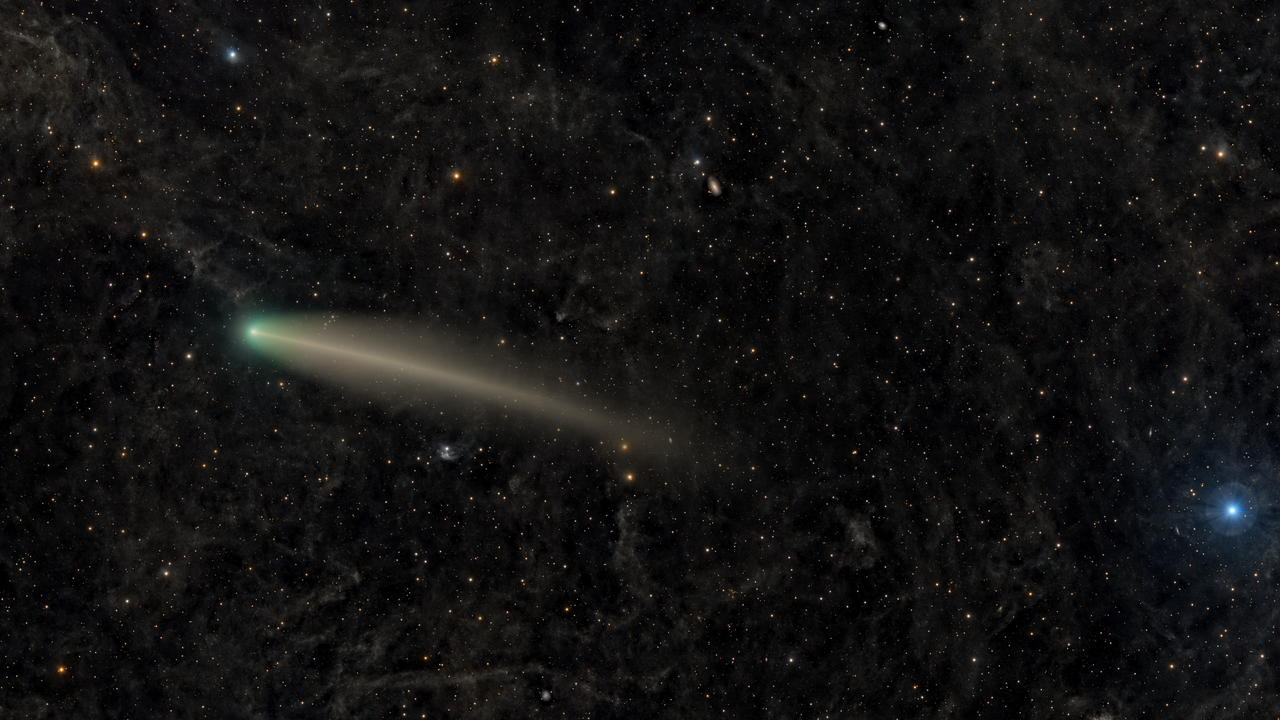
Comet McNaught delivered an unexpected celestial performance this summer, brightening dramatically through two distinct outbursts as it swung closest to the sun. The comet, formally designated C/2023 A3, exceeded predictions about its visibility and brightness, offering observers across the Northern Hemisphere a rare window to spot a dynamic comet before it fades into the outer solar system.
Comets brighten unpredictably near perihelion, the point closest to the sun, due to increased solar heating. This process sublimes frozen volatiles from the nucleus, releasing dust and gas that scatter sunlight. McNaught's two outbursts followed this pattern but arrived with unusual intensity. Amateur astronomers and space agencies tracking the comet documented the brightness spikes, which sent ephemeris calculations scrambling across observatories worldwide.
The outbursts made McNaught visible to the naked eye during peak intensity, though binoculars provided superior views of the coma, the bright envelope of material surrounding the nucleus, and the tail streaming away from the sun. The comet's trajectory carried it through early morning skies in the Northern Hemisphere during the height of summer 2024, creating an observing window that demanded early rising or dedicated dark-site visits.
Comet observers track such objects for multiple reasons. Each apparition provides data about cometary composition, outgassing rates, and structural integrity as these primordial bodies approach the sun. Long-period comets like McNaught originate in the Oort Cloud, a spherical shell of icy bodies surrounding our solar system at distances up to 100,000 astronomical units. Studying their behavior refines planetary science knowledge about the solar system's formation and evolution.
McNaught's visibility window remained narrow. After perihelion passage, the comet began its retreat into the outer solar system, growing fainter with each passing night. Sky watchers intent on observing it faced a deadline. The comet's brightness followed the inverse square law relative to solar distance, meaning it dimmed rapidly once past its closest approach to the sun.
Clear skies and dark locations away from light pollution offered the best odds for spotting McNaught before it faded beyond binocular reach. Observers monitoring online comet tracking resources, such as those maintained by the Minor Planet Center or professional astronomical societies, could access updated positions and brightness predictions. Smartphone astronomy apps updated with current comet positions simplified locating it in the predawn or evening sky.
The summer 2024 appearance of C/2023 A3 reminded observers why comet watching persists as both recreational pursuit and scientific undertaking. These wandering ice bodies connect humans directly to the solar system's origin and structure. Each outburst, each brightness variation, each tail morphology change offers clues about ancient materials preserved nearly unchanged since the solar system's birth 4.6 billion years ago. McNaught's dramatic show, though temporary, represented another chapter in humanity's ongoing dialogue with the cosmos.