# Europe's SMART-1 Lunar Impactor Ends Mission with Controlled Crash
The European Space Agency's SMART-1 spacecraft executed a deliberate lunar impact on September 3, 2006, completing a mission that pioneered solar electric propulsion technology and mapped the moon's mineral composition with unprecedented detail.
SMART-1, which stands for Small Missions for Advanced Research in Technology, launched from Earth in September 2003 aboard an Ariane-5 rocket. The spacecraft reached lunar orbit in November 2004 after a journey that demonstrated the viability of ion drive propulsion. This solar-powered thruster accelerated the satellite slowly but efficiently, consuming far less fuel than conventional chemical rockets would require for the same trajectory.
During its 20 months in lunar orbit, SMART-1 operated three instruments that fundamentally advanced our understanding of the moon's geology. The D-CIXS spectrometer detected chemical elements in the lunar surface, particularly magnesium, aluminum, silicon, iron, calcium, and titanium. The RNIS infrared radiometer mapped thermal properties across different lunar terrain. The AMIE optical camera captured high-resolution images that revealed previously unmapped regions, especially near the south polar area where scientists suspected water ice deposits.
The spacecraft's instruments discovered evidence of olivine-rich material near the lunar south pole and confirmed the presence of anorthosite, an aluminum-rich rock abundant in the moon's ancient highlands. These findings provided crucial data for future lunar missions seeking resources for human exploration.
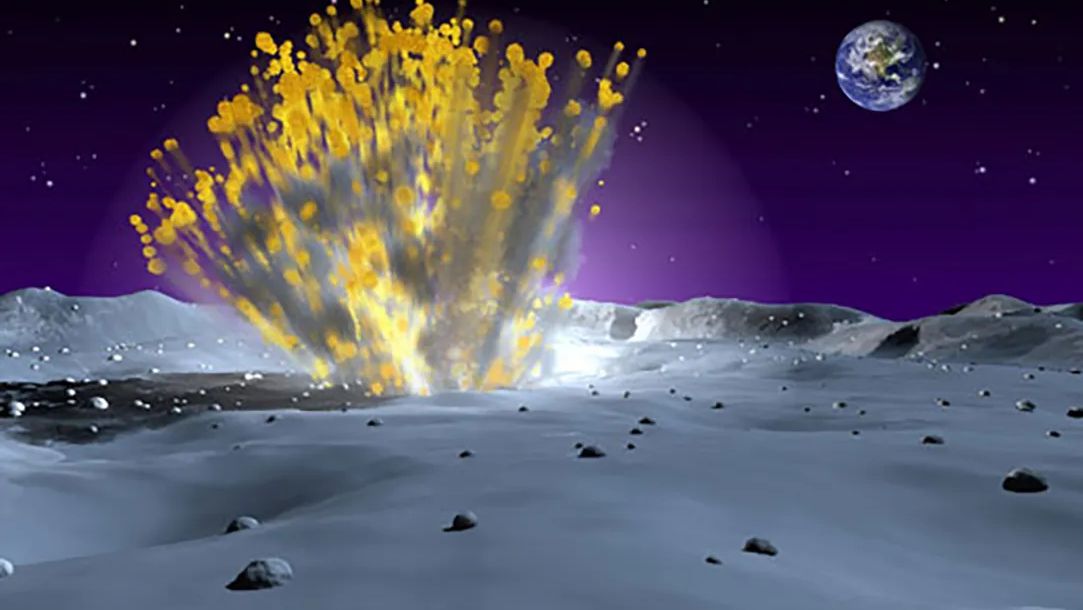
ESA scientists designed SMART-1's final phase as an impact event rather than a burial in orbit. On September 3, 2006, controllers commanded the spacecraft into a collision course with the moon's Lakshmi Plume region, near the southwest wall of the Leibnitz and Leibnitz Sommerfeldt mountains in the south polar area. The impact occurred at approximately 5.8 kilometers per second. Lunar Reconnaissance Orbiter images captured later would eventually show the impact crater SMART-1 created, measuring roughly 10 meters wide.
The deliberate crash served multiple purposes. It concluded the mission in a controlled fashion after propellant supplies ran low. More importantly, it provided a ground-truth verification of impact signatures that telescopes and orbiting instruments could detect. Scientists observed a brief dust plume from the impact, offering calibration data for understanding what future lunar impacts might reveal about subsurface composition.
SMART-1's success with ion propulsion technology proved transformative. The mission demonstrated that small, relatively inexpensive spacecraft could reach the moon using electric propulsion systems that consumed minimal fuel. This breakthrough influenced subsequent ESA missions and international space programs planning lunar and deep space exploration.
The mission's scientific legacy extends beyond its operational period. Data from SMART-1's mineral mapping informed planning for numerous subsequent lunar missions, including China's Chang'e orbiters and landers, India's Chandrayaan missions, and NASA's Lunar Reconnaissance Orbiter. The mapped distribution of elements and minerals on the lunar surface provided baseline information essential for identifying locations where future human explorers might extract water ice and other resources.
SMART-1 remains emblematic of ESA's approach to space exploration: achieving bold scientific objectives through innovative technology and efficient mission design. The spacecraft transformed a small payload into a powerful tool for lunar science, and its deliberate impact created a final legacy by becoming itself a scientific observation point.