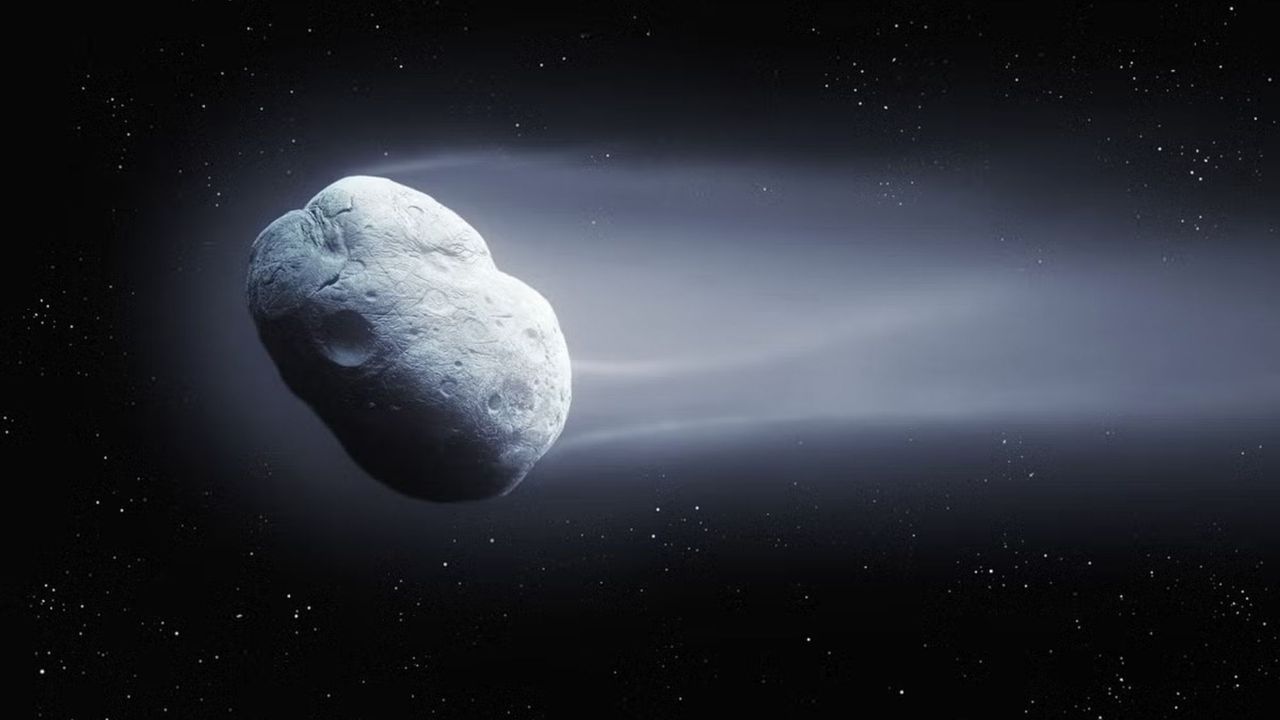
Astronomers have captured direct evidence of a centaur object in the process of transforming into an active comet, offering scientists their first clear observation of this fundamental transition in small icy bodies orbiting the Sun.
The observation solves a long-standing puzzle in planetary science. Centaurs, which orbit between Jupiter and Neptune roughly 3 billion miles from Earth, occupy a mysterious niche in solar system taxonomy. They resemble both asteroids and comets yet belong fully to neither category. Some centaurs remain dormant through entire observational histories. Others abruptly activate, developing the characteristic coma and tail that define true comets. The mechanism triggering this activation has remained poorly understood, largely because astronomers rarely witness the transition occurring in real time.
This discovery represents a direct window into that process. The object in question, monitored across multiple wavelengths and observatories, showed the telltale signs of awakening. A coma, the fuzzy envelope of gas and dust surrounding a comet's nucleus, expanded around the centaur's core. Solar heating appears to have penetrated the object's subsurface ice layers sufficiently to trigger outgassing. As volatile materials sublimated directly from solid to gas, the centaur began displaying cometary behavior, releasing dust and ejecting material into space at increasing velocities.
The data provides empirical grounding for theoretical models that have long predicted this transition. Centaurs occupy orbital paths vulnerable to gravitational perturbations from giant planets. Over time, these gravitational nudges alter their trajectories incrementally. Eventually, some centaurs migrate into orbits that carry them closer to the Sun than before. Increased solar radiation destabilizes their mantles of frozen material. The interior, insulated for millions of years, suddenly receives enough heat to activate previously dormant sublimation mechanisms.
Understanding this transformation carries implications beyond taxonomy. Centaurs and comets represent time capsules containing material formed during the early solar system's construction phase, roughly 4.6 billion years ago. Analyzing their composition reveals information about conditions in the protoplanetary disk, the swirling cloud of gas and dust from which planets accreted. By studying centaurs mid-transition, scientists gain access to interior material typically inaccessible on dormant bodies.
The observation also informs models of orbital dynamics and long-term solar system evolution. Each centaur transformation represents a data point confirming predictions about gravitational interactions and orbital instability across the outer solar system. These processes shape the current population of comets, including periodic visitors like Halley's Comet and near-Earth objects that occasionally threaten planetary bodies.
Current and future missions enhance this investigative capacity. The James Webb Space Telescope can detect infrared signatures from distant cometary activity. Ground-based observatories coordinated through networks like the Minor Planet Center provide continuous monitoring. Together, these resources increase the likelihood of catching additional centaurs in their transformation phase.
The discovery underscores that the solar system remains dynamically active and observable in real time, not merely a historical relic. Icy bodies continue their ancient journeys, and some continue their metamorphosis from dormant to active worlds.