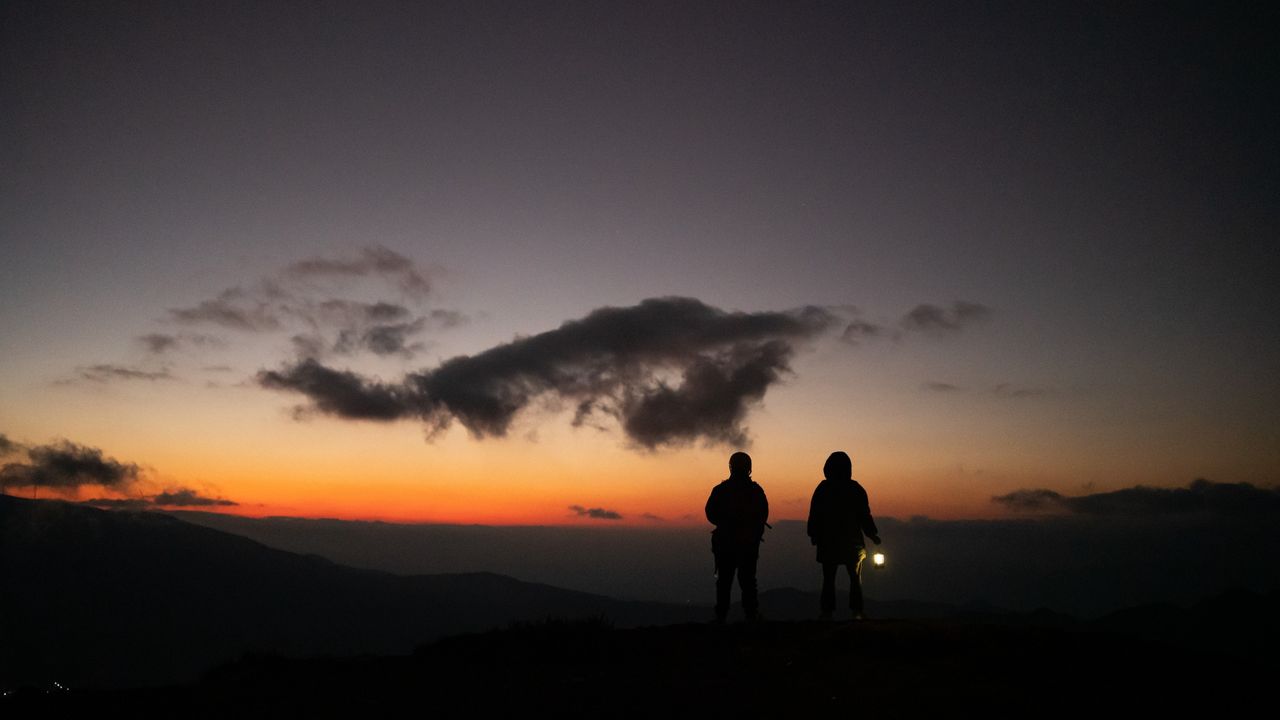
Venus begins its farewell performance in Earth's evening sky this September, dropping toward the horizon as our neighboring planet continues its orbital dance away from our line of sight. The brightest object in the night sky after the Moon, Venus will fade from easy visibility over the coming weeks, but observers with clear western horizons and binoculars still have a brief window to catch this celestial giant before it vanishes.
Venus appears brilliant in our sky because of its thick, reflective cloud layer composed largely of sulfuric acid. This same atmosphere creates surface temperatures exceeding 460 degrees Celsius, hot enough to melt lead. Yet from Earth, we see only the planet's dazzling white clouds, which reflect about 70 percent of the sunlight that reaches them. This exceptional reflectivity makes Venus the third-brightest object in the entire sky, outshone only by the Sun and Moon.
The planet's disappearing act results from orbital mechanics. Venus orbits the Sun roughly every 225 Earth days, while Earth completes its orbit every 365 days. This timing mismatch means Venus and Earth periodically align in ways that shift the planet's position relative to our Sun. Throughout September, Venus sinks lower each evening, approaching what astronomers call inferior conjunction, when Venus passes between Earth and the Sun. During this period, the planet becomes lost in the Sun's glare and vanishes from naked-eye observation.
Observers hoping to spot Venus should look low on the western horizon immediately after sunset, roughly 30 minutes after the Sun disappears. Binoculars dramatically improve visibility by cutting through twilight haze and allowing viewers to locate the planet more easily against the brightening sky. The planet will appear as a brilliant white point of light, unmistakable once found. Clear weather and minimal light pollution help considerably. Urban observers should seek locations away from city lights or position themselves where buildings do not block the western view.
Venus returns to the morning sky next, where it will serve as the Morning Star before dawn later this fall and winter. The planet will reach its maximum brightness as a morning object in early January, appearing higher and more prominent as winter progresses. This oscillation between evening and morning visibility has made Venus culturally significant across human civilization. Ancient astronomers, unaware that these two appearances represented the same object, named them separately as the Evening Star and Morning Star.
The orbital geometry that removes Venus from evening skies operates with predictable regularity. Venus serves as an Evening Star for roughly eight months, then disappears for about two months, then reappears as a Morning Star for another eight months. This cycle repeats approximately every 19 months, providing regular opportunities for observers to witness the planet's celestial choreography.
For skywatchers, September 2024 represents the final chance to observe Venus in evening twilight for several months. Sunset observations between early and mid-September offer the best opportunity before the planet becomes impossible to spot without optical aid. By late September, even binoculars will struggle to reveal Venus, as it sinks too close to the Sun's position in the sky. The window closes quickly, making this month the ideal time to appreciate one of the solar system's most visually striking worlds before it vanishes into the glare.