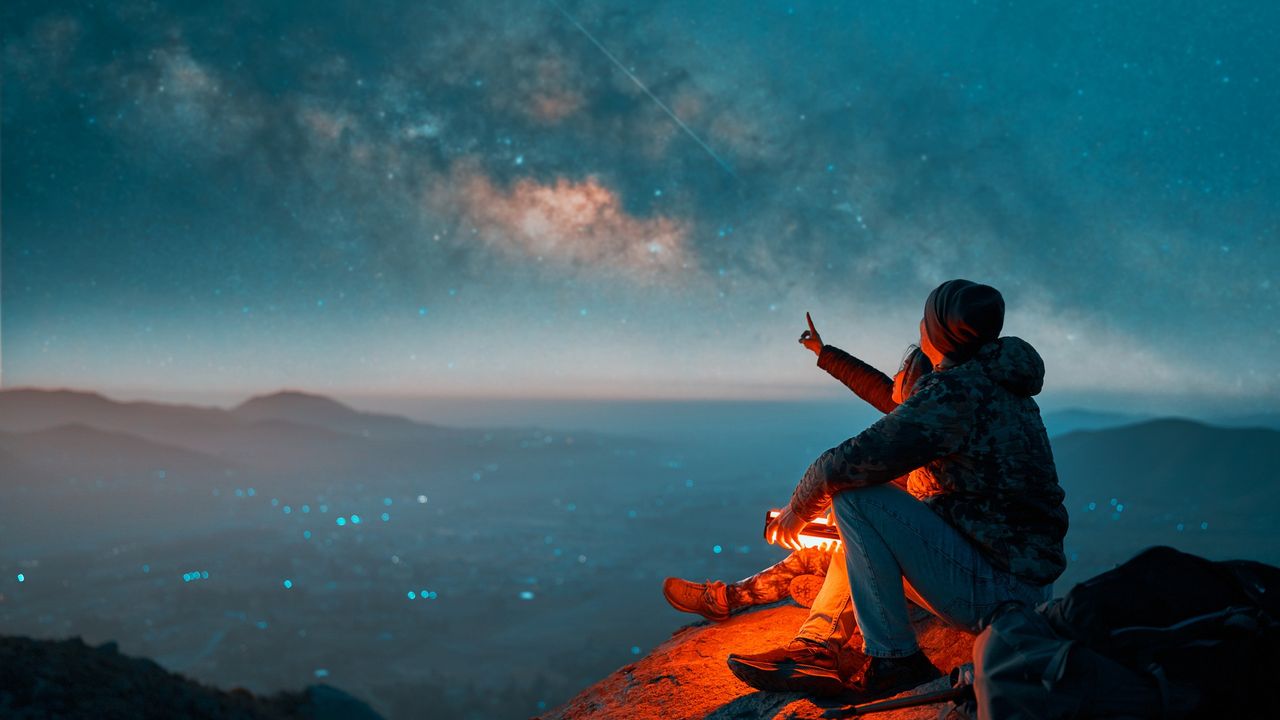
# Five Planets Align in September Sky for Naked-Eye Observation
September offers a rare planetary parade across Earth's night sky. Mercury, Venus, Mars, Jupiter, and Saturn will all become visible to the naked eye this month, creating one of the most accessible celestial displays of 2024 for amateur astronomers and casual stargazers alike.
The alignment stems from orbital mechanics. Each planet moves through its own orbital path around the sun at different speeds and distances. Every few years, these orbits align such that multiple planets cluster together in Earth's sky, appearing in relatively the same region of the celestial sphere. This month, that convergence reaches peak visibility, requiring no telescope or binoculars to observe.
Jupiter dominates the night sky during September, rising in the east as twilight fades. The gas giant's immense size and reflective cloud layers make it the brightest planet visible after Venus. Amateur observers with modest telescopes can resolve Jupiter's Great Red Spot and cloud bands. Saturn follows Jupiter across the sky, appearing slightly dimmer but still commanding attention with its distinctive pale yellow hue. The planet's rings remain tilted at an angle favorable for ground-based observation through small telescopes.
Venus presents the second-brightest option for observation, though timing matters. The planet appears in the western sky shortly after sunset, glowing brilliantly during twilight hours. Venus reaches its maximum brightness in September, outshone only by the Moon. Mercury, smaller and closer to the sun, appears lower on the horizon and requires clear skies and precise timing to locate. Early morning observers have the best chance to spot Mercury before sunrise, appearing in the eastern sky as the faintest member of this planetary congregation.
Mars occupies middle ground in brightness and positioning. The red planet sits between Mercury and Venus in the predawn sky, becoming visible roughly two to three hours before sunrise. Unlike the other planets' relatively steady positions, Mars moves noticeably night to night against the background stars, revealing its status as Earth's neighbor in the solar system.
Stargazers should observe from locations with minimal light pollution. Urban skies wash out fainter planets like Mercury and Mars. Dark skies away from city lights reveal all five planets with dramatic clarity. Binoculars enhance the experience by magnifying planetary detail, though naked-eye observation remains perfectly valid.
The best approach involves timing observations to the sun's position. Twilight hours provide optimal conditions, as the sky retains enough light to navigate by familiar landmarks while remaining dark enough for planets to shine. September's lengthening nights after the equinox expand observation windows each evening.
This planetary arrangement carries no special scientific significance for the solar system itself. Planetary conjunctions occur regularly and predictably based on orbital calculations first performed centuries ago. Their value lies in public engagement with astronomy. These events inspire people to step outside, look upward, and recognize humanity's position within a dynamic cosmos. They demonstrate that fundamental knowledge of physics and celestial mechanics translates directly into observable phenomena available from any reasonably dark location on Earth. September's planetary display represents an opportunity to witness the solar system's architecture in action.