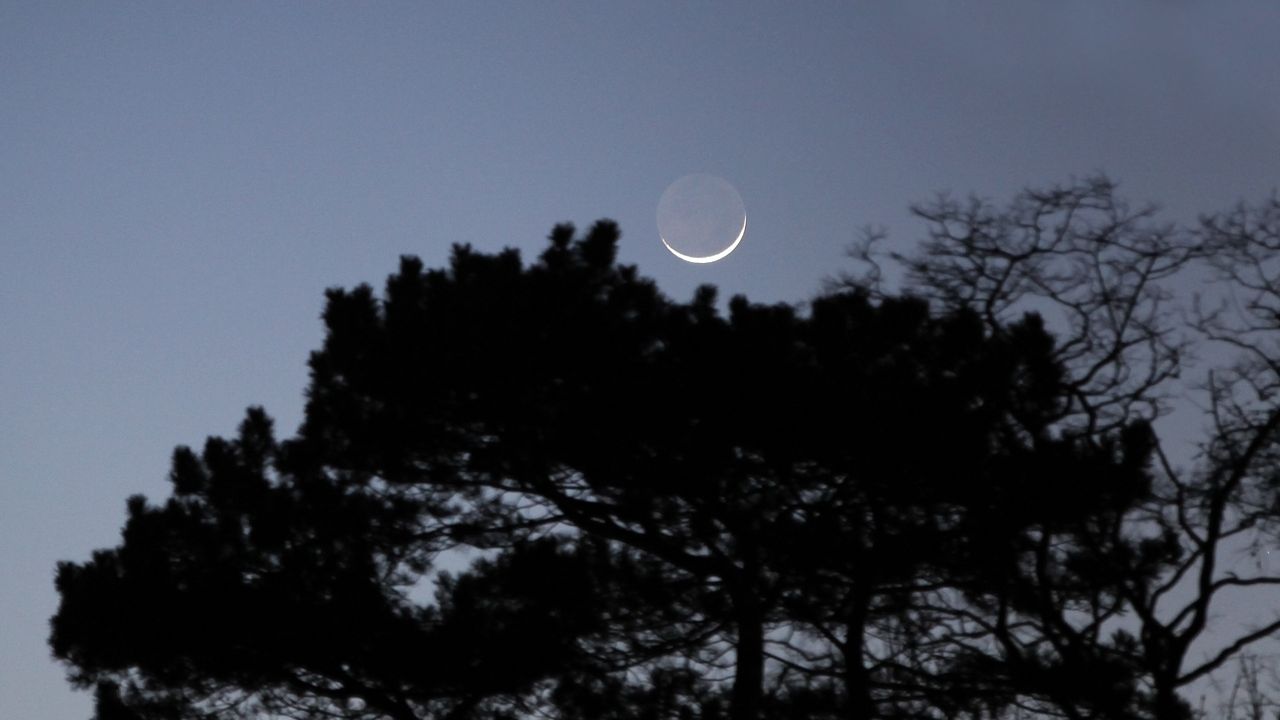
On September 8, the Moon will occult Jupiter in a daytime event visible across parts of North America, Europe, and North Africa. This rare astronomical alignment places the Moon directly in front of Jupiter, blocking the planet from view even in daylight hours. The occultation begins before sunrise, with the actual moment of Jupiter's disappearance occurring after dawn depending on observer location.
Occultations of bright planets happen infrequently. Jupiter, the solar system's largest planet, typically remains easily visible to the naked eye throughout the night. But when the Moon's orbital path intersects with Jupiter's position in the sky, the closer lunar body blocks the distant giant entirely. The event's timing during daylight hours makes observation more challenging than nighttime occultations, requiring binoculars or a telescope to locate Jupiter before it vanishes behind the lunar disk.
The Moon orbits Earth roughly every 27 days, passing in front of stars and planets occasionally. These conjunctions become occultations only when the Moon moves directly between Earth and the occulted object. Jupiter, orbiting much farther from Earth, moves slowly across our sky. The Moon catches up to it periodically, but daytime occultations occur less frequently than nighttime ones.
Observers in favorable locations across North America, Europe, and parts of Africa will experience the best viewing conditions. The exact timing varies by geographic position. In eastern North America, the occultation occurs after sunrise, allowing observers to see Jupiter vanish from the sky. European observers witness the event during morning hours. North African locations experience the event earlier in their local morning or still during darkness.
Successful observation requires preparation. Binoculars or a small telescope become essential for locating Jupiter after sunrise, since the bright daytime sky washes out the planet's faint light to unaided eyes. Astronomy clubs and planetariums often provide guidance for finding such events. Online resources from astronomical societies publish precise local timing for different cities and regions.
The occultation's rarity stems from orbital geometry. The Moon's path tilts relative to Jupiter's apparent motion through the zodiac. Most lunar occultations of bright planets occur at night. Daytime events, when the Moon blocks a major planet while the Sun remains above the horizon, represent unusual alignments that occur only every several years for any given planet.
This September event follows previous daytime occultations involving bright planets. Venus and Mercury experience more frequent daytime occultations due to their proximity to the Sun, but Jupiter's greater brightness and slower motion across the sky make its daytime occultations particularly dramatic when they occur.
Photographing the event requires stable equipment and proper solar filters to prevent eye damage when pointing instruments toward the daytime sky. Experienced astrophotographers often capture the moment Jupiter reappears from behind the lunar disk, revealing details of the lunar limb's features silhouetted against the giant planet's disk.
The September 8 occultation rewards patient observers with a reminder of the Moon's complex orbital mechanics and the precise celestial choreography governing our view of the planets. Such events demonstrate how location on Earth determines what observers witness in the sky.